| Product Name |
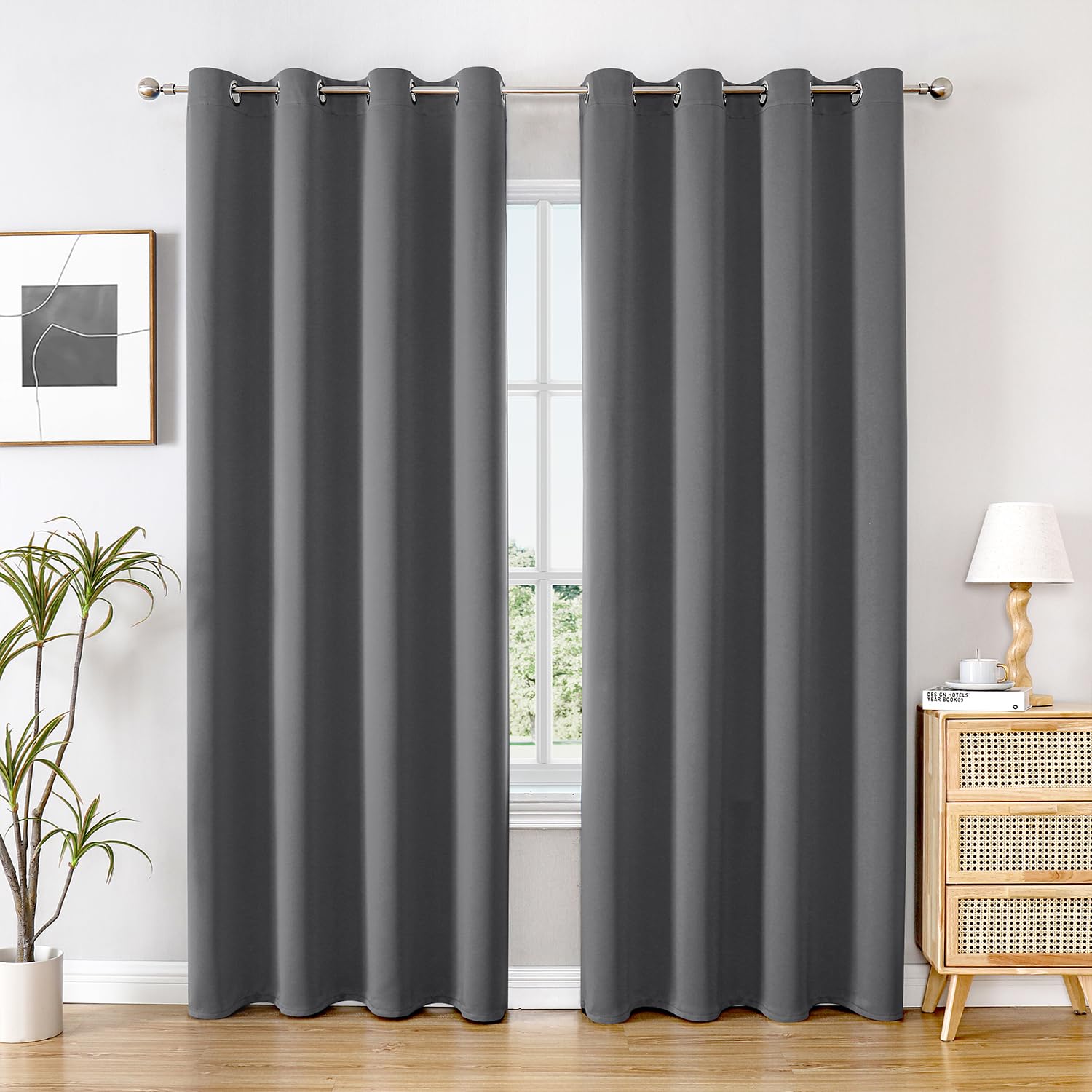
Neutral Solid Textured Polyester Blackout Curtains |
| Color |
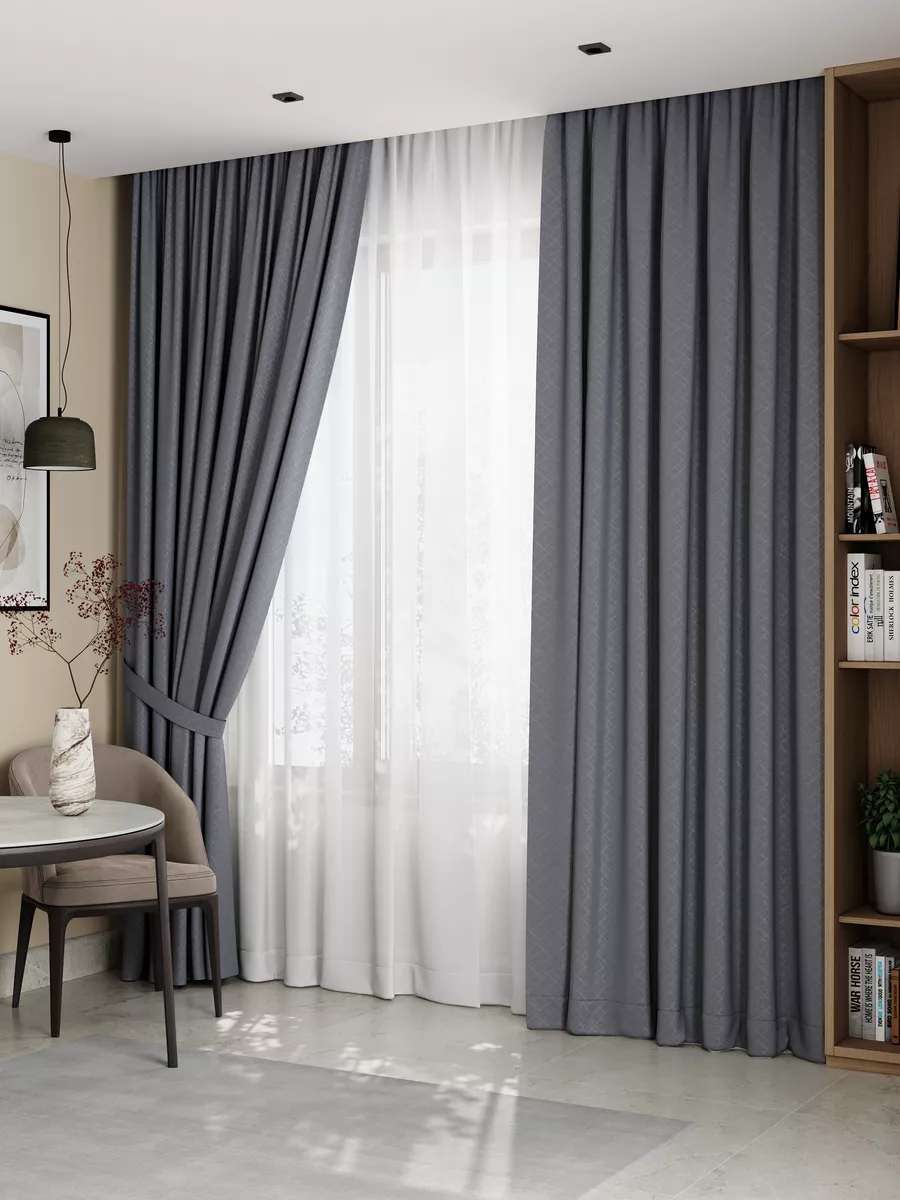
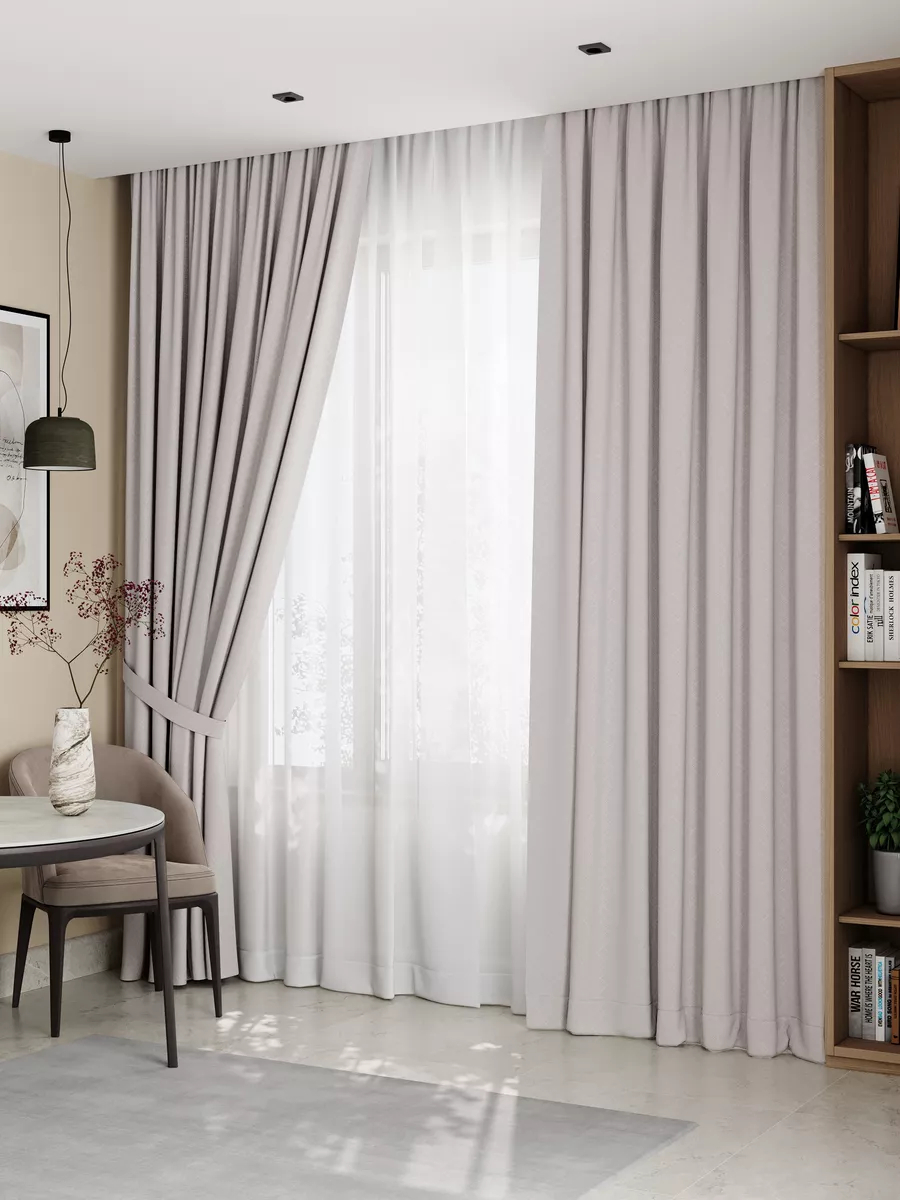
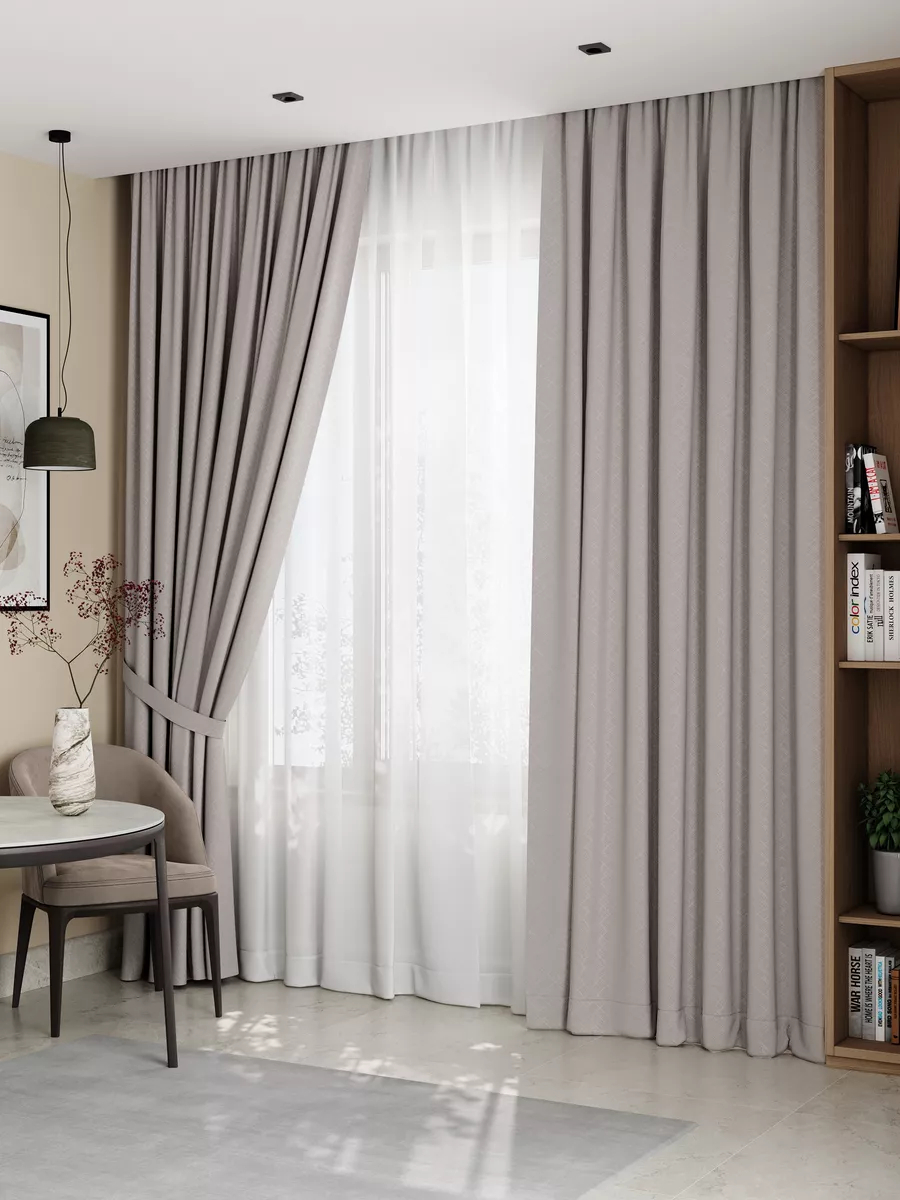
Beige, Cappuccino and Dark Grey; other colors can be discussed |
| Material |
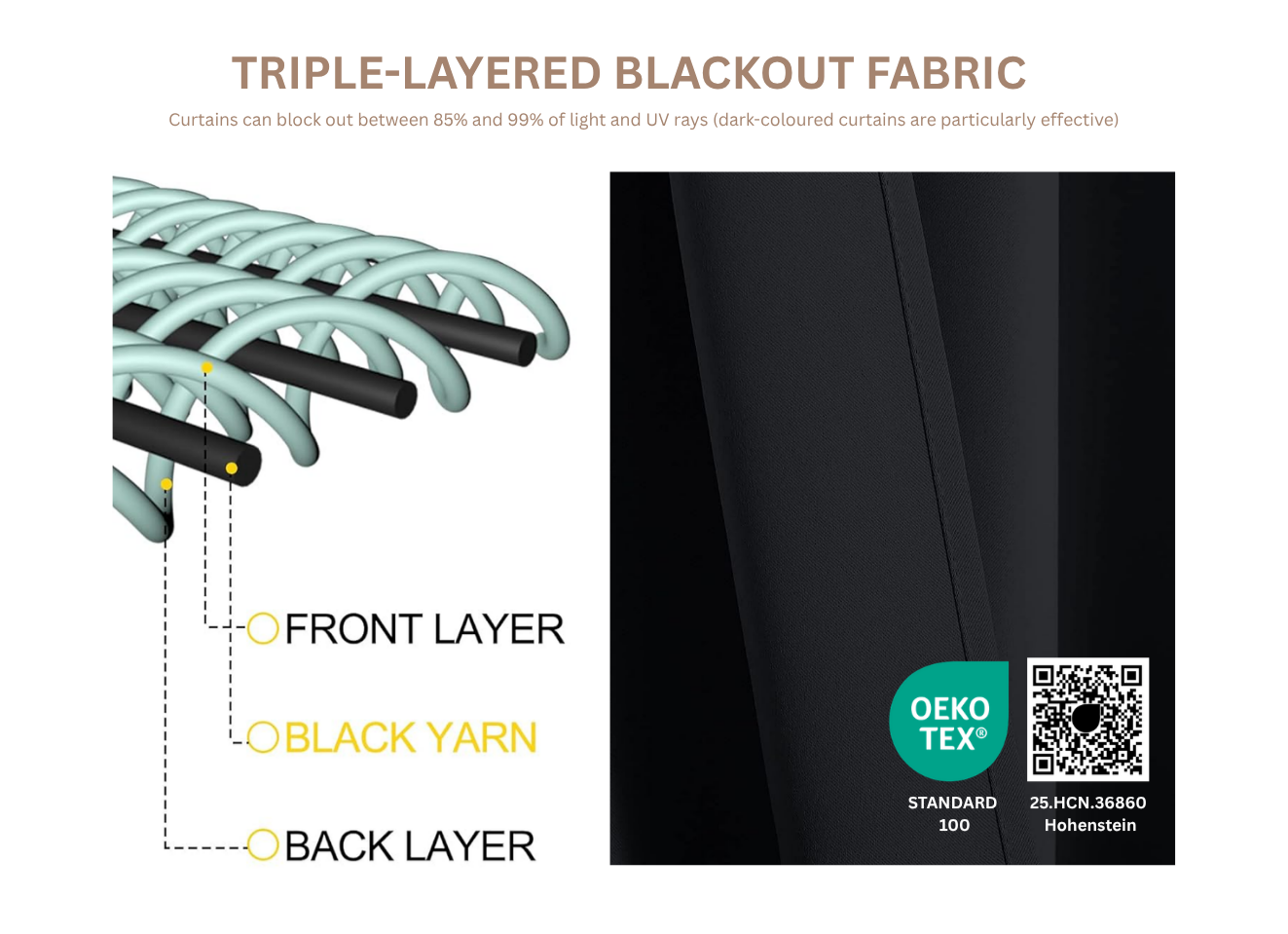
Dense polyester fabric; final blackout construction subject to approval |
| Style | Neutral Decorative Drapery / Bedroom and Living Room |
| Size |
Custom sizes available |
| Package | Two curtain panels; tiebacks and private-label packing subject to confirmation |
| Certification | OEKO-TEX Standard 100 Available |
| MOQ | 200 |
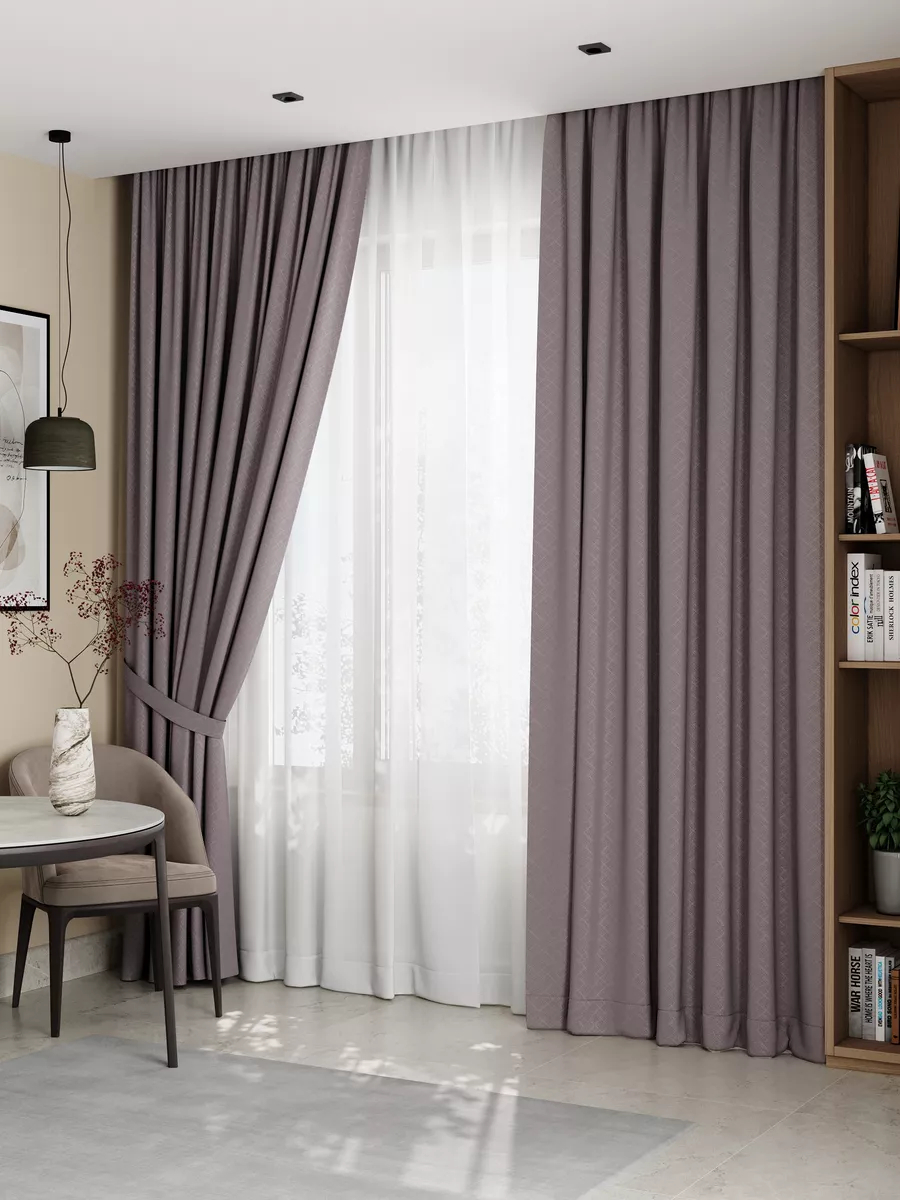
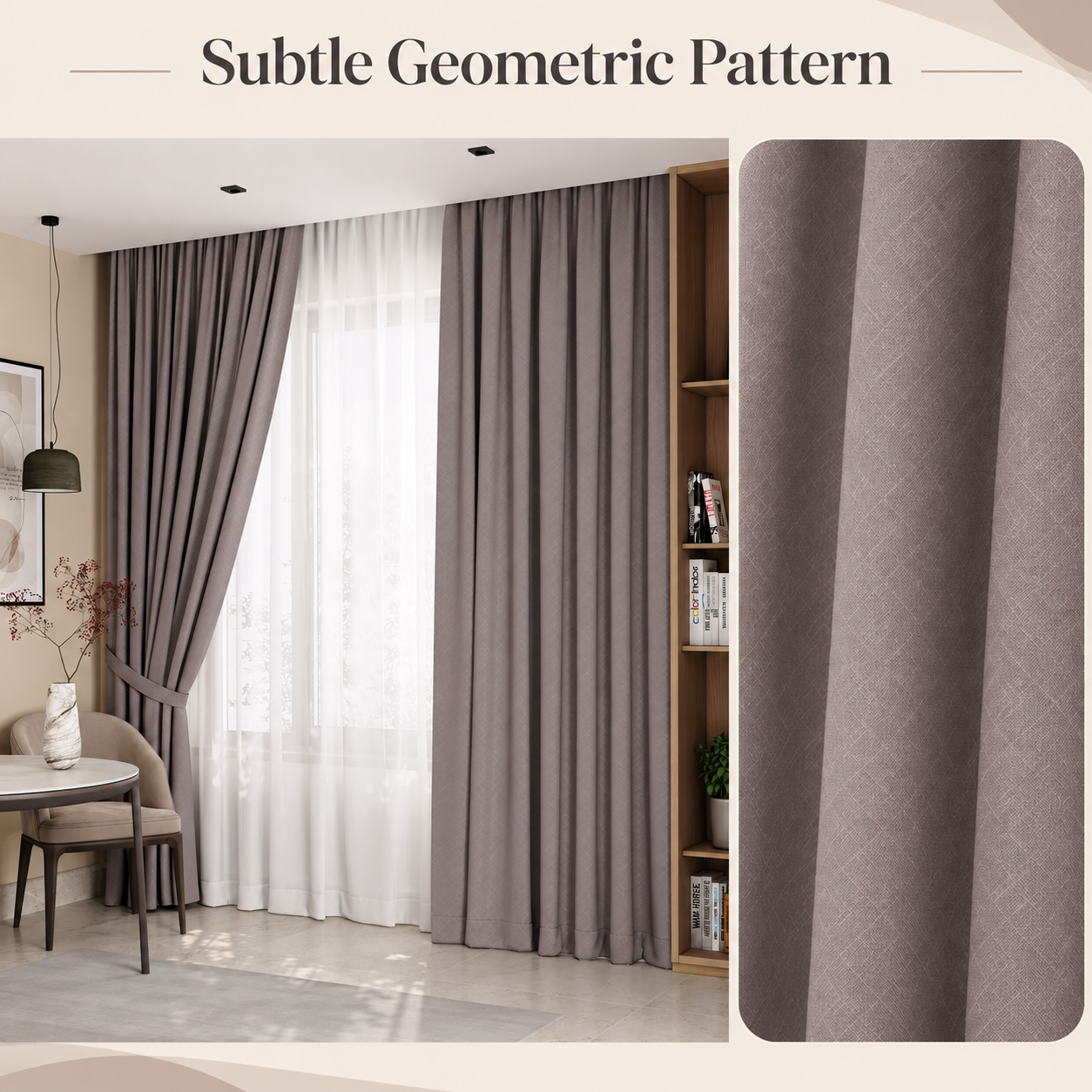
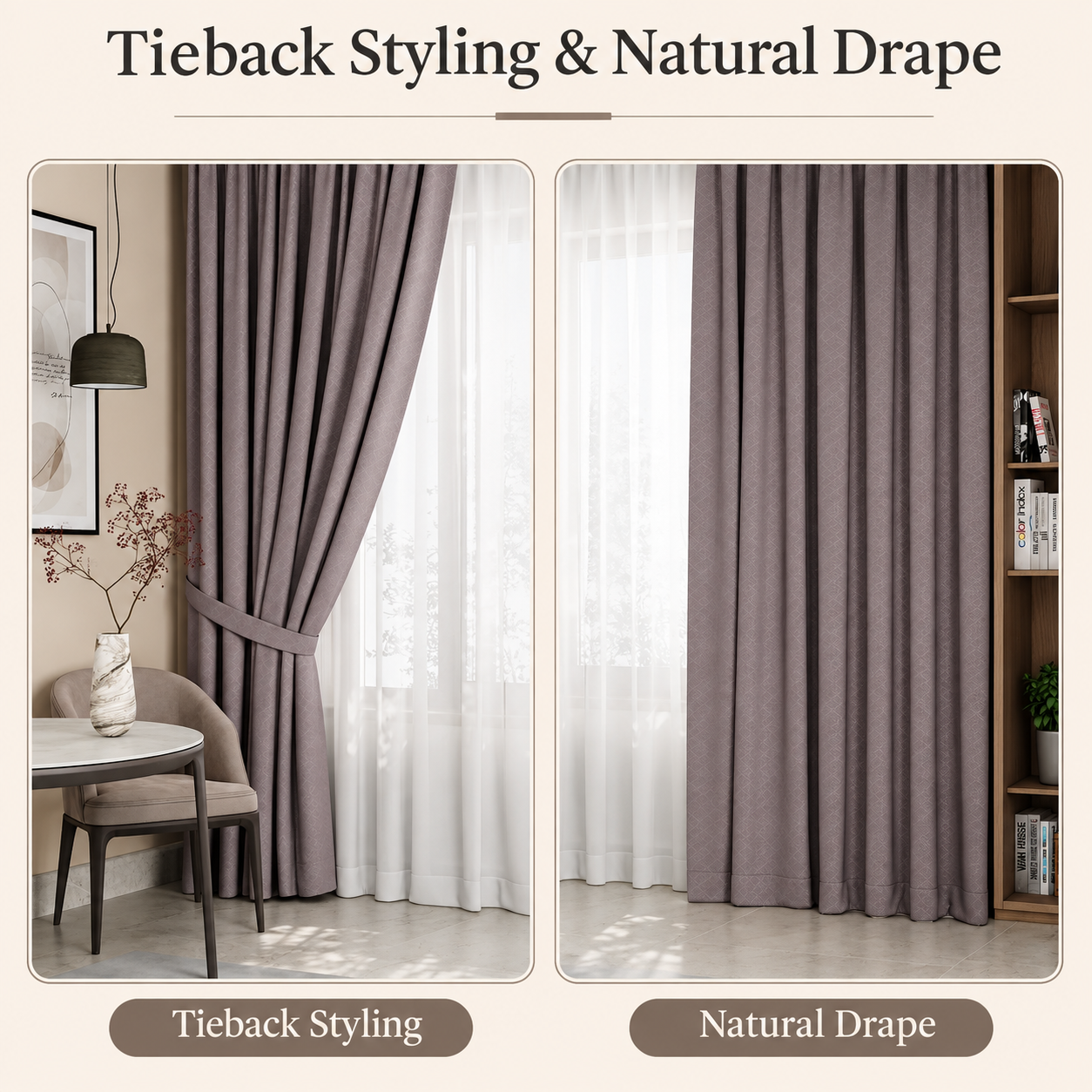
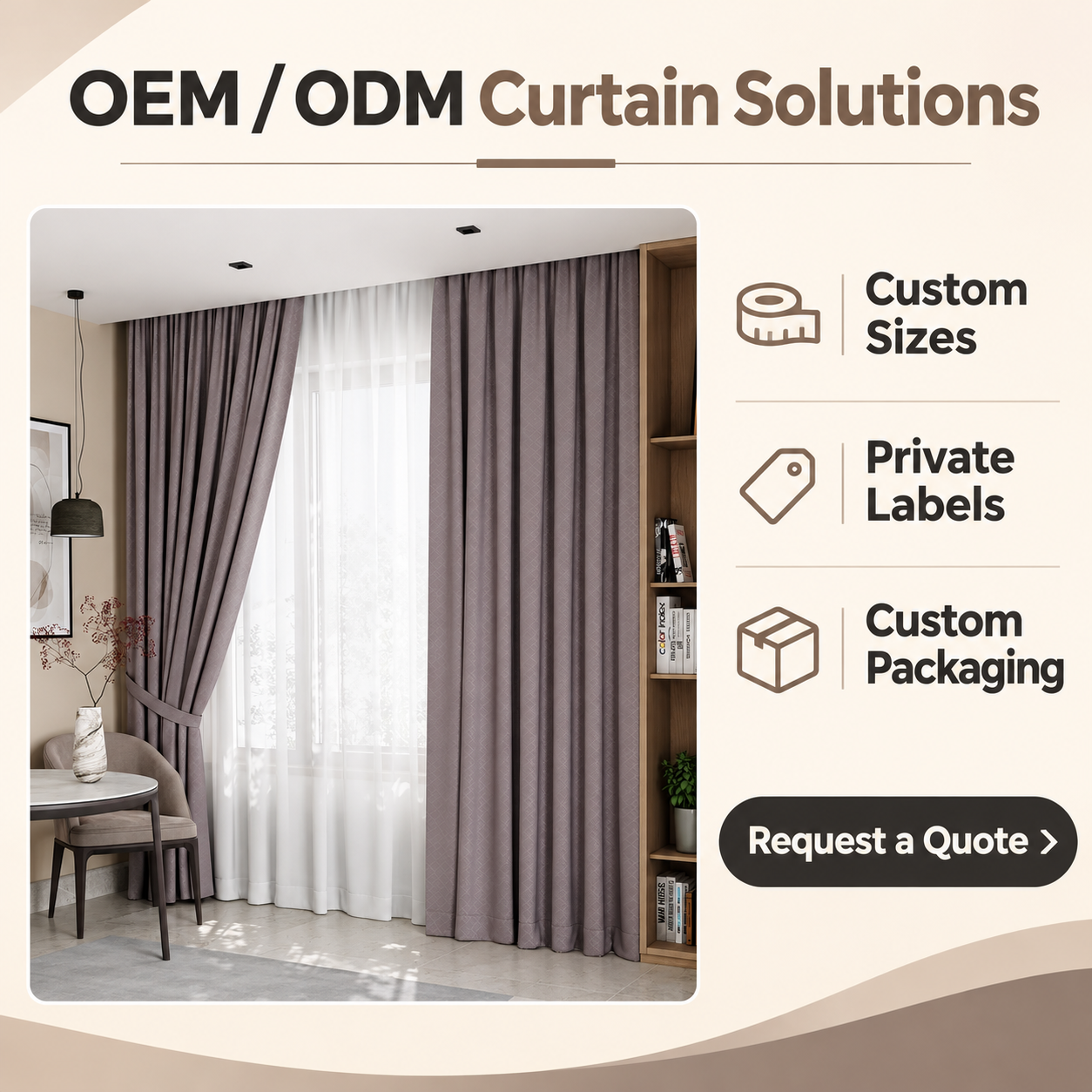
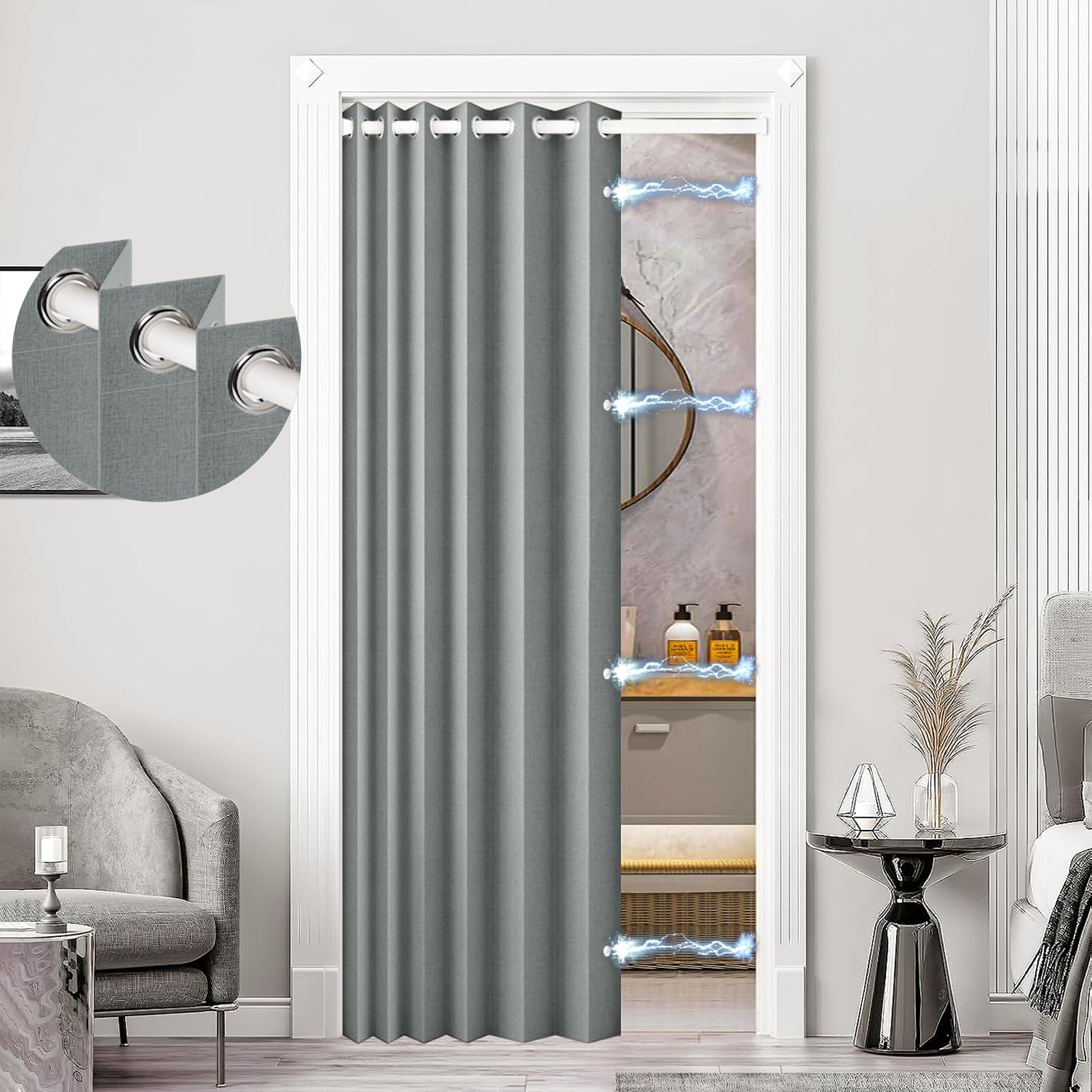
A fine fabric surface and quiet solid colors give these polyester curtains a clean, substantial window presence. Beige offers a warm neutral base, Cappuccino introduces a deeper brown tone, and Dark Grey creates stronger contrast against pale walls. The panels form continuous vertical folds, allowing the fabric texture and drape to carry the design without an added motif. Custom sizes are available for different window proportions. The selected fabric build and finished installation determine the light-blocking result, with blackout performance established through sample approval and appropriate testing.
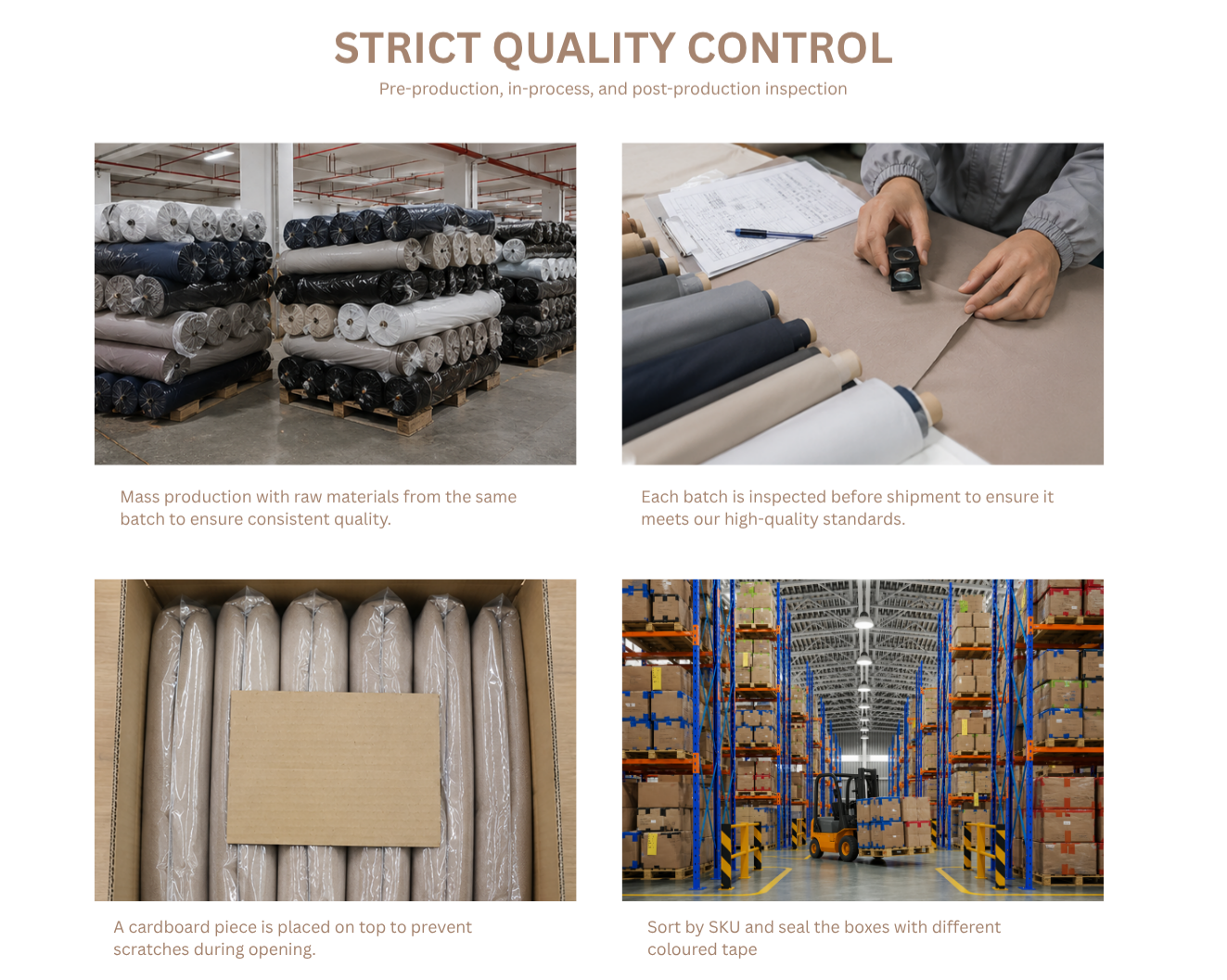
Shaoxing Yingkuo Textile Co., Ltd. (EAGLEKO HOME TEXTILE) can develop this neutral curtain range around the buyer’s preferred handle, heading and finished dimensions. Beige, Cappuccino and Dark Grey provide starting shades, while other colors can be discussed against physical standards. One-stop sourcing allows the curtains to be purchased alongside compatible sheers, cushion covers and other home textiles for coordinated collections. Sampling aligns the face appearance, sewing and packaging requirements before bulk approval; customization scope, minimum quantities and delivery schedules are confirmed in the quotation.
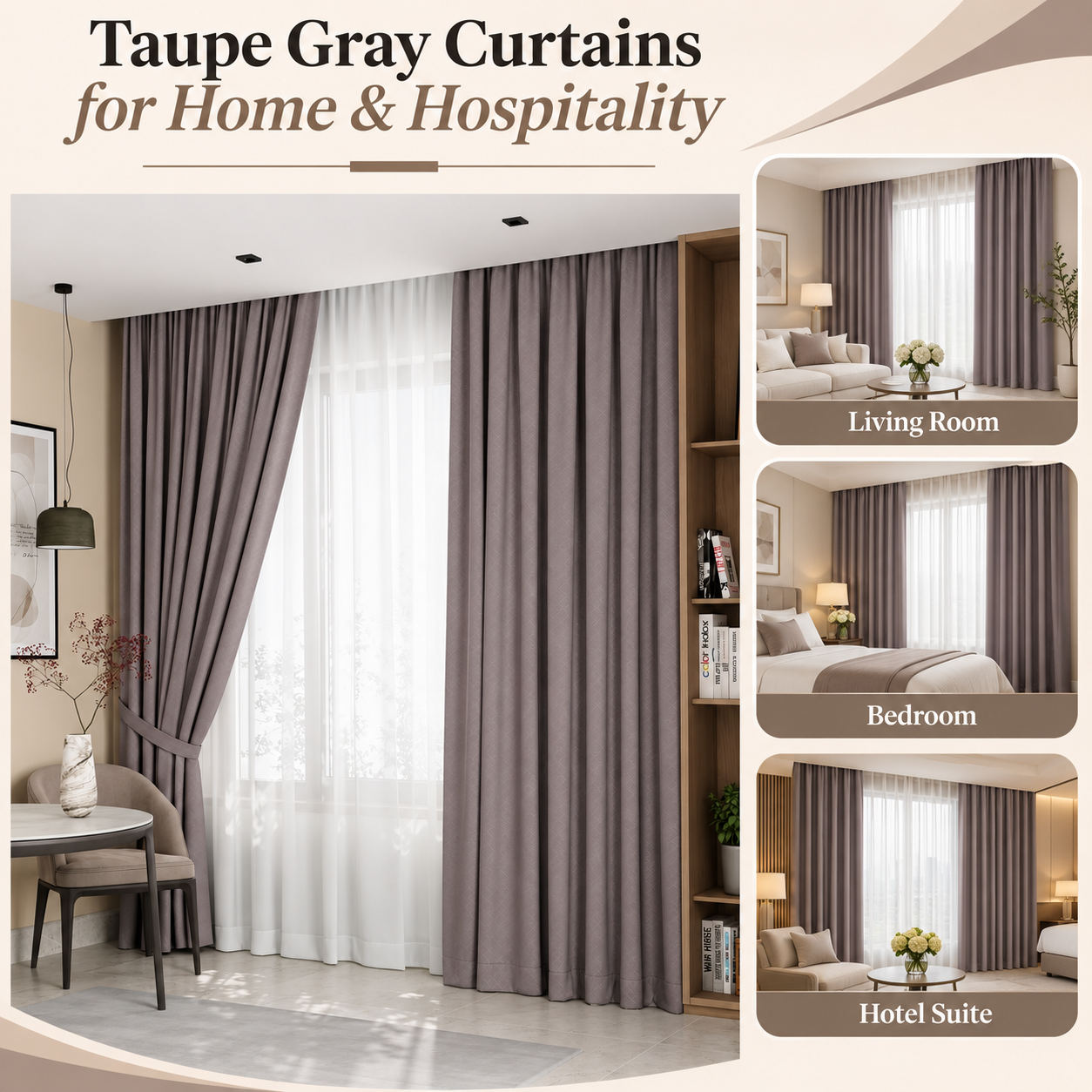
Neutral Bedroom Collections — Choose a coordinated solid shade and verify the required light reduction for the intended sleeping space.
Contemporary Living Rooms — Use continuous folds and restrained color to frame the window without competing with furniture patterns.
Residential Design Projects — Specify the finished drop, usable width and heading for the room’s installation hardware.
Home Furnishing Retail — Display full hanging panels so buyers can compare Beige, Cappuccino and Dark Grey under the same light.
E-commerce Sales — Provide texture close-ups, accurate shade photography and a clear custom-size measurement guide.
Wholesale Core Ranges — Develop repeatable neutral SKUs with approved fabric, shade and finished-size standards.
Layered Window Styling — Coordinate the curtain with separately specified sheers on suitable double hardware for flexible daylight use.
Restrained Solid Design — The absence of a motif lets the fabric surface and hanging folds define the window.
Three Neutral Shades — Beige, Cappuccino and Dark Grey support both warm and cool interior palettes.
Fine Surface Appearance — Subtle woven texture adds detail without a large decorative repeat.
Dense Polyester Direction — Fabric handle and the required light-blocking build can be reviewed together during sampling.
Custom Dimensions — Finished panel widths and drops can be planned around the intended opening.
Additional Color Discussion — Other shades can be evaluated against the buyer’s physical color standards.
Coordinated Pair Supply — Panel matching, labels and packing can be specified for a consistent two-panel retail offer.
Q1: How can buyers specify blackout performance without relying on fabric density alone?
A: Define the required light-transmission result and agree on the test method and sample conditions for the ordered fabric. Confirm whether the build is woven, coated or lined before approving claims. Evaluate the assembled panel and installed coverage separately, since seams and gaps can admit light even when the fabric itself performs well.
Q2: What is needed to develop another color beyond the three core neutrals?
A: Provide a physical shade standard and the intended market presentation, then review a lab dip or appropriate development sample. Assess the approved color on the selected fabric build because texture and backing can change its appearance. Feasibility, minimum quantities and timing depend on the fabric and dyeing route and should be quoted individually.
Q3: How should Beige and Cappuccino be differentiated consistently in a retail range?
A: Keep separate physical standards and product codes for the two shades, and photograph them under the same lighting. Evaluate both flat swatches and hanging folds so shade depth is not confused with shadow. Agree on acceptable lot variation and check labels during packing to avoid mixing closely related neutral panels.
Q4: Which measurements are essential when quoting custom curtain widths?
A: State whether the requested width is the flat panel width or the usable width after the heading is gathered. Provide the rod or track span, desired fullness, overlap and side returns where relevant. Confirm how these allowances are distributed between two panels before approving the finished dimensions.
Q5: How should the heading be selected for a rod or curtain track?
A: Identify the actual hardware and intended opening method, then agree on the tape, hooks or other heading construction. Review top reinforcement, attachment positions and the length datum on a full-size sample. A gathered appearance alone does not establish that the same panel will fit every rod and track arrangement.
Q6: What should be checked when an extra-wide panel needs a joining seam?
A: Confirm available fabric width and agree on seam placement before cutting. Inspect the join hanging under side lighting, especially on plain neutrals where puckering and changes in sheen can be conspicuous. Keep the fabric orientation consistent across joined sections and approve the resulting drape before committing to bulk production.
Q7: How can laundering approval protect the panel’s drape and dimensions?
A: Trial the finished construction under the intended care routine, then measure changes in width and drop and inspect seam distortion and surface appearance. If coatings or linings are selected, assess their condition as well. Set care labels and any cutting allowances from those results rather than assuming all polyester blackout fabrics behave alike.
Q8: Which controls help two panels hang as a matched set?
A: Compare shade, fabric orientation, finished drop and heading dimensions before packing the pair. Inspect the hems together and hang a sample set to identify uneven folds or seam tension. Retain an approved finished panel and lot records so later production can be assessed for compatibility with the established range.
 EN