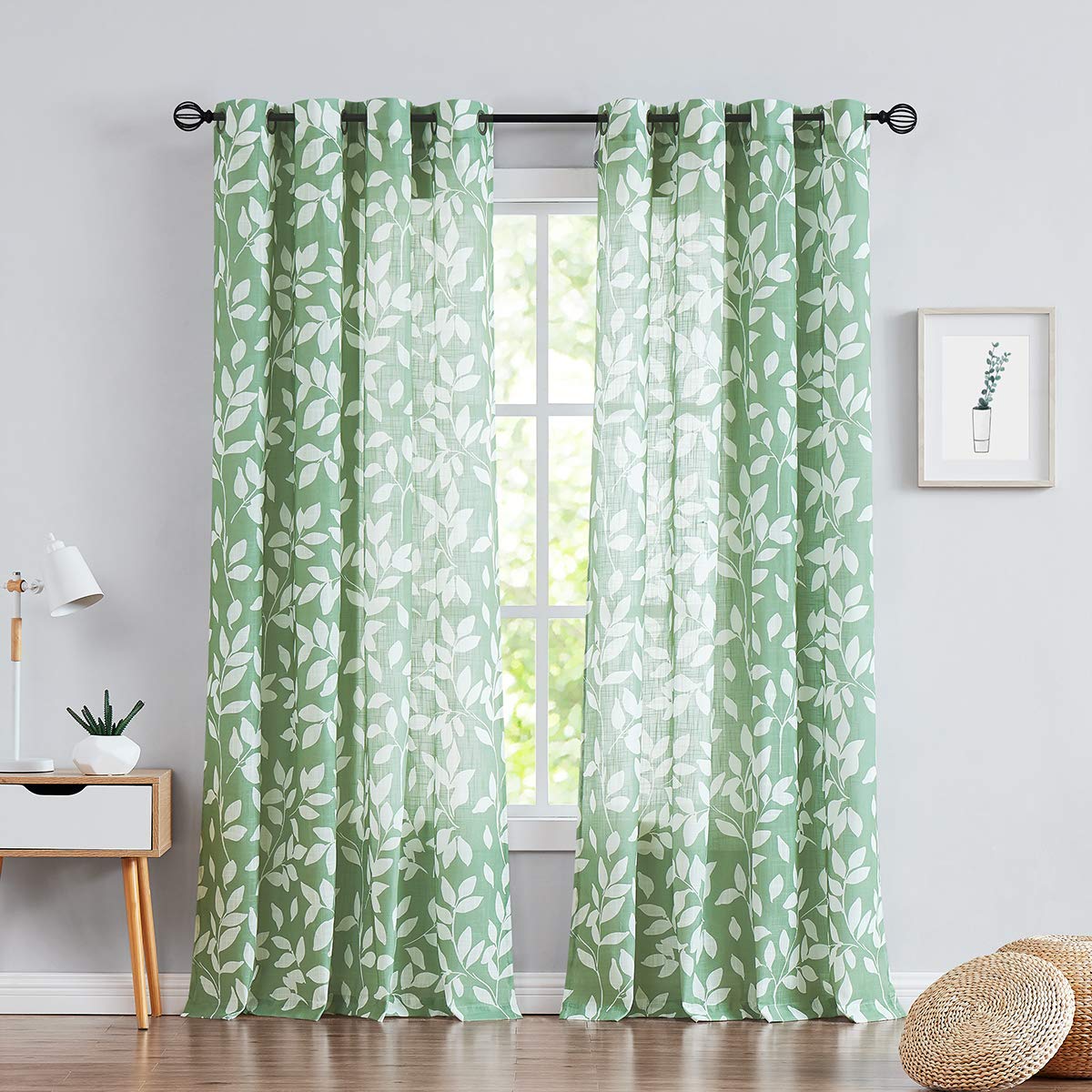
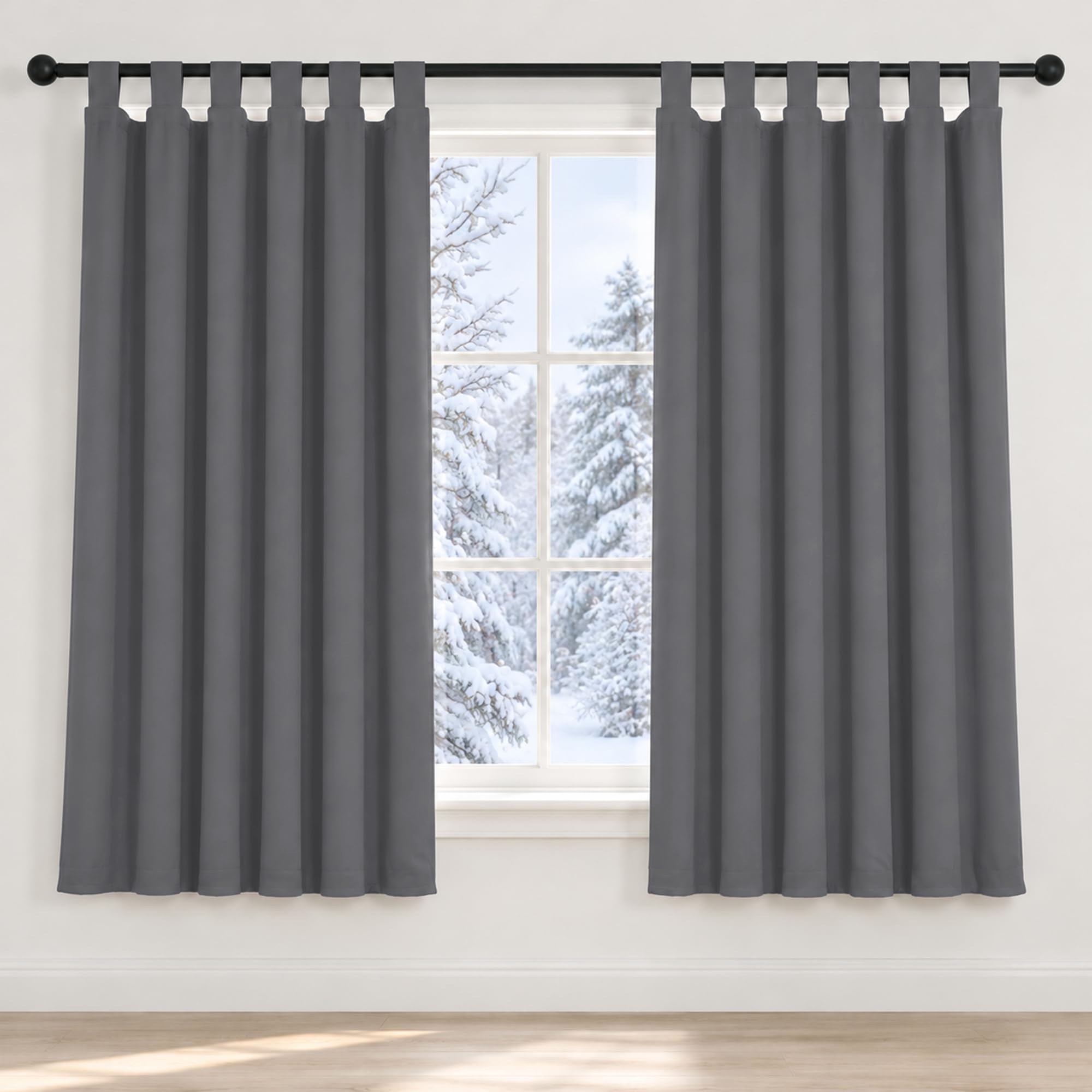
| Product Name |
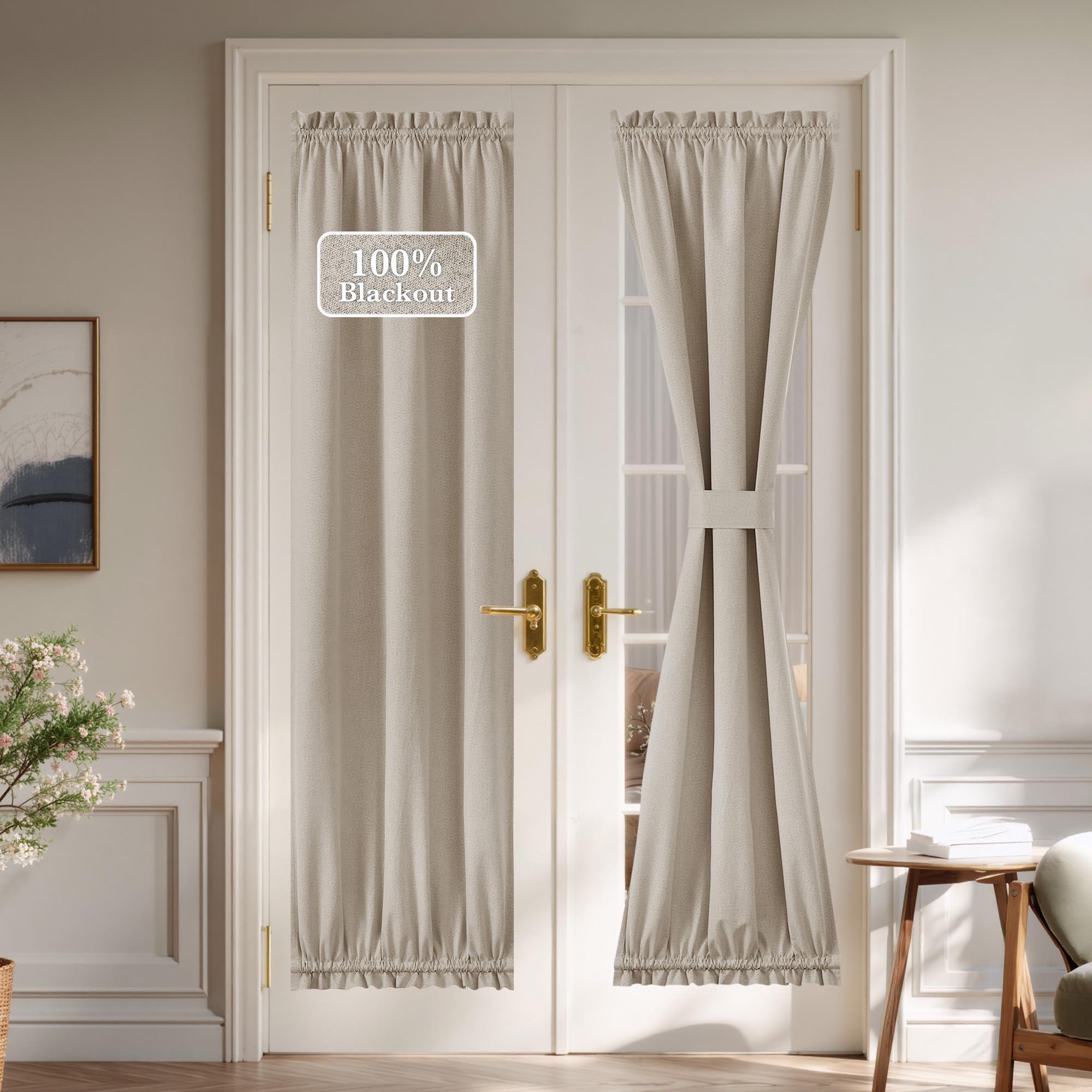
Light Beige Linen Look Blackout French Door Curtain with Dual Rod Pockets |
| Color |
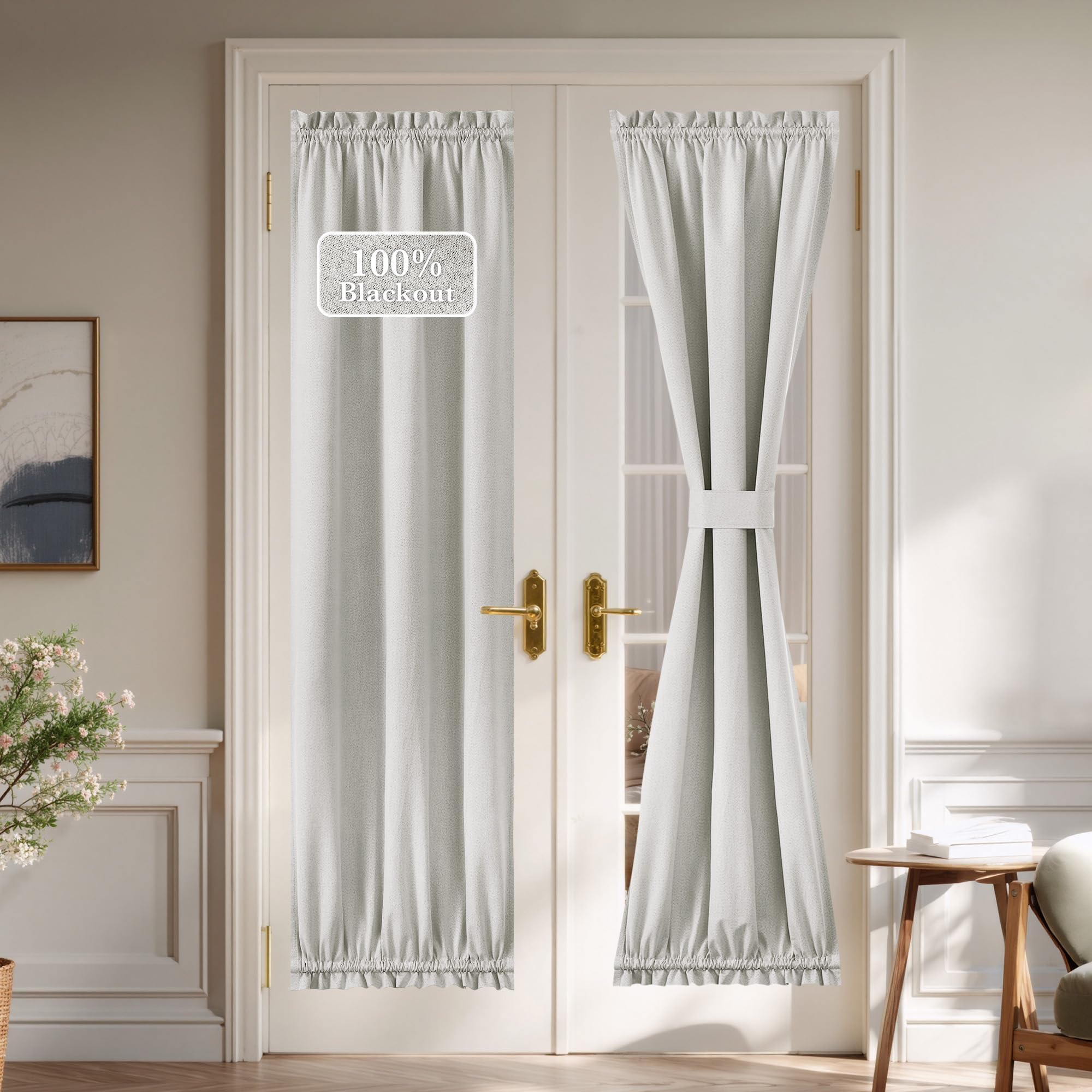
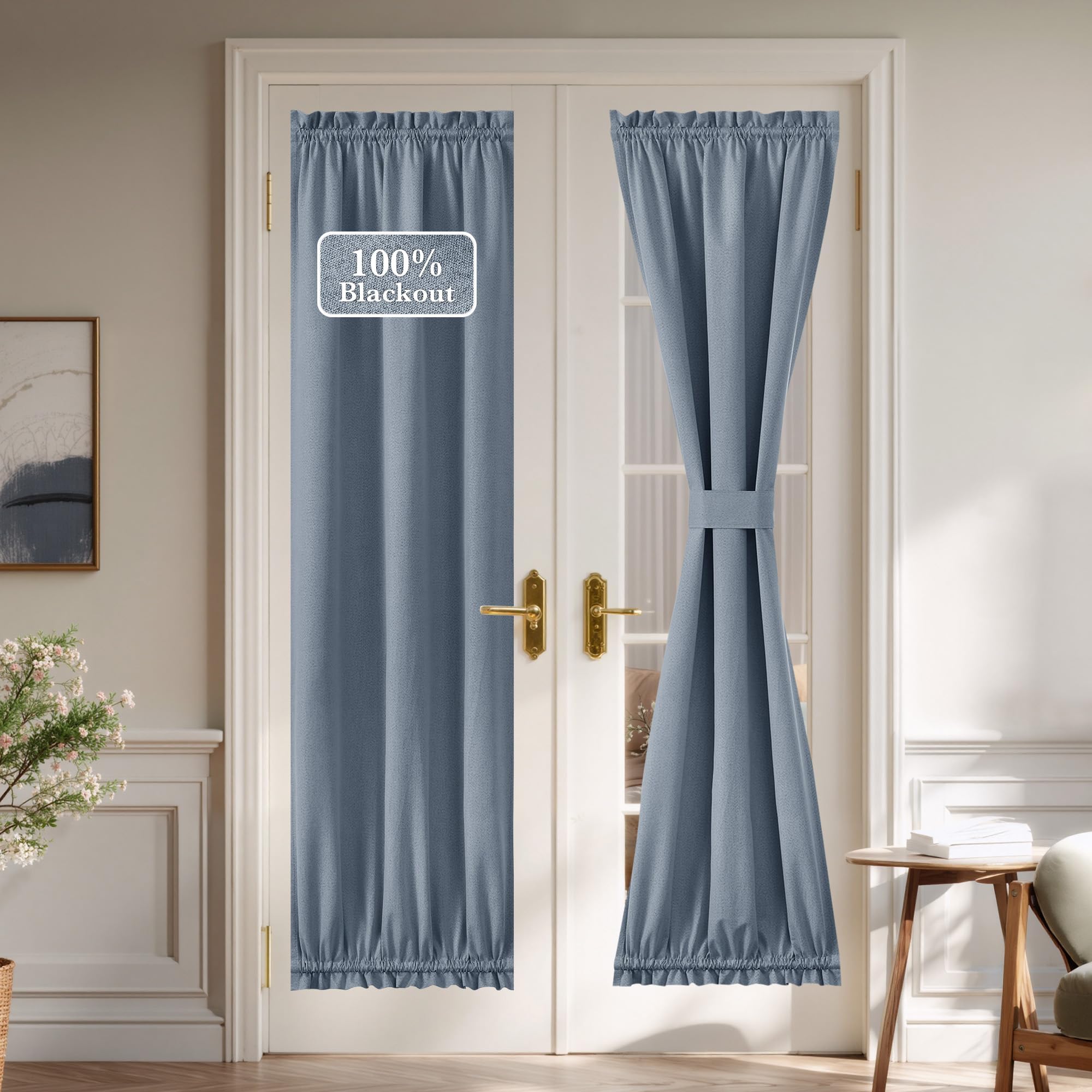
Light Beige; other colors can be discussed |
| Material |
Linen-look textile; final fiber composition and light-blocking construction subject to approval |
| Style |
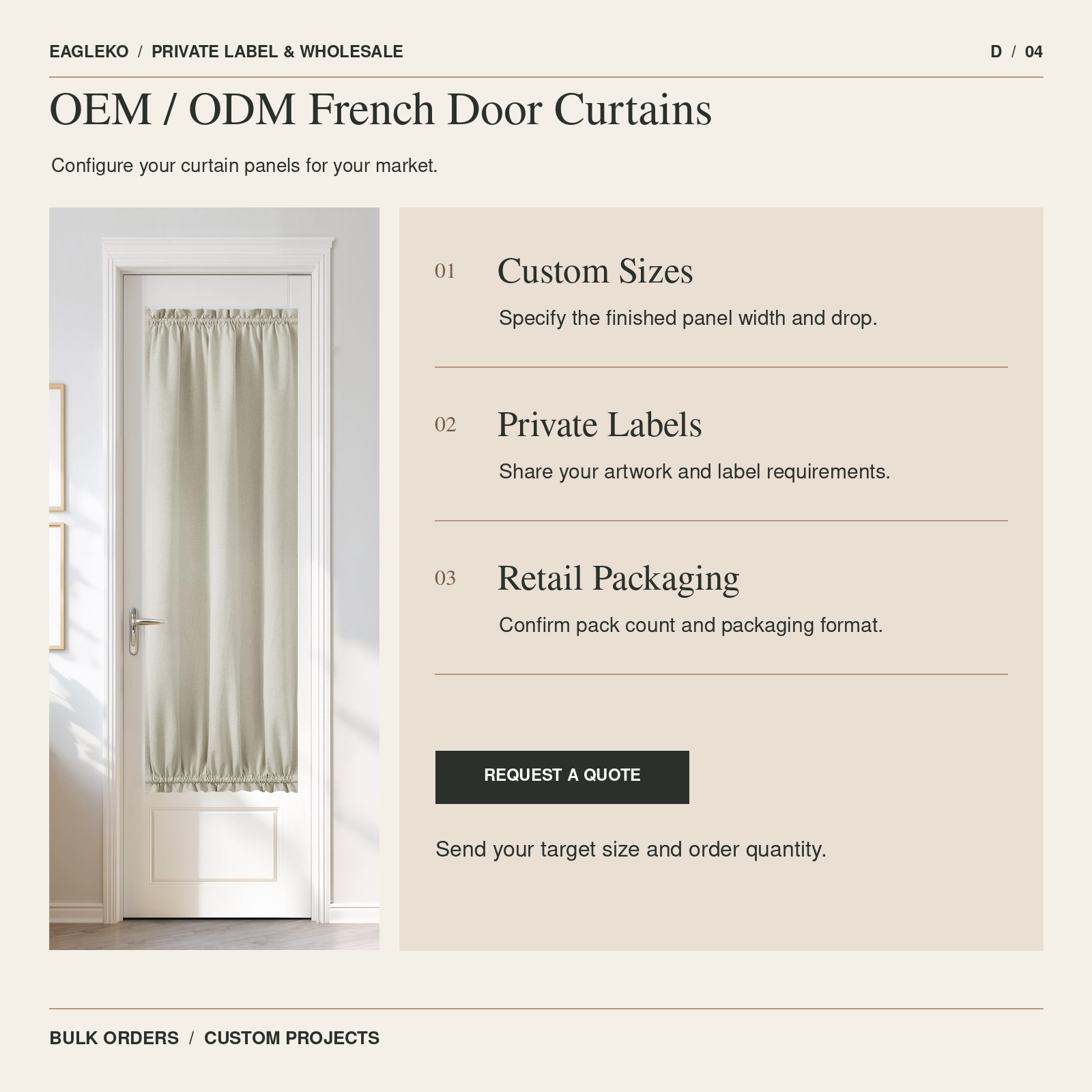
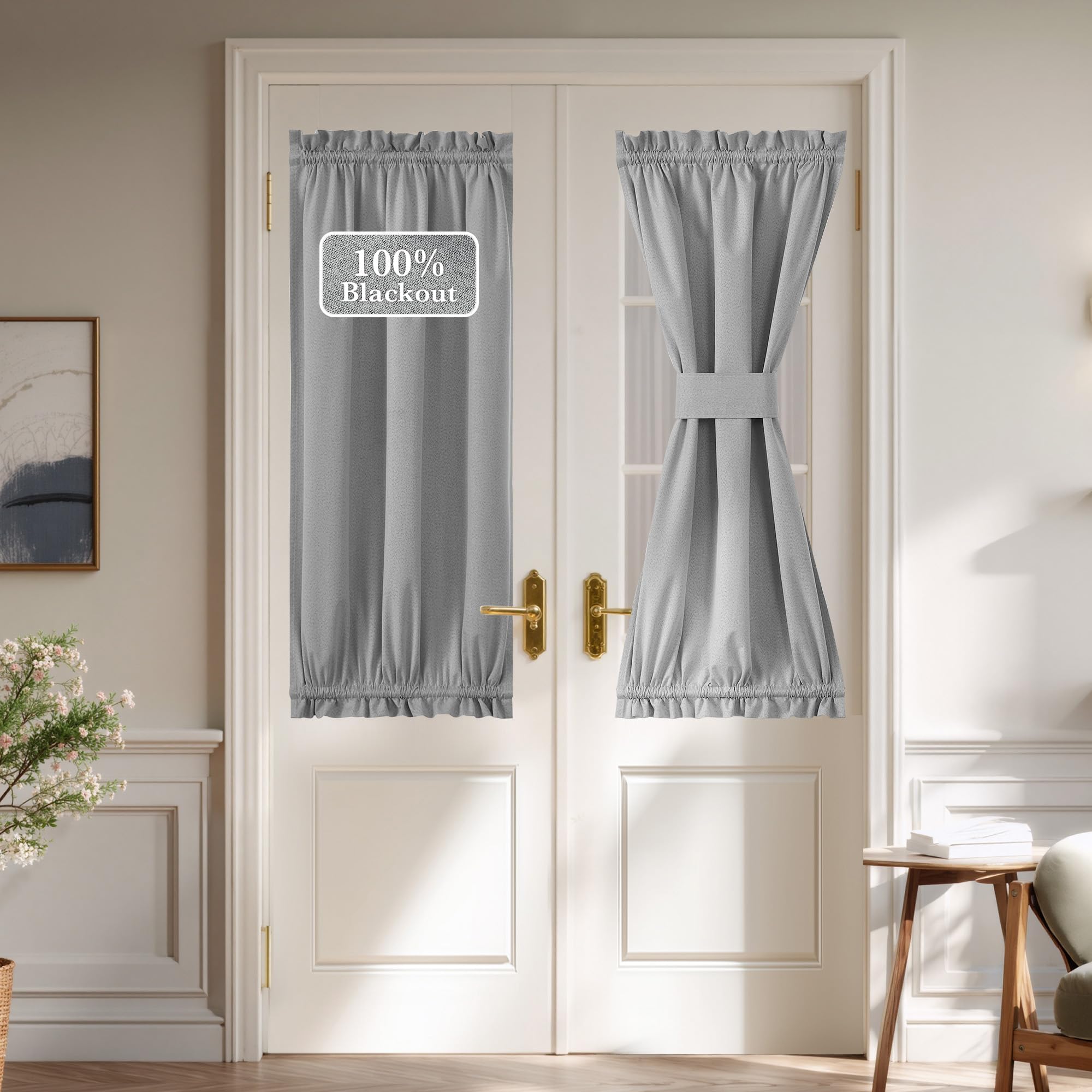
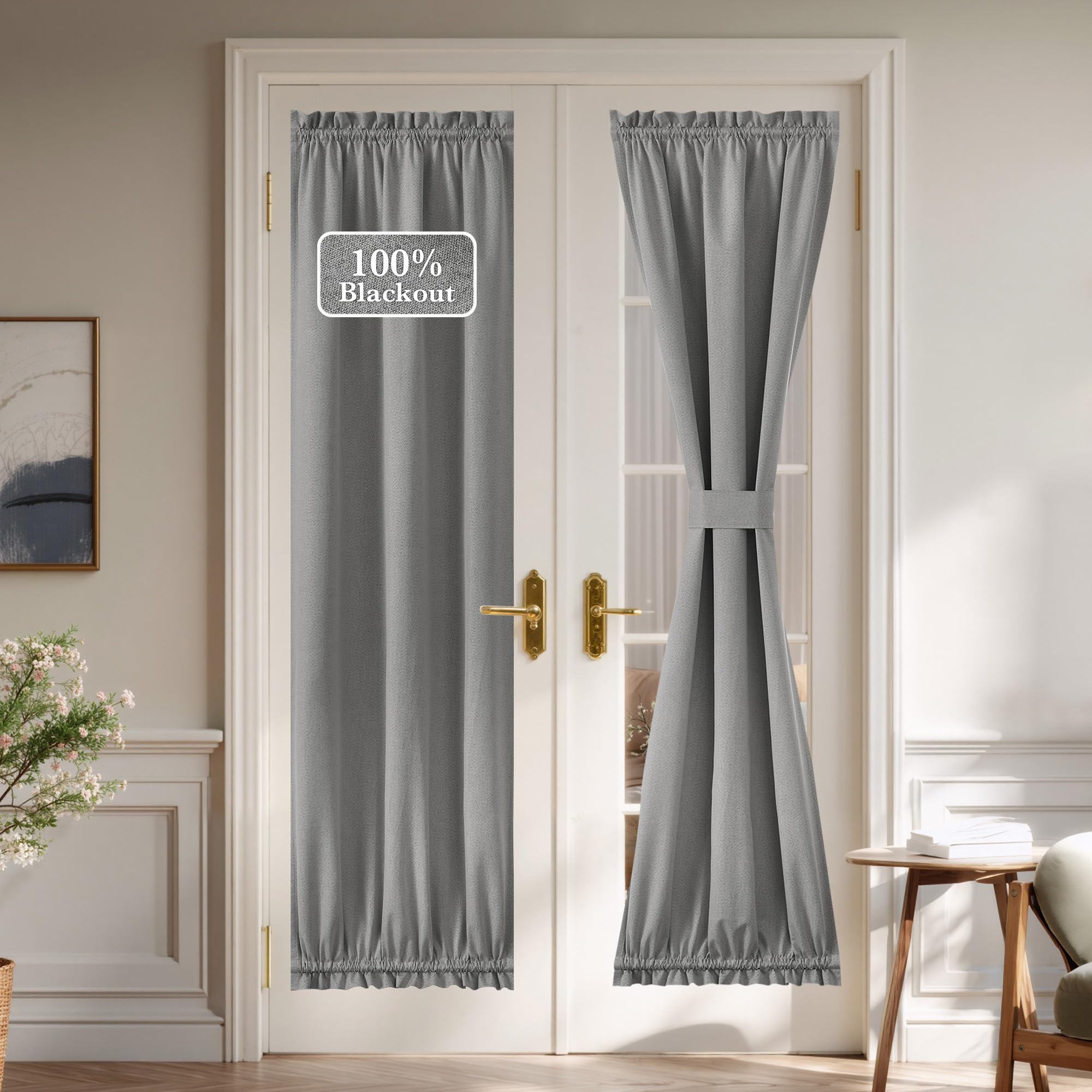
Fitted glass-door curtain with a matching tieback |
| Size |
Custom sizes available |
| Package |
One panel with matching tieback; hardware and final pack contents to be confirmed |
| Certification | OEKO-TEX Standard 100 |
| MOQ | 200 |
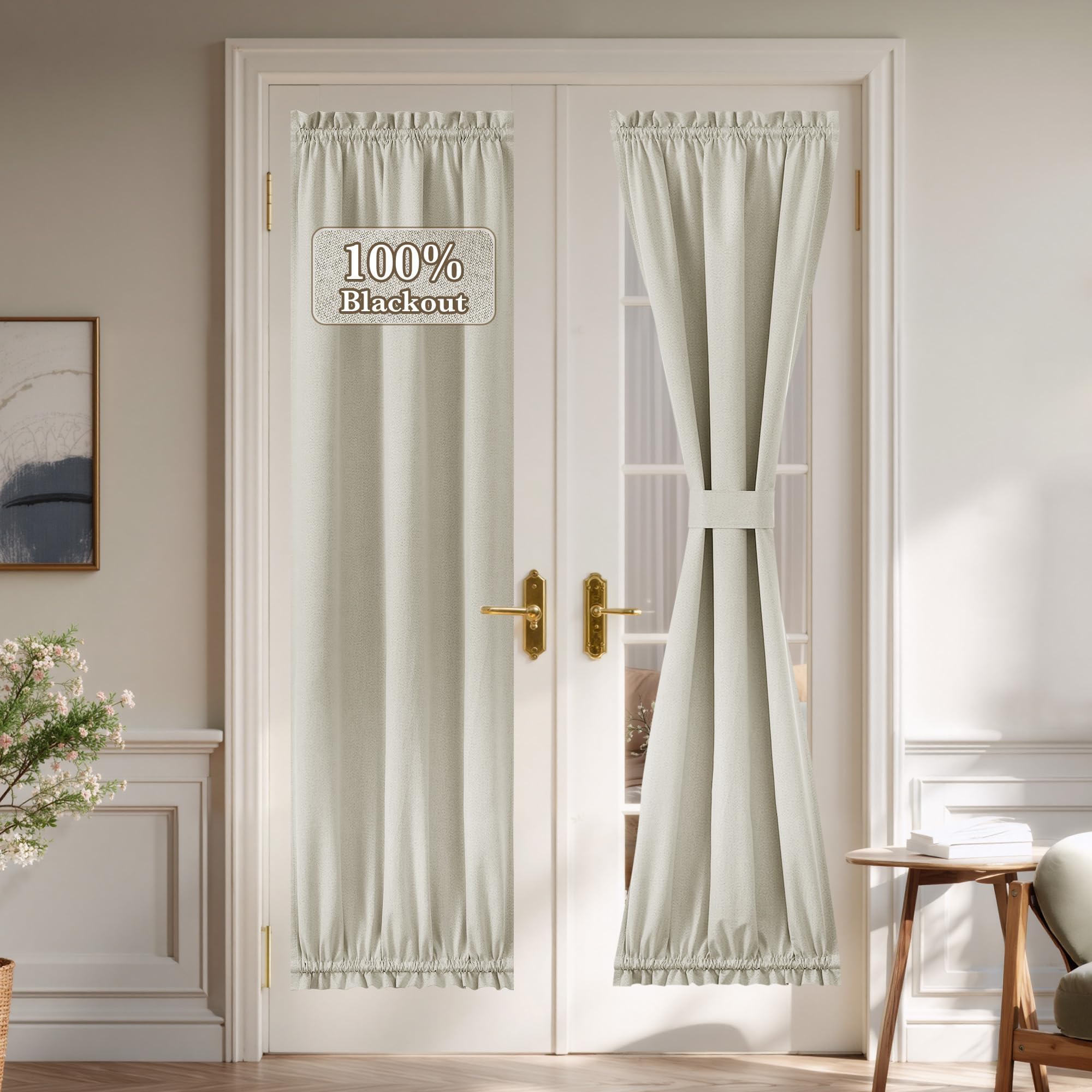
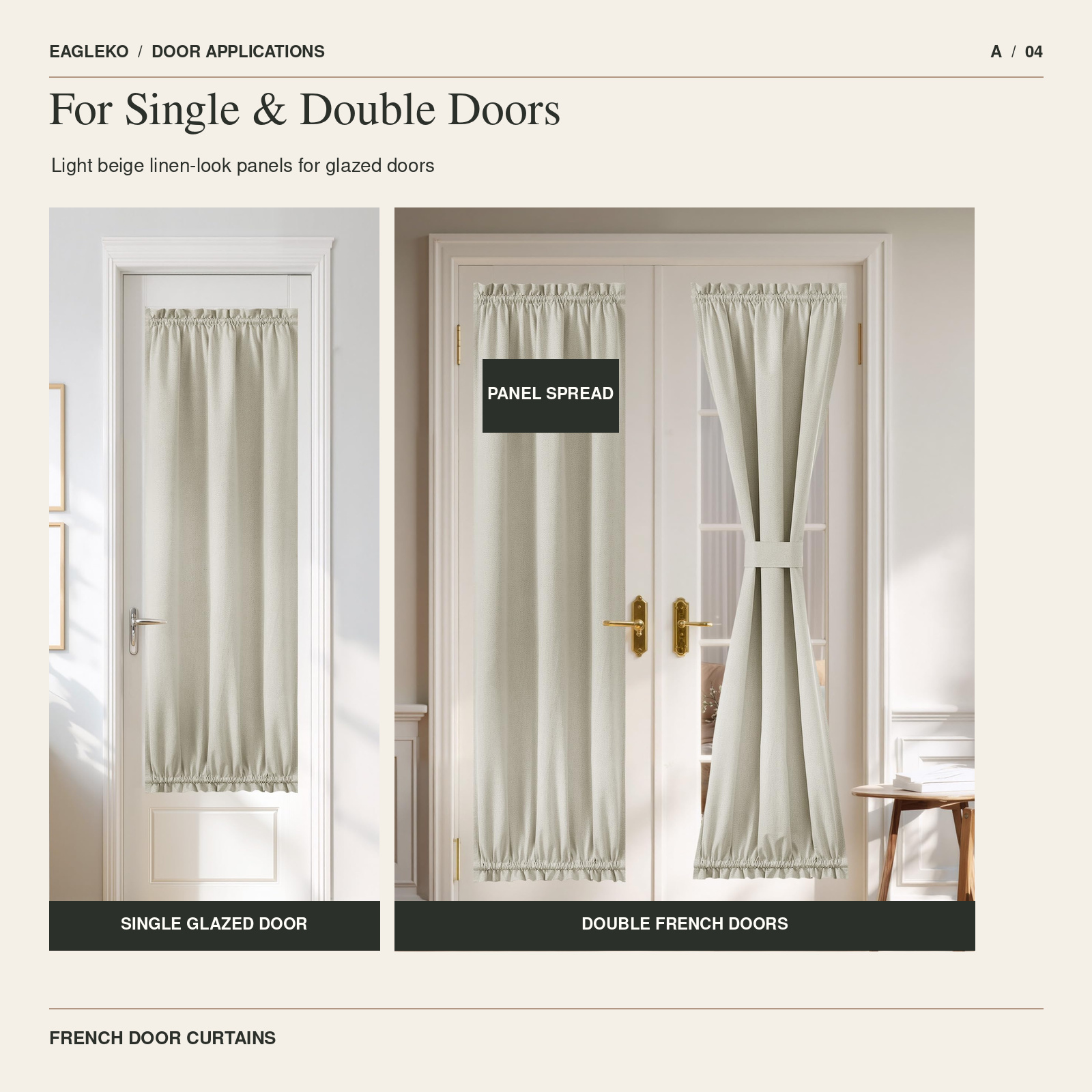
A light beige textile surface helps a glazed-door covering sit comfortably within a soft neutral interior. This linen-look panel is held between upper and lower sash rods, creating a fitted treatment with gathered fabric across the glass. A matching tieback opens the center for a view through the door. The texture gives the panel decorative interest without a printed motif, and both faces can be coordinated for visibility through the glazing. Custom sizing allows the fabric width, rod spacing and intended coverage to be developed as one fitted product.
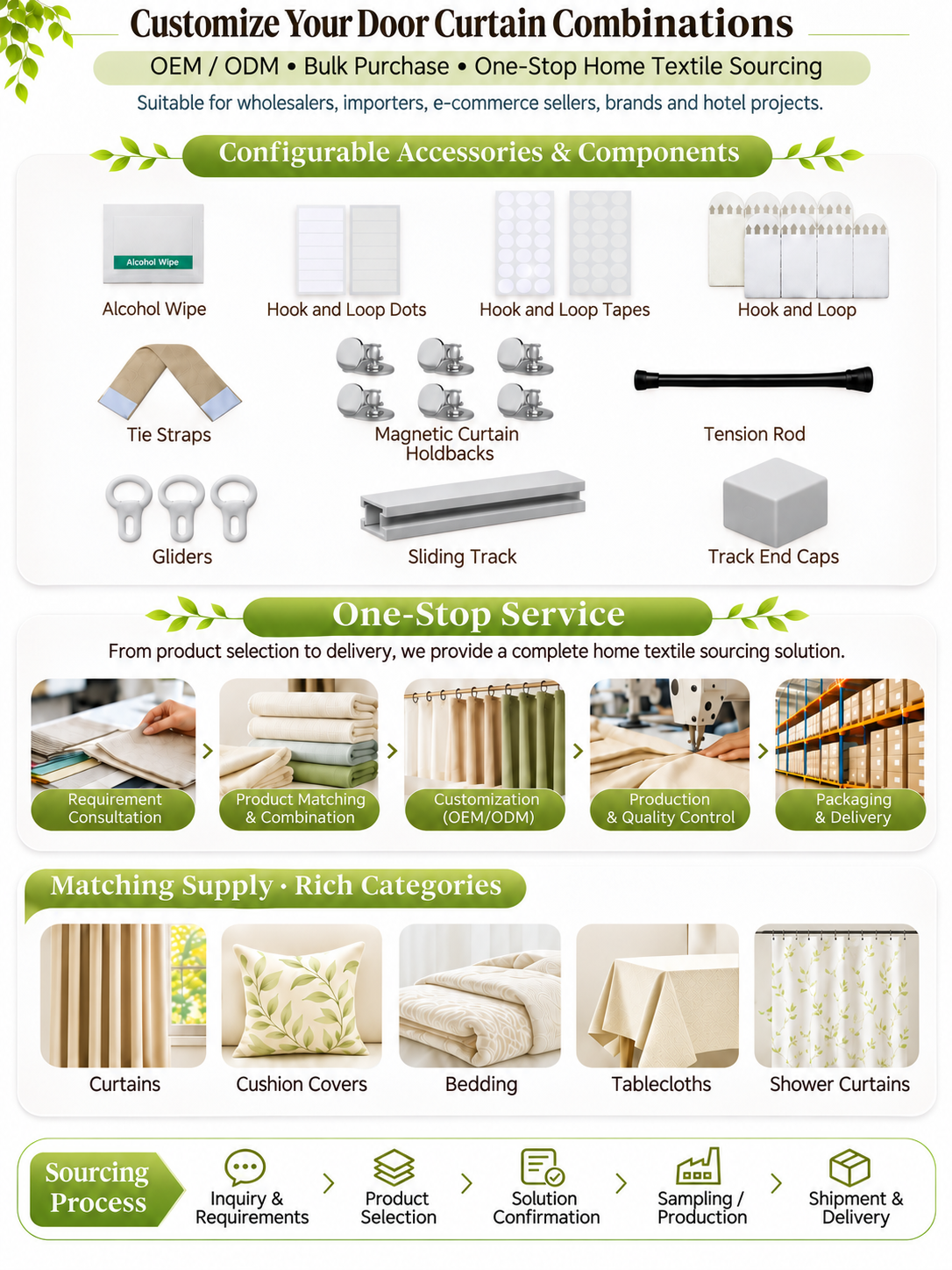
Door-curtain buyers working with Shaoxing Yingkuo Textile Co., Ltd. (EAGLEKO HOME TEXTILE) can define the fabric appearance and installation dimensions before committing to a bulk assortment. We can coordinate sampling, pocket specifications and private-label packs, with other colors available for discussion. Our one-stop sourcing advantage lets importers combine fitted door panels with matching window curtains and additional home textiles. The approved specification records fabric selection, sewing details and accessory contents so purchasing and inspection teams work from the same requirements.
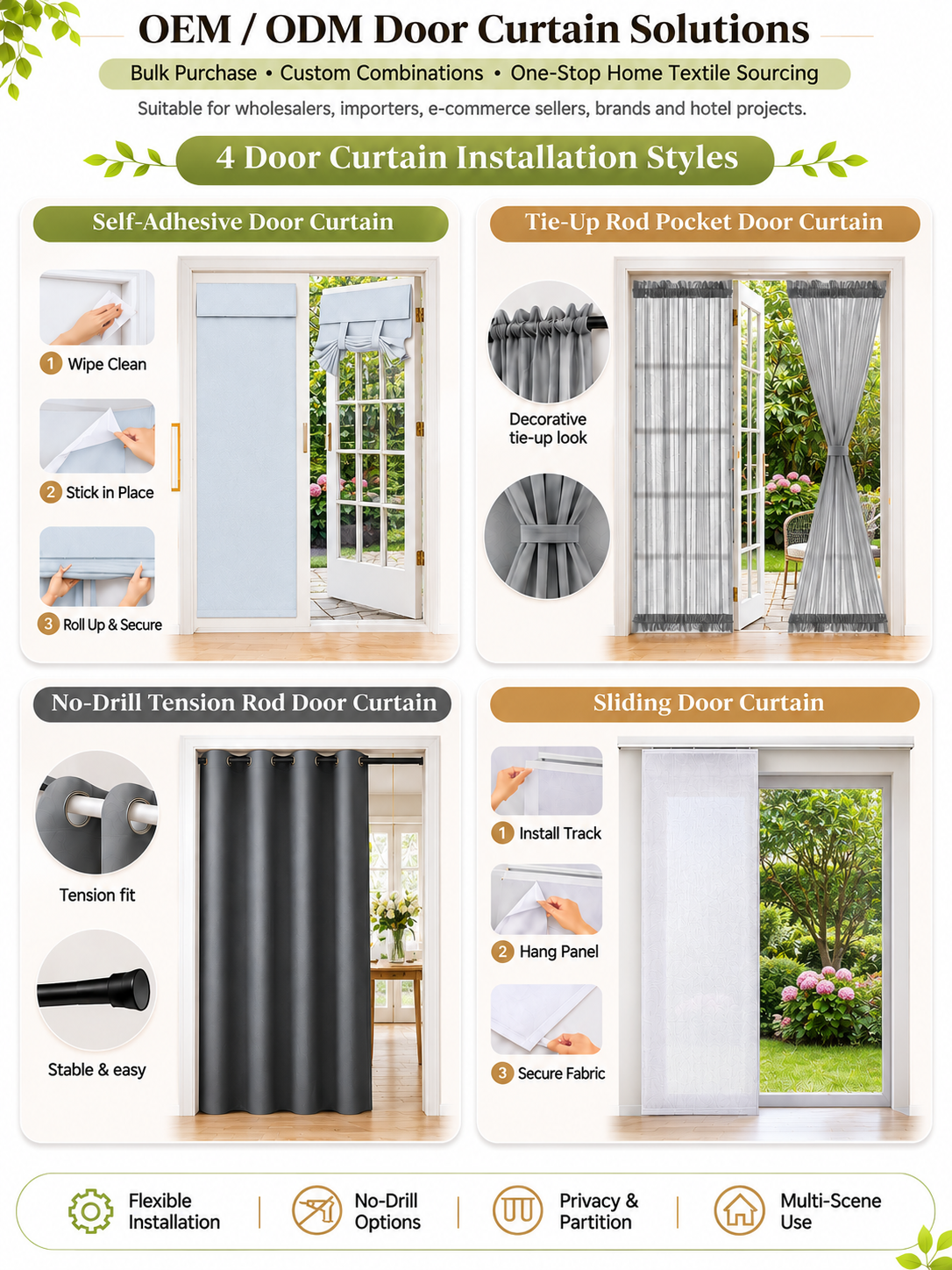
Kitchen Glass Doors — Coordinate a neutral fabric panel while checking its distance from cooking and splash areas.
French Door Pairs — Develop aligned panels and tieback positions for adjacent glazed doors.
Living Room Doorways — Carry a textured neutral palette from the main windows onto door glazing.
Home Office Interiors — Plan adjustable glass coverage while maintaining access to door hardware.
Decor Retail Collections — Display the fitted and center-gathered positions alongside compatible sash rods.
Online Curtain Assortments — Give buyers a clear measurement diagram and separate fabric dimensions from opening size.
Wholesale Interior Accessories — Combine door panels and full-length curtains into coordinated purchasing programs.
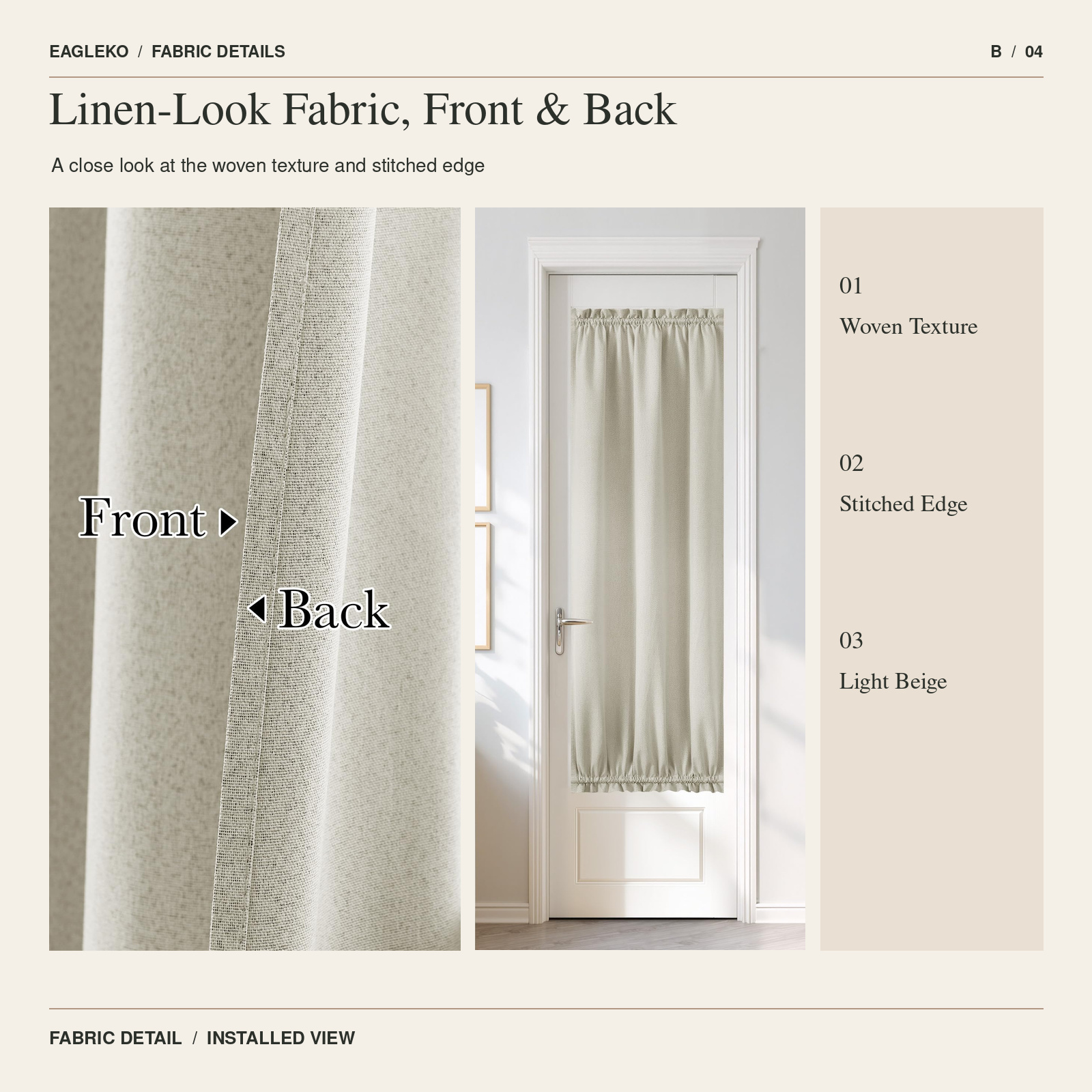
Soft Beige Palette — A light neutral shade supports coordinated interior textile ranges.
Linen Look Character — Textile texture adds surface interest without relying on a decorative print.
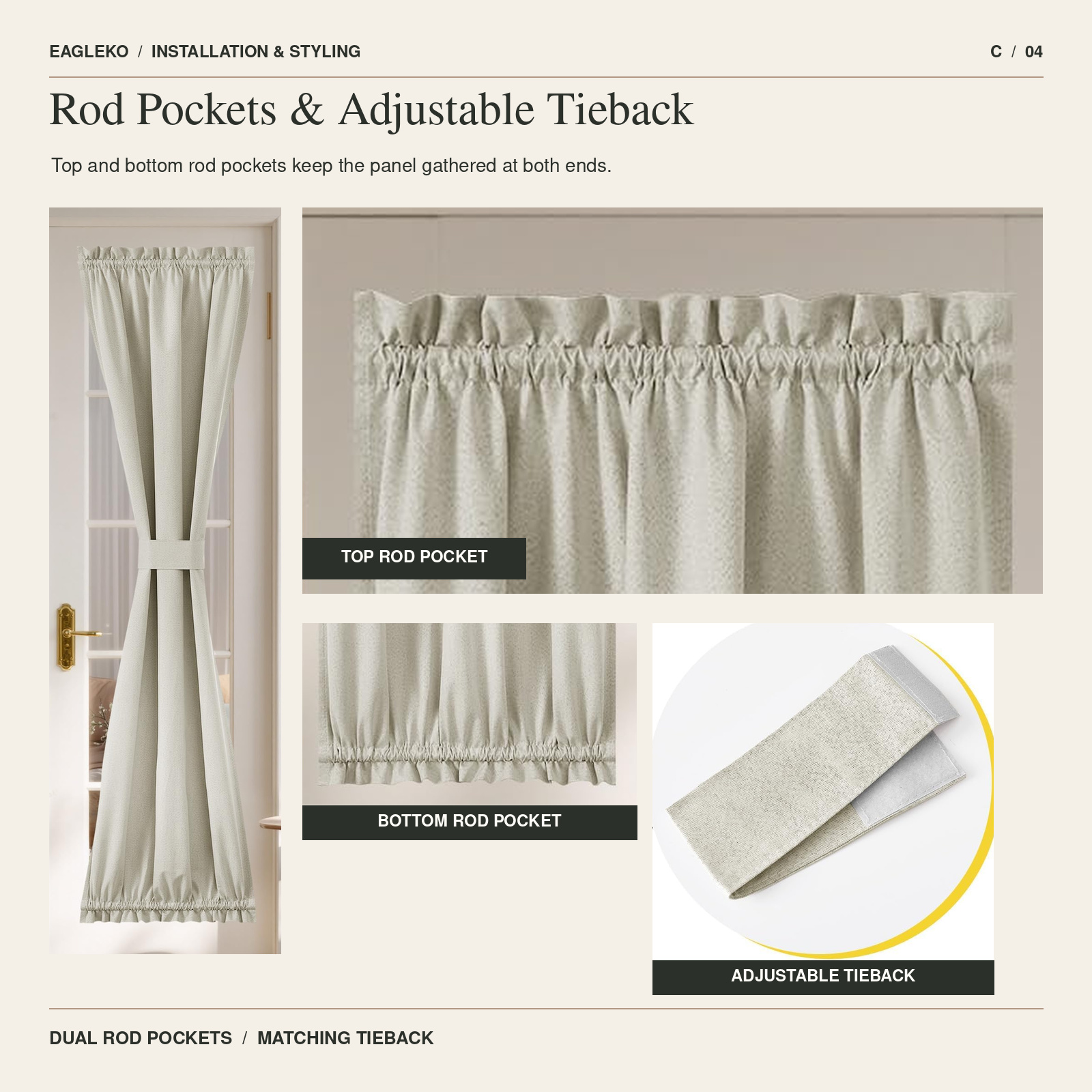
Fitted Two-End Mounting — Upper and lower pockets allow the panel to be retained close to the glazed area.
Center-Gathered Option — A matching tieback creates an adjustable opening through the fabric.
Custom Fit Development — Panel width and length can be developed around rod positions and desired fullness.
Two-Face Appearance Review — The face and reverse can be evaluated together for a door visible from both sides.
Assortment Coordination — Colors, matching tiebacks and pack formats can be discussed for wholesale ranges.
Q1: What should a technical drawing show for a fitted door panel?
A: Show the distance between the installed rods, usable mounting space and visible glass area. Mark the finished fabric edges and pocket seams separately. Agree on whether header extensions are included in the ordered length, then approve the fit on a representative door before grading the design into other sizes.
Q2: How can buyers choose fullness without crowding a narrow door?
A: Trial the selected fabric width on the intended rod span. Compare the released panel with the center gathered by its tieback, checking the amount of exposed glass and the thickness of the bundle. A heavier construction or firmer texture may need a different width allowance, so use the final fabric for the fitting decision.
Q3: How should a linen-look product be labeled for fiber content?
A: Specify composition from the approved fabric information and any testing required for the destination market. Treat linen look as an appearance description, not proof of linen content. Confirm the wording across the sewn label, packaging and online listing before bulk production so customers receive consistent information.
Q4: What should be evaluated before advertising blackout or thermal performance?
A: Agree on the required light-transmission test for the selected construction and shade. Review edge leakage on a fitted panel separately from fabric results. If thermal claims are needed, define an applicable test and supporting evidence before publication; the presence of a dense textile alone does not establish a quantified insulation benefit.
Q5: Which pocket details affect installation and removal?
A: Check the rod diameter and the largest end component that must pass through the sewn channel. Approve clearance, stitching and fabric thickness together so insertion is practical without leaving an excessively loose fit. Include a sample installation and removal in approval, especially when the curtain is intended to be taken down for laundering.
Q6: How can light beige panels be kept consistent within a coordinated order?
A: Compare production fabric with the approved shade and texture standard under agreed lighting. Review adjacent panels together to identify differences that are more visible on paired doors. Coordinate tiebacks with the panel lot and retain a finished control sample for reorders, noting any accepted variation in the textile surface.
Q7: What care checks matter when both ends of the fabric are held by rods?
A: Measure a finished sample before and after the proposed wash and drying routine, then refit it to the original rod spacing. Inspect pocket distortion, seam puckering and any change in tension. Use the findings to approve care instructions and dimensional allowances rather than assuming a standard laundry cycle will preserve the fitted length.
Q8: What should be included in a retail pack specification?
A: List the panel quantity, tieback and any supplied hardware separately. Include the size convention, compatible mounting arrangement and instructions for gathering the center. For multiple custom formats, assign distinct SKU codes and verify pocket dimensions and accessory count at packing. Order quantities, pack customization and delivery timing are confirmed through quotation.
 EN