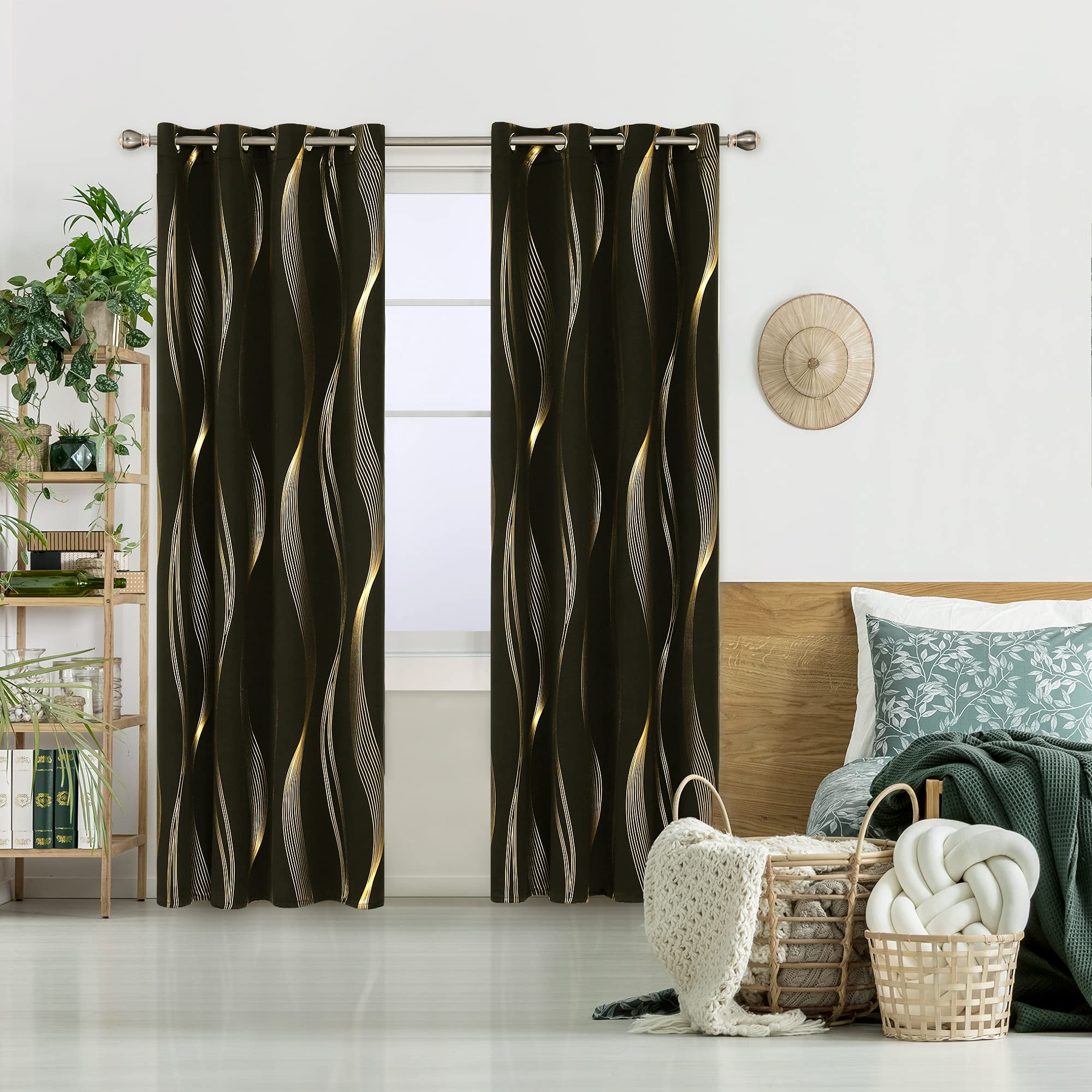
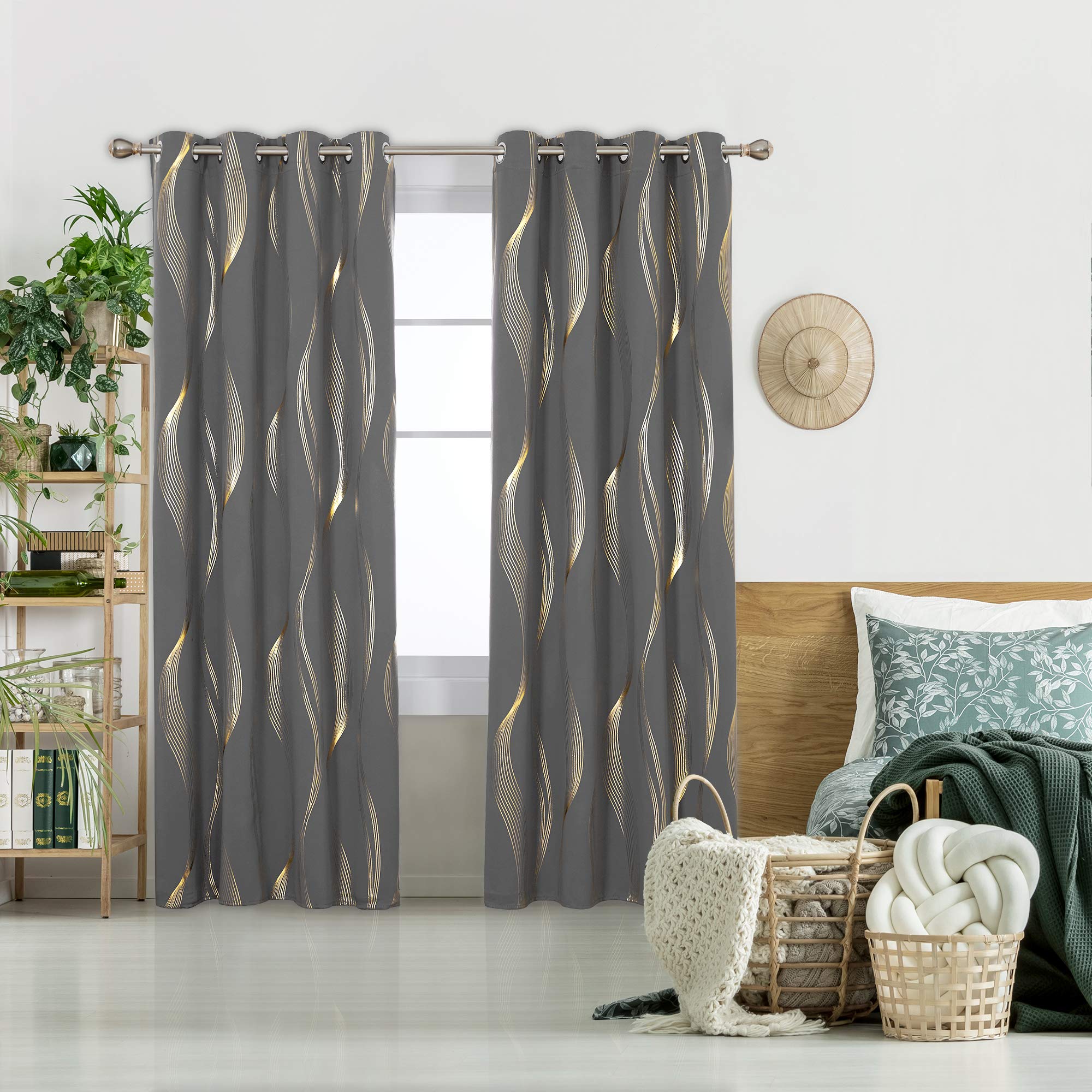
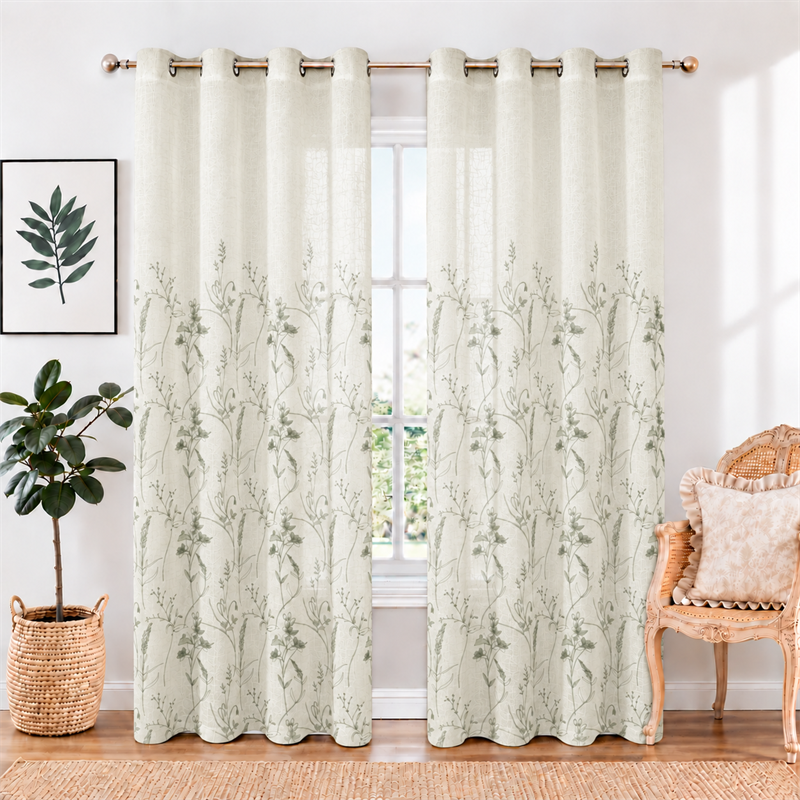
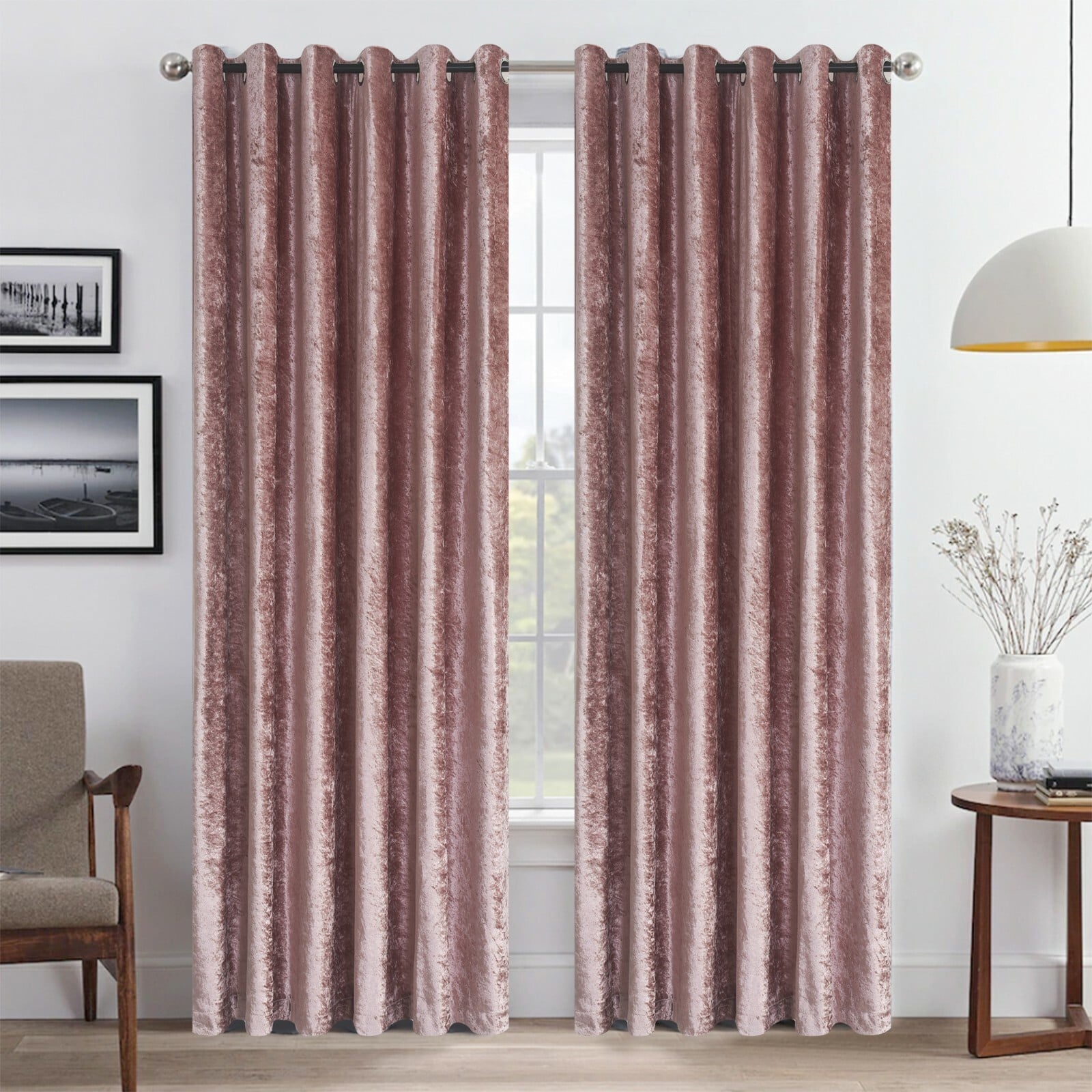
| Product Name |
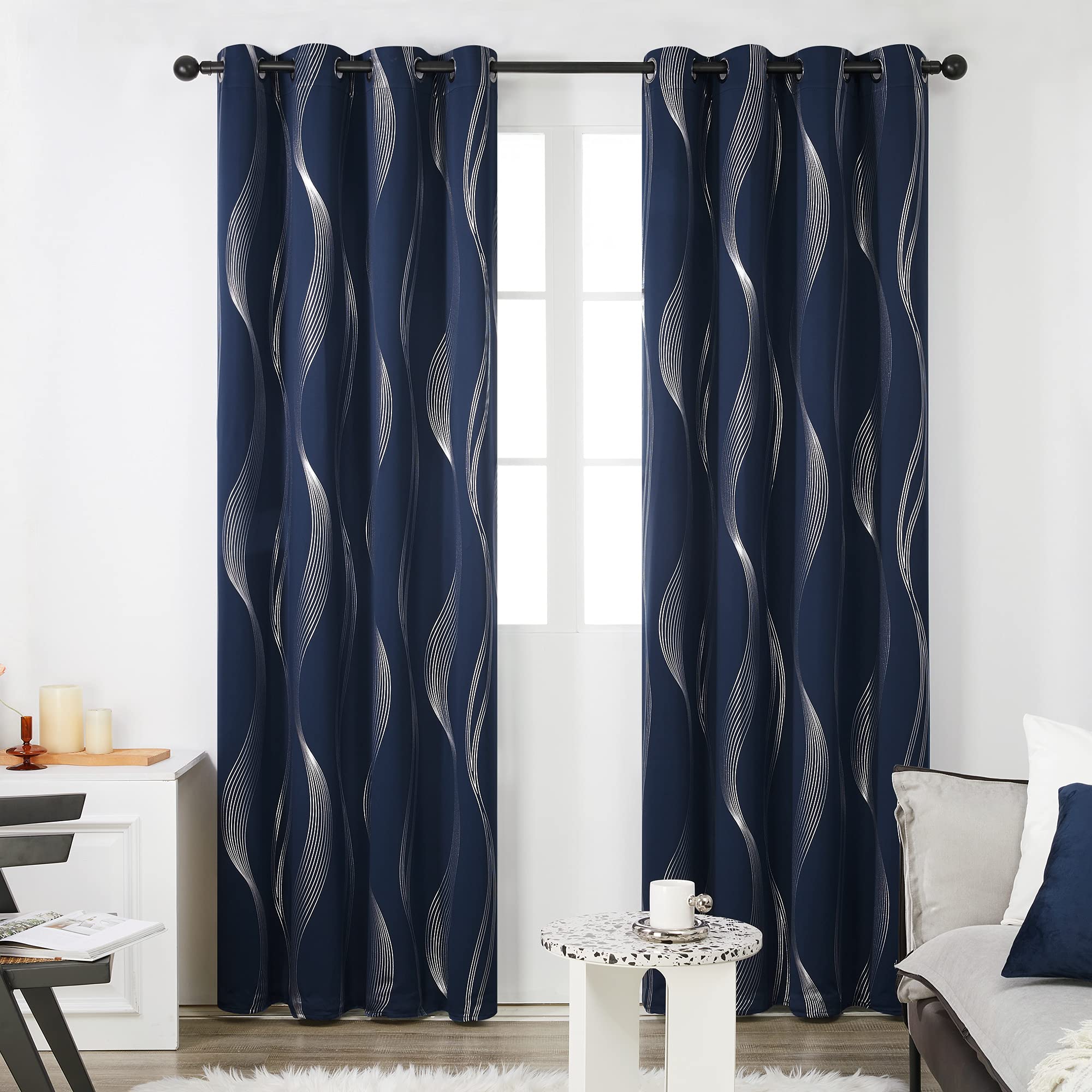
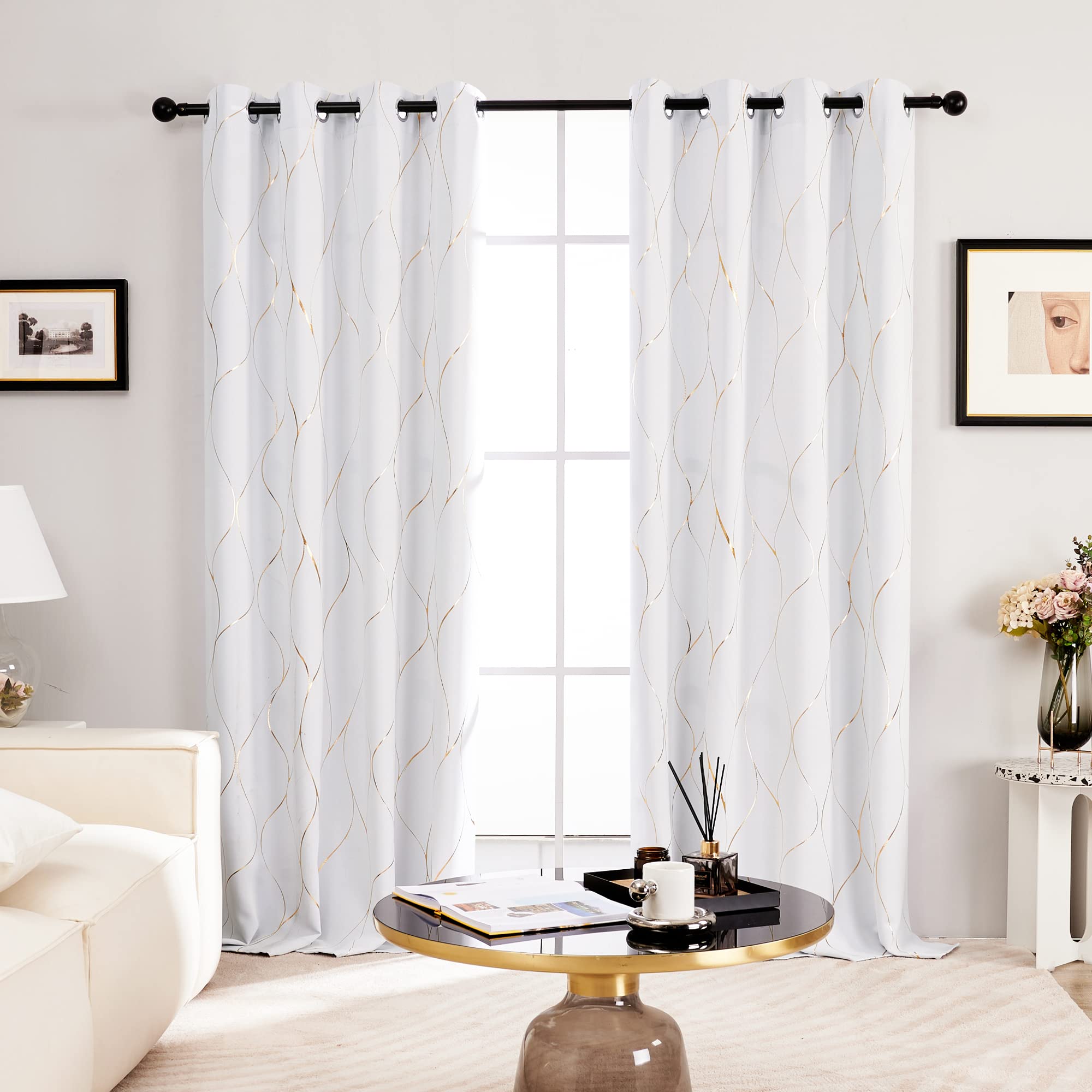
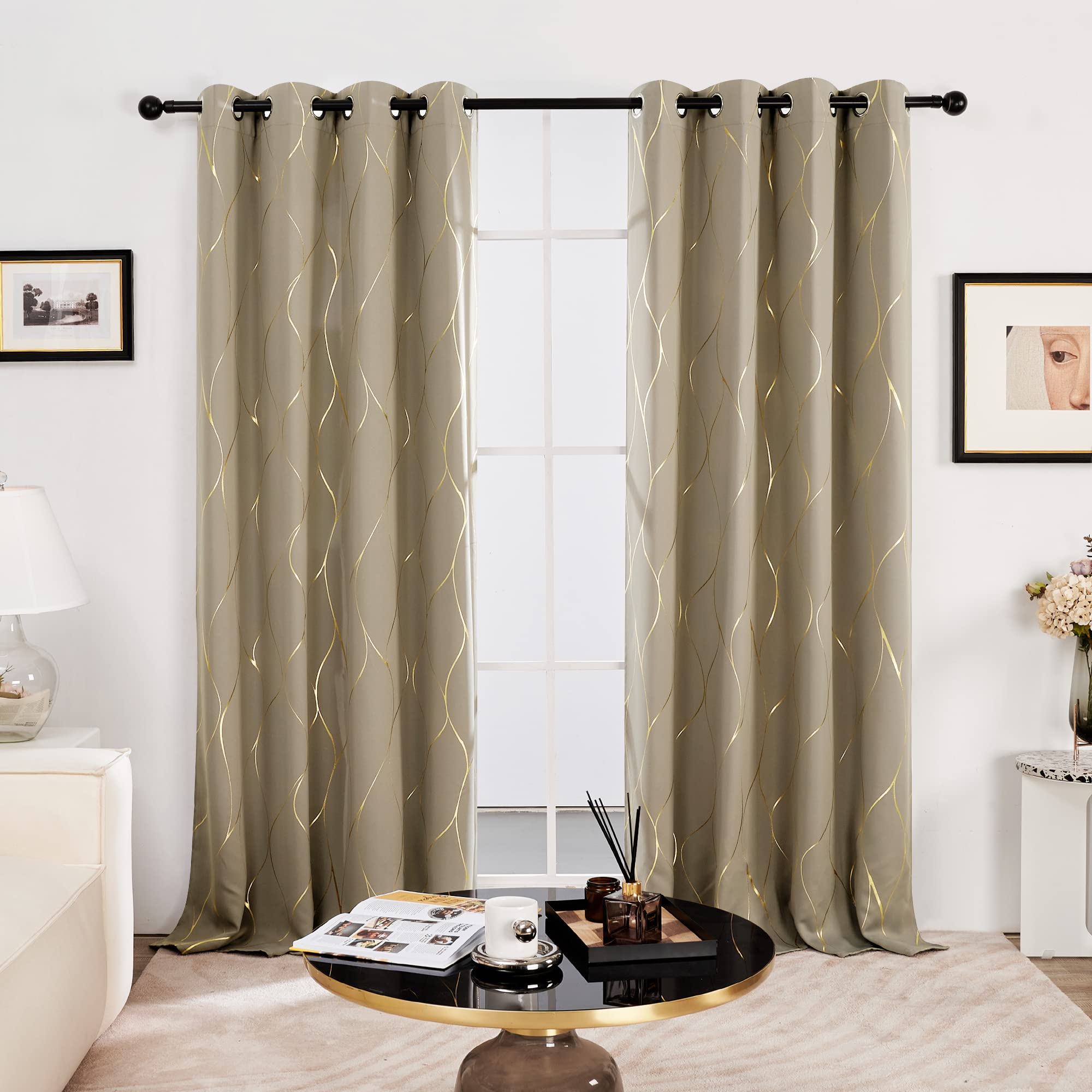
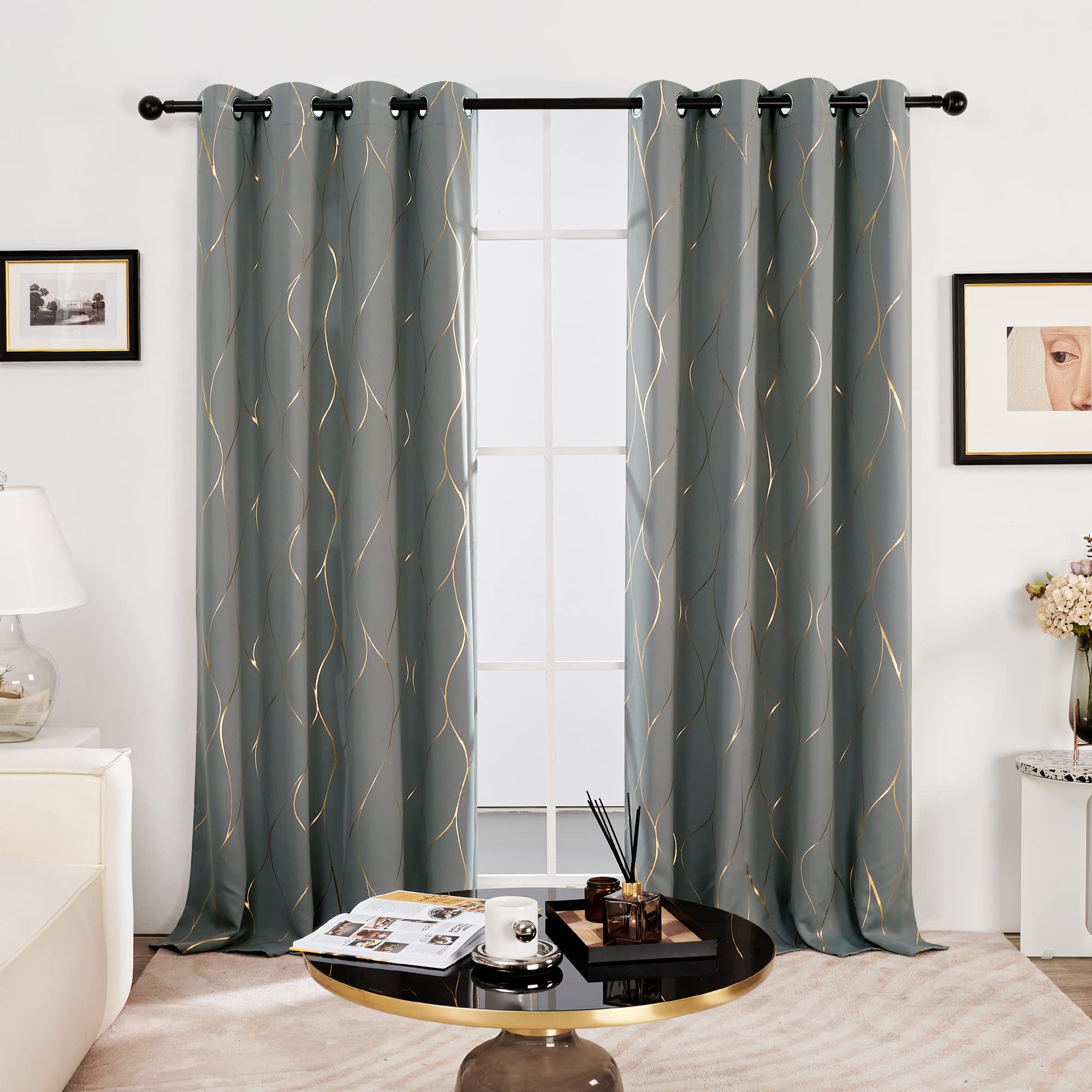
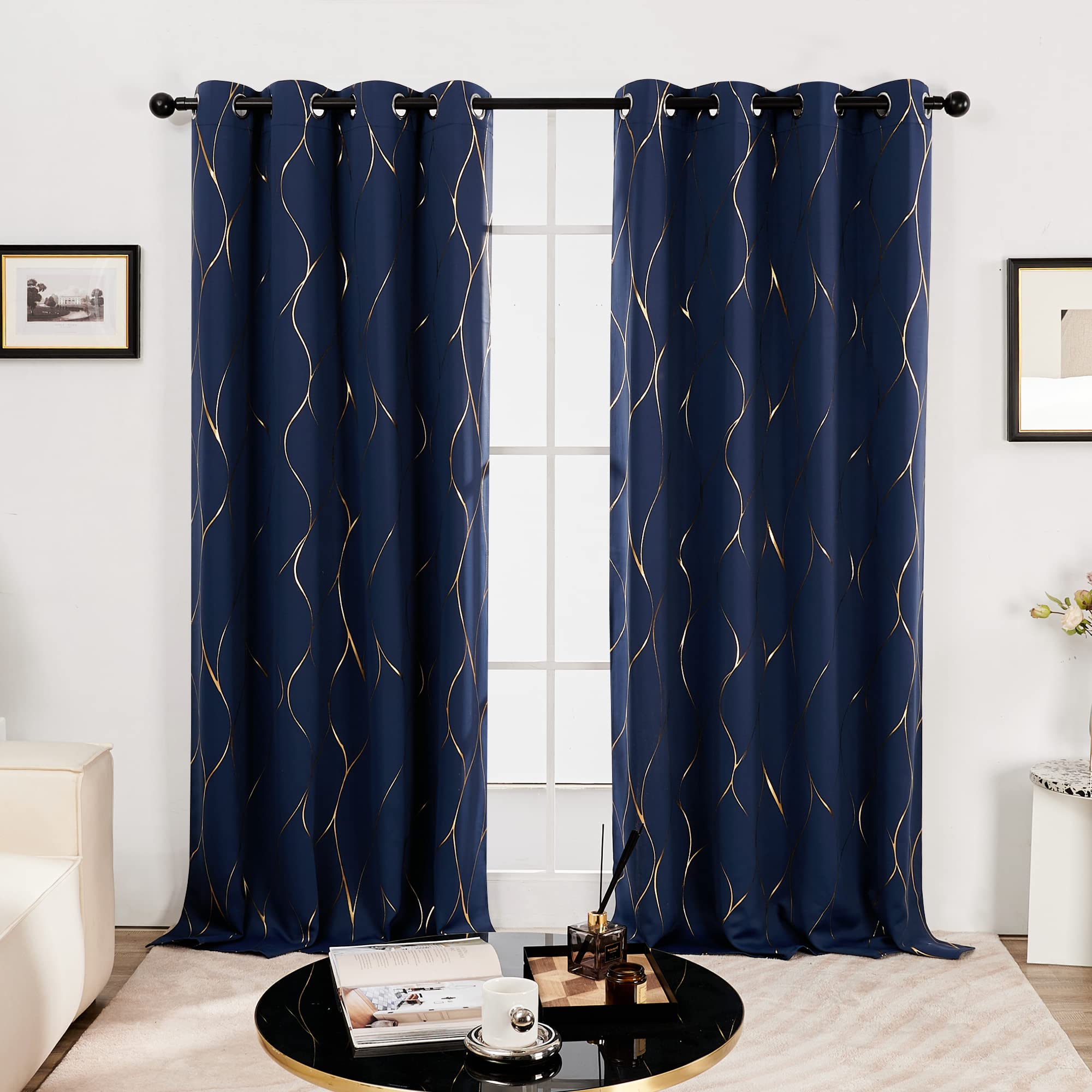
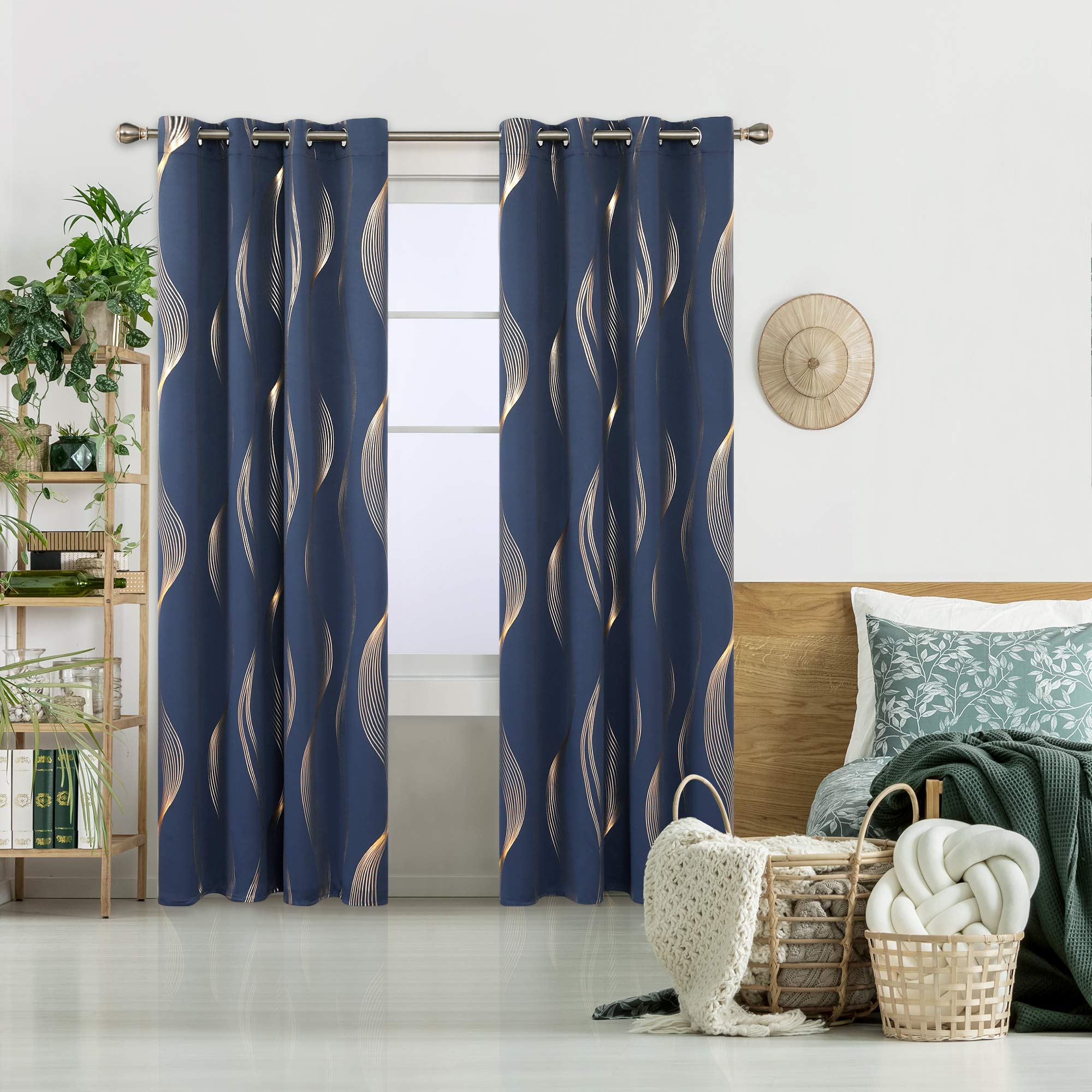
Navy Blue Silver Wave Foil Blackout Grommet Curtains |
| Color |
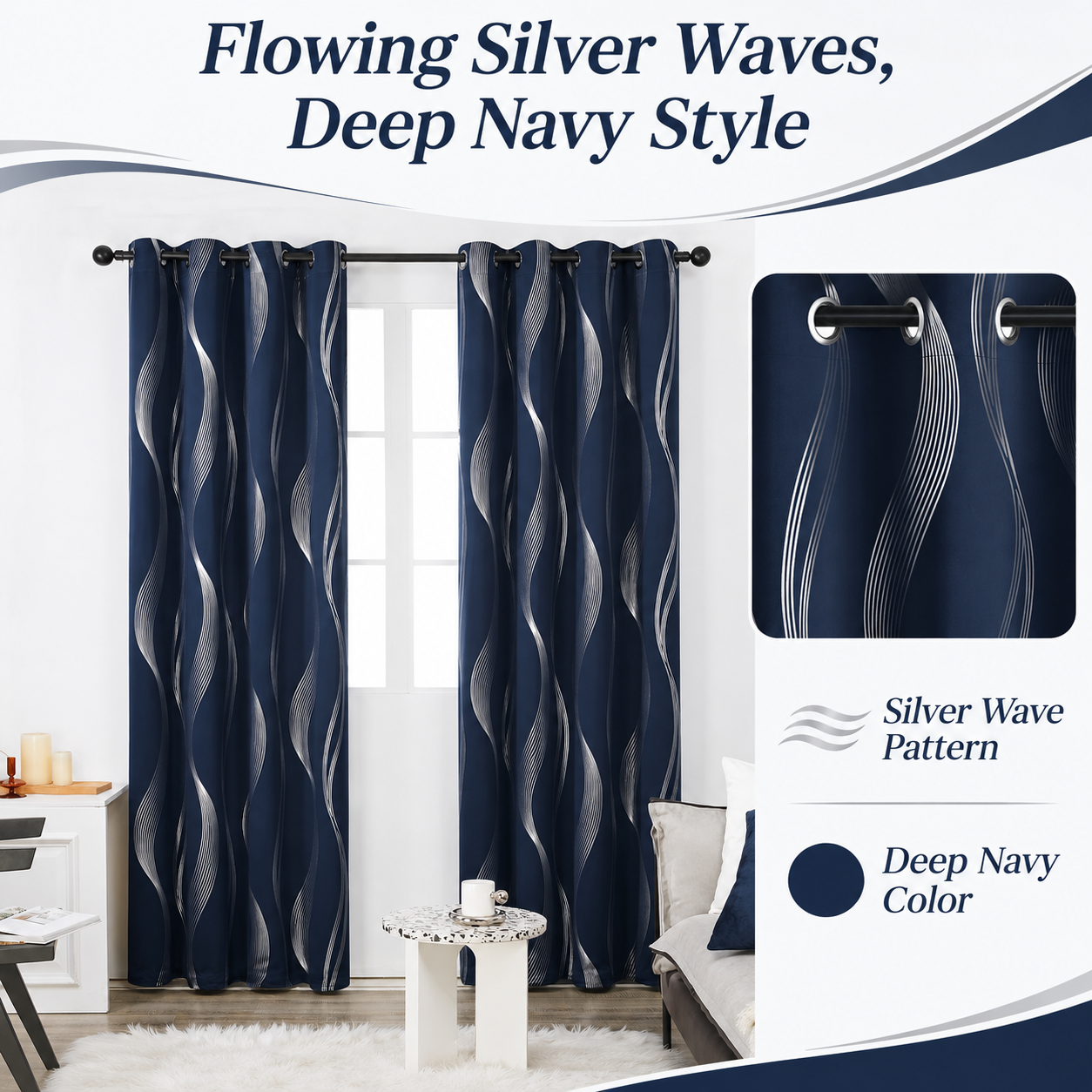
Navy blue with silver wave foil decoration; approve actual fabric and finish |
| Material |
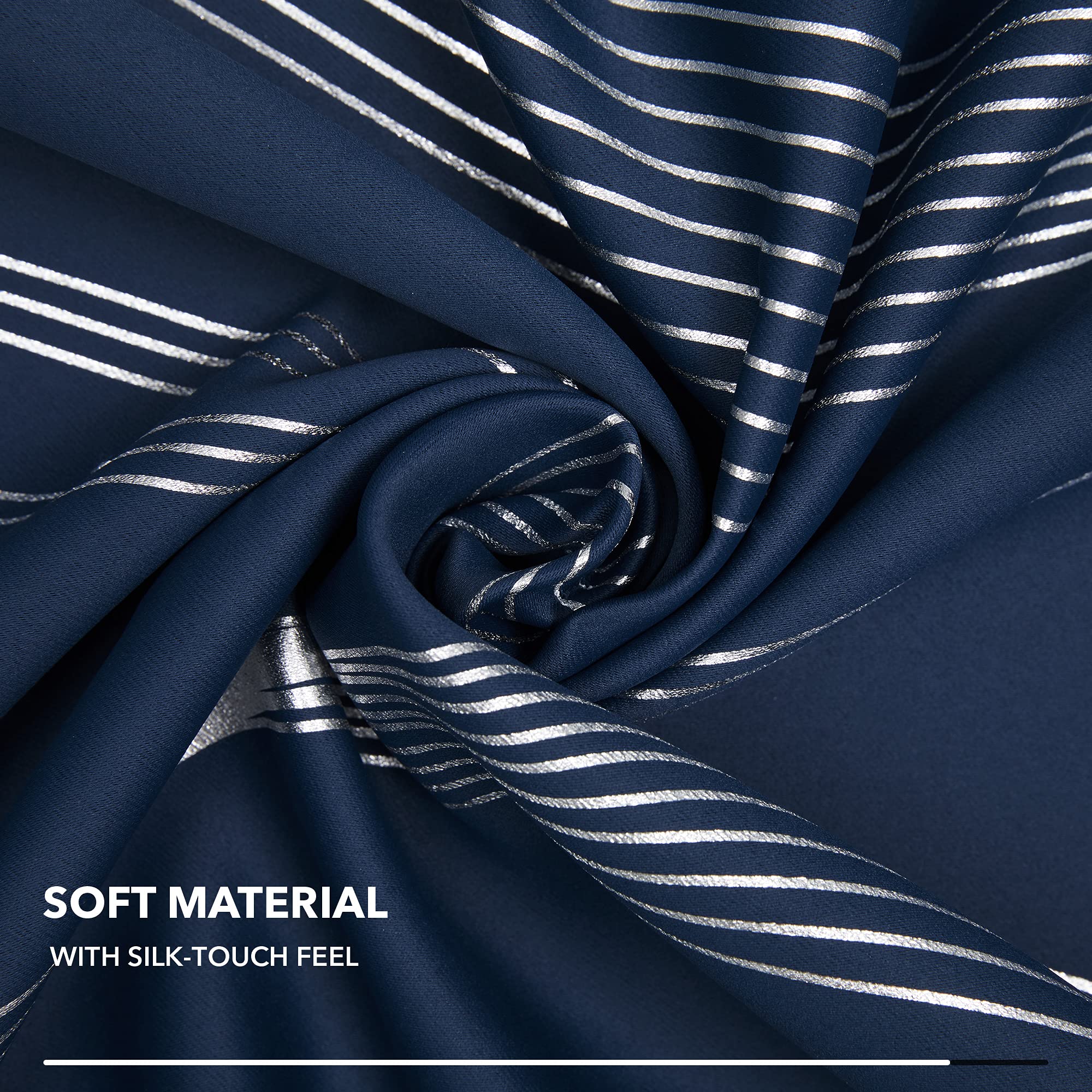
Polyester reference fabric; final composition and blackout construction to be confirmed |
| Style |
Modern Decorative / Room Darkening Window Panels |
| Size |
Reference size 52 inches wide by 84 inches long per panel; custom sizing subject to review |
| Package | 1 Shower Curtain with Snap-in Liner / Custom Packaging Available |
| Certification | OEKO-TEX Standard 100 Available |
| MOQ | 200 |
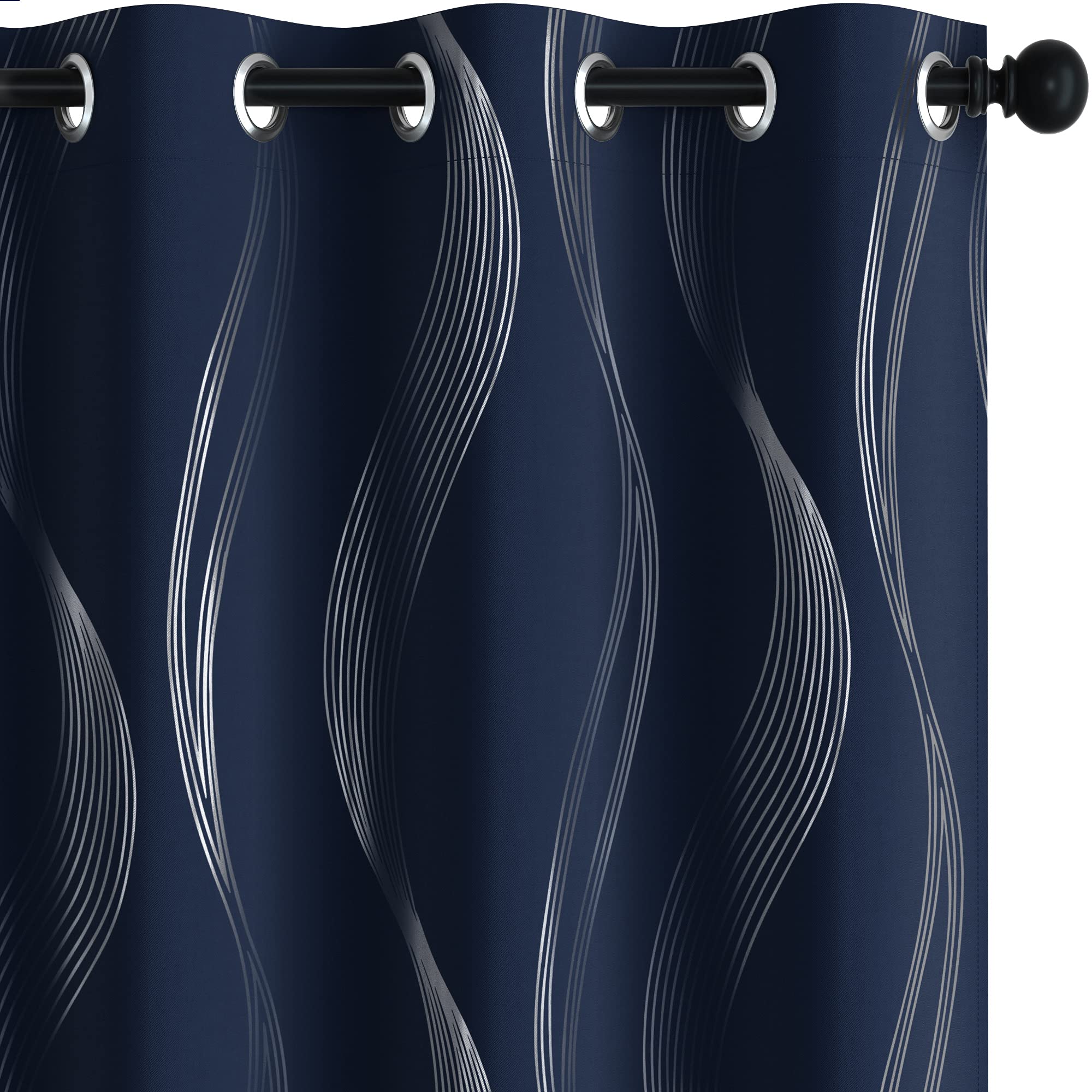
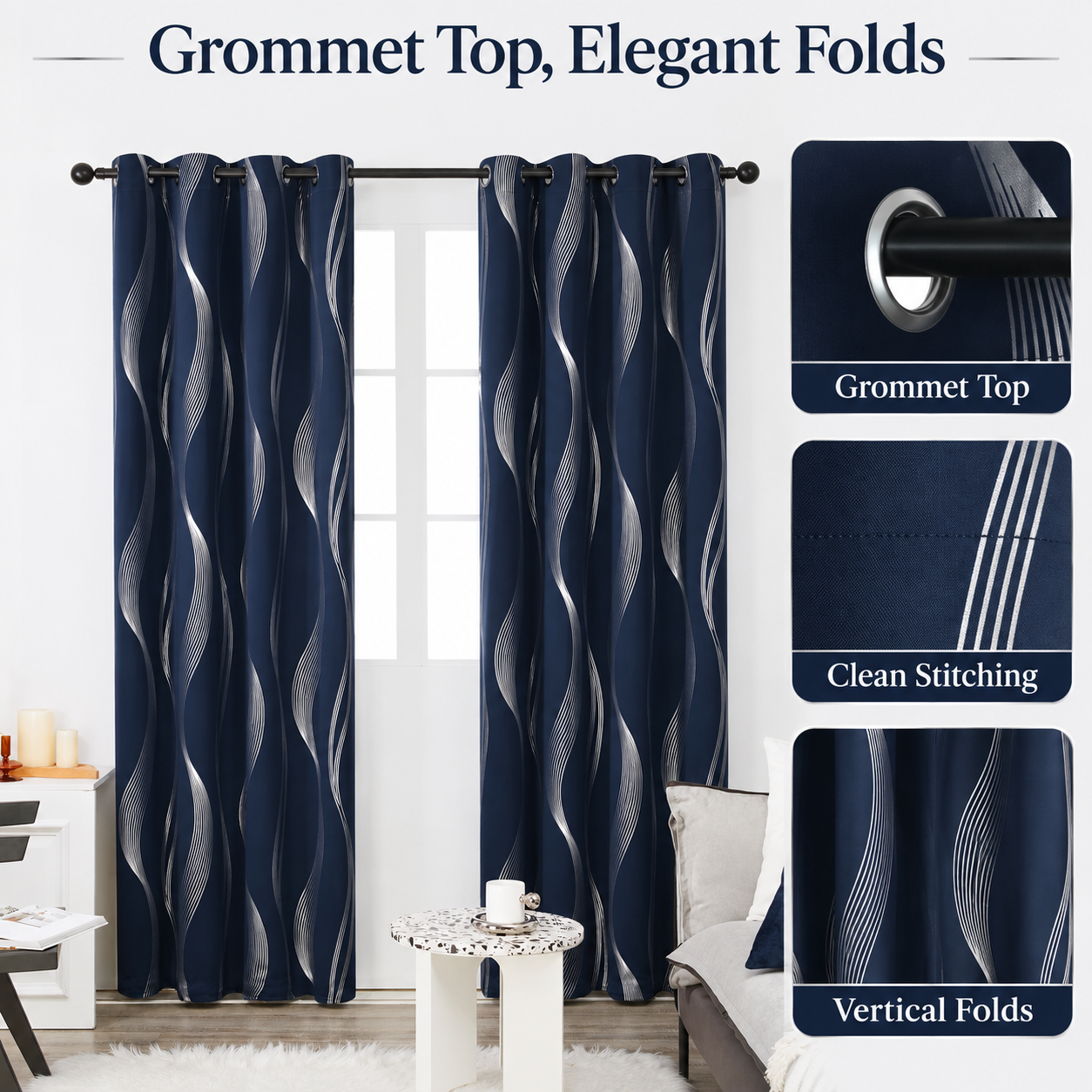
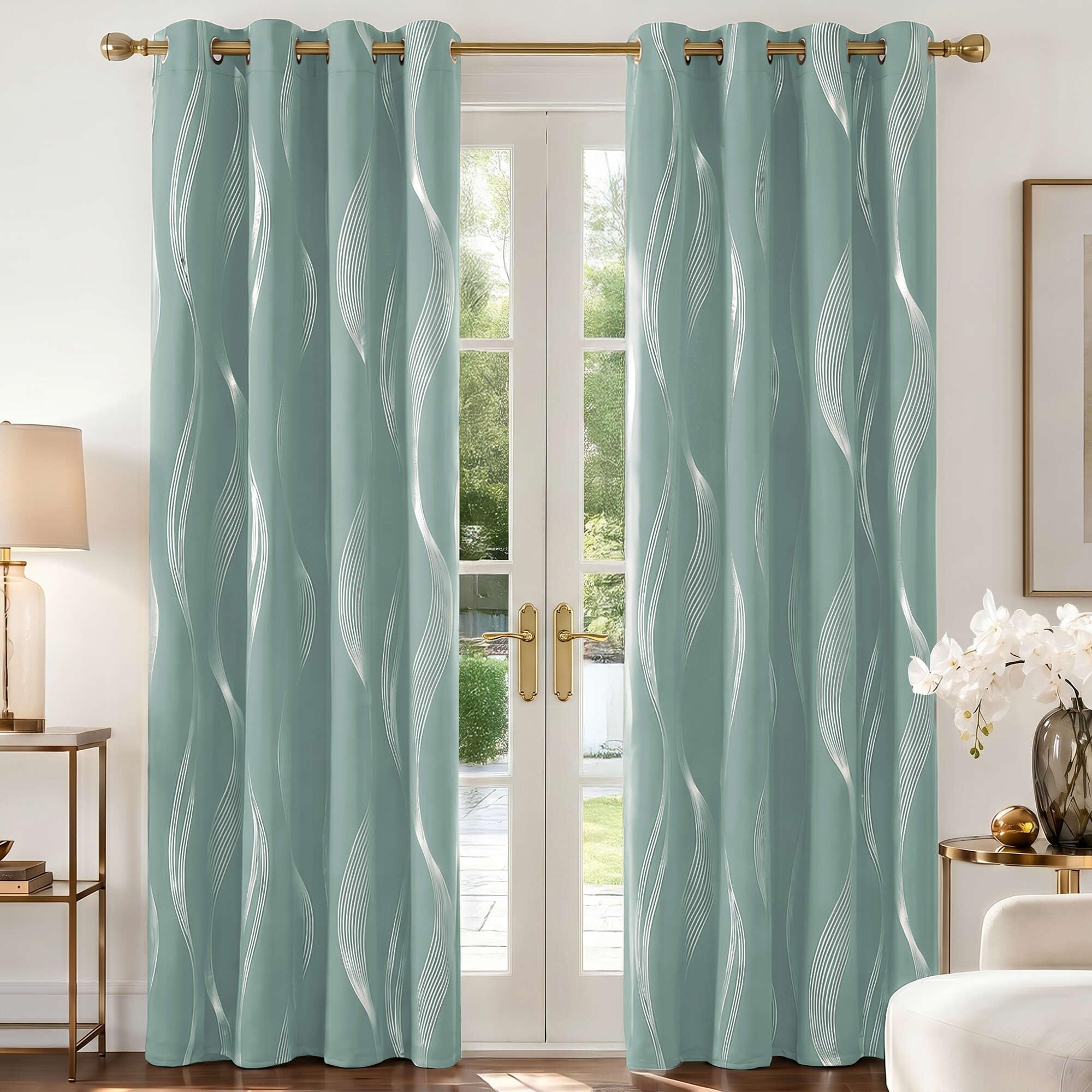
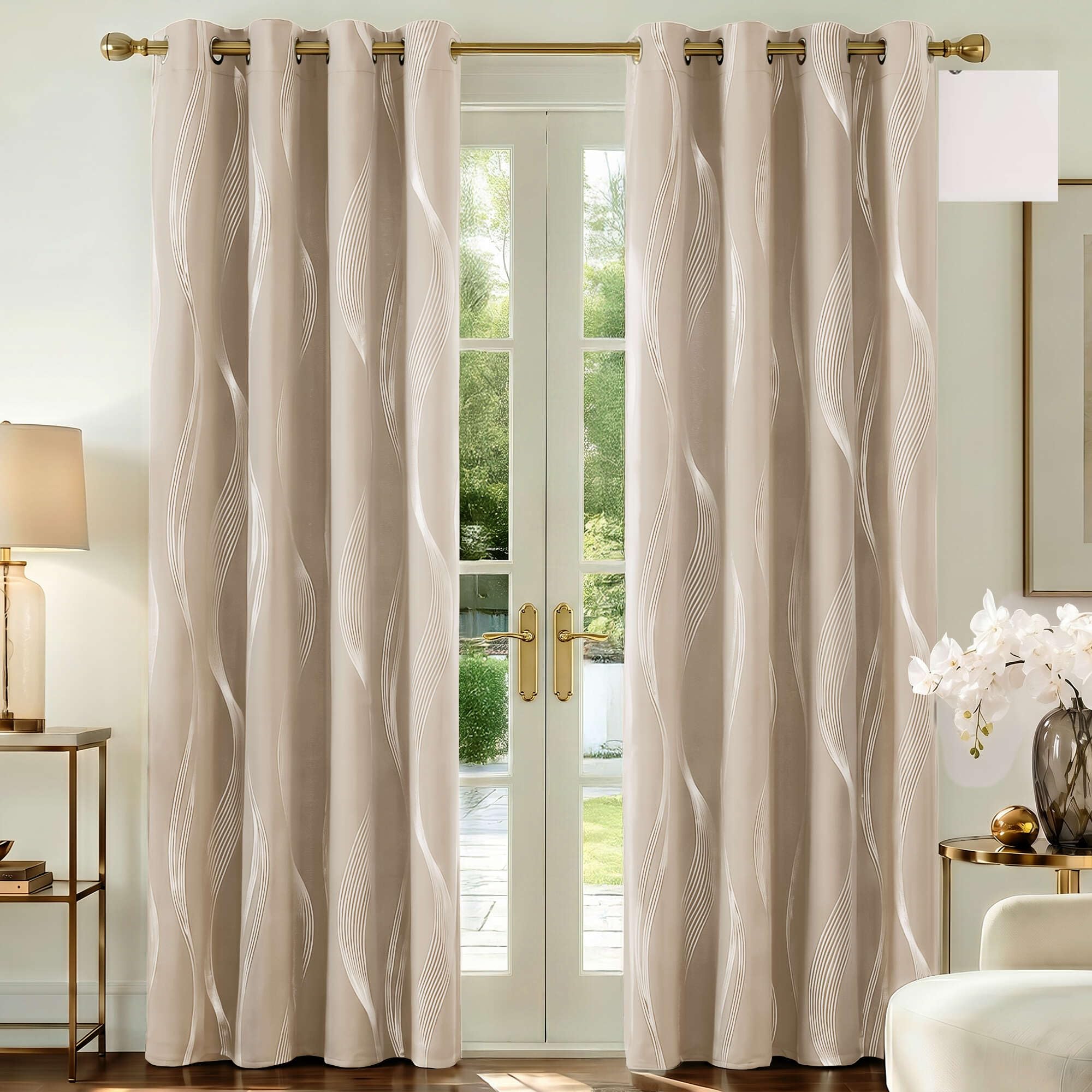
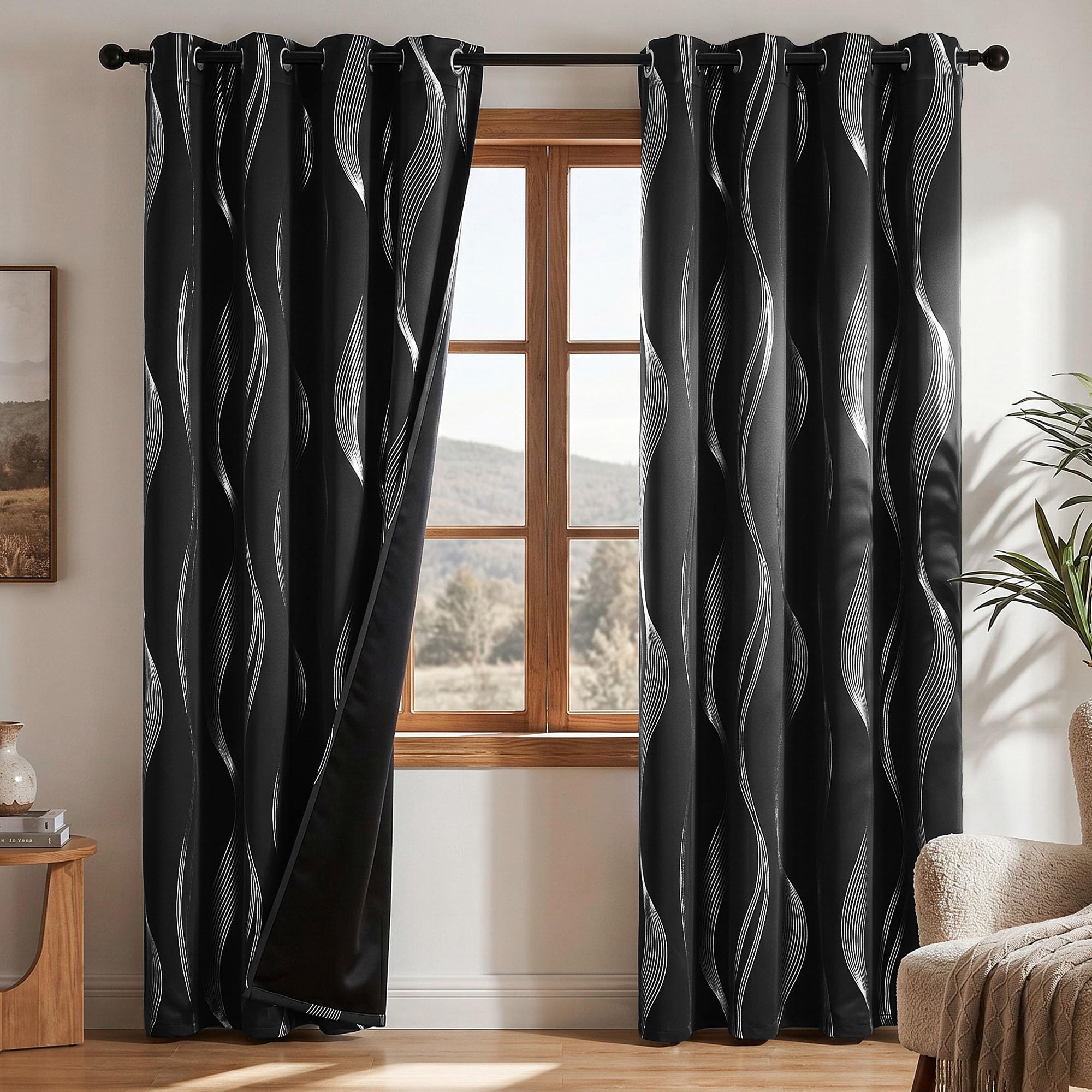
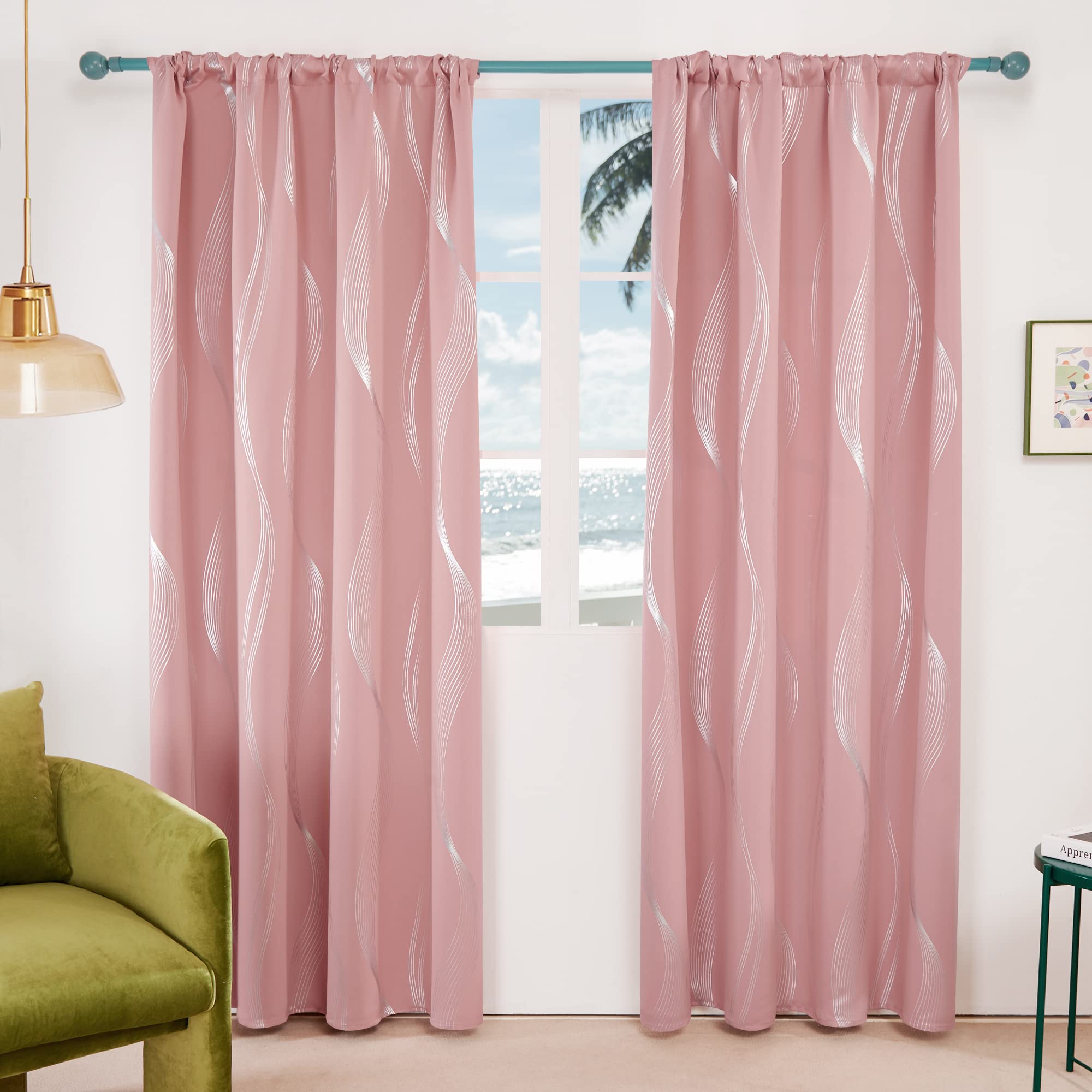
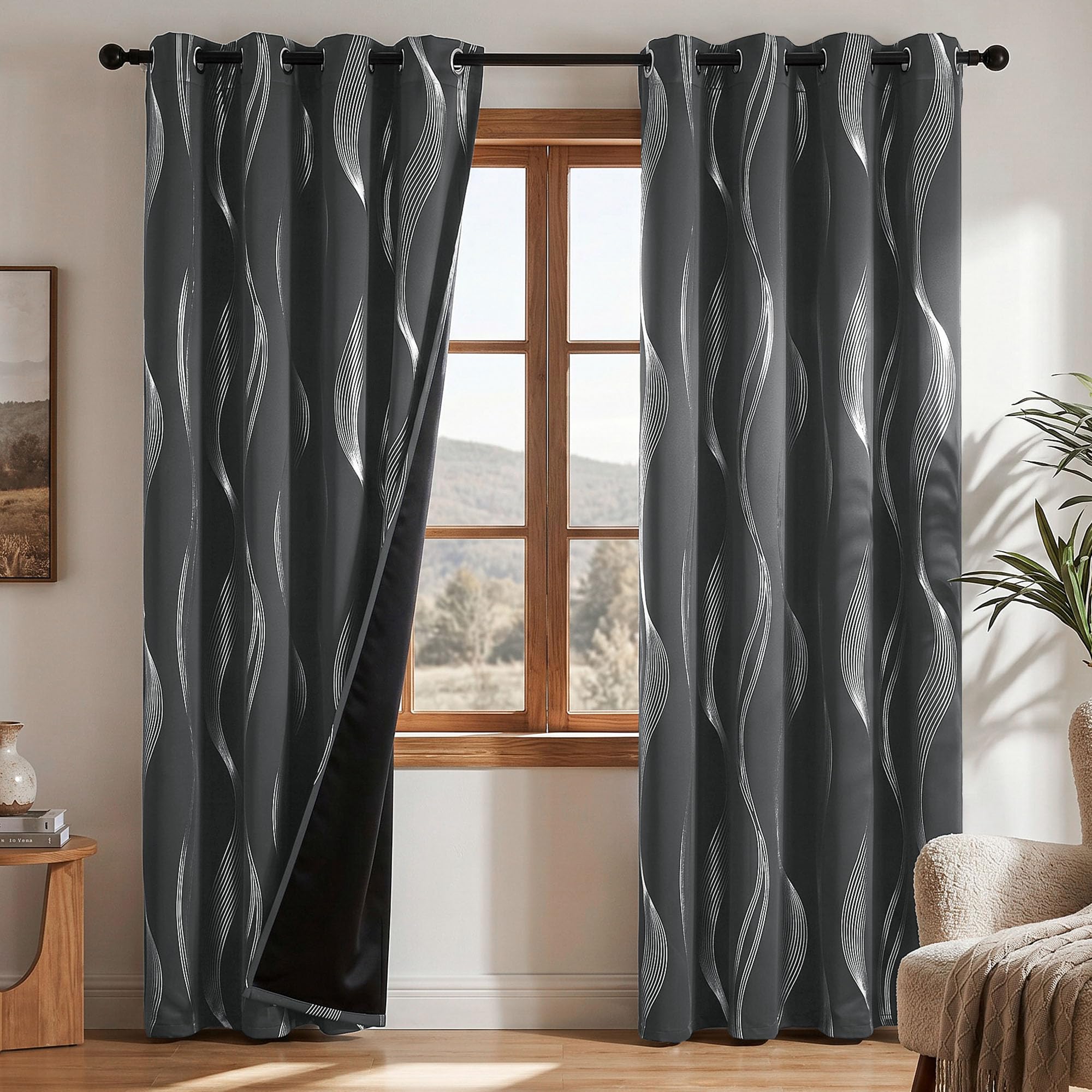
Navy blue fabric gives these silver-wave curtains a deep color foundation, while the foil decoration introduces highlights across the folds. The design suits a window-led interior scheme with plain bedding, neutral seating or metallic accessories. A grommet header supports a relaxed hanging profile, allowing the reflective lines to shift in appearance as the panels are drawn. Buyers can develop this style around an approved navy shade and metallic finish, with light-control performance assessed on the selected fabric and finished set rather than assumed from its dark appearance.
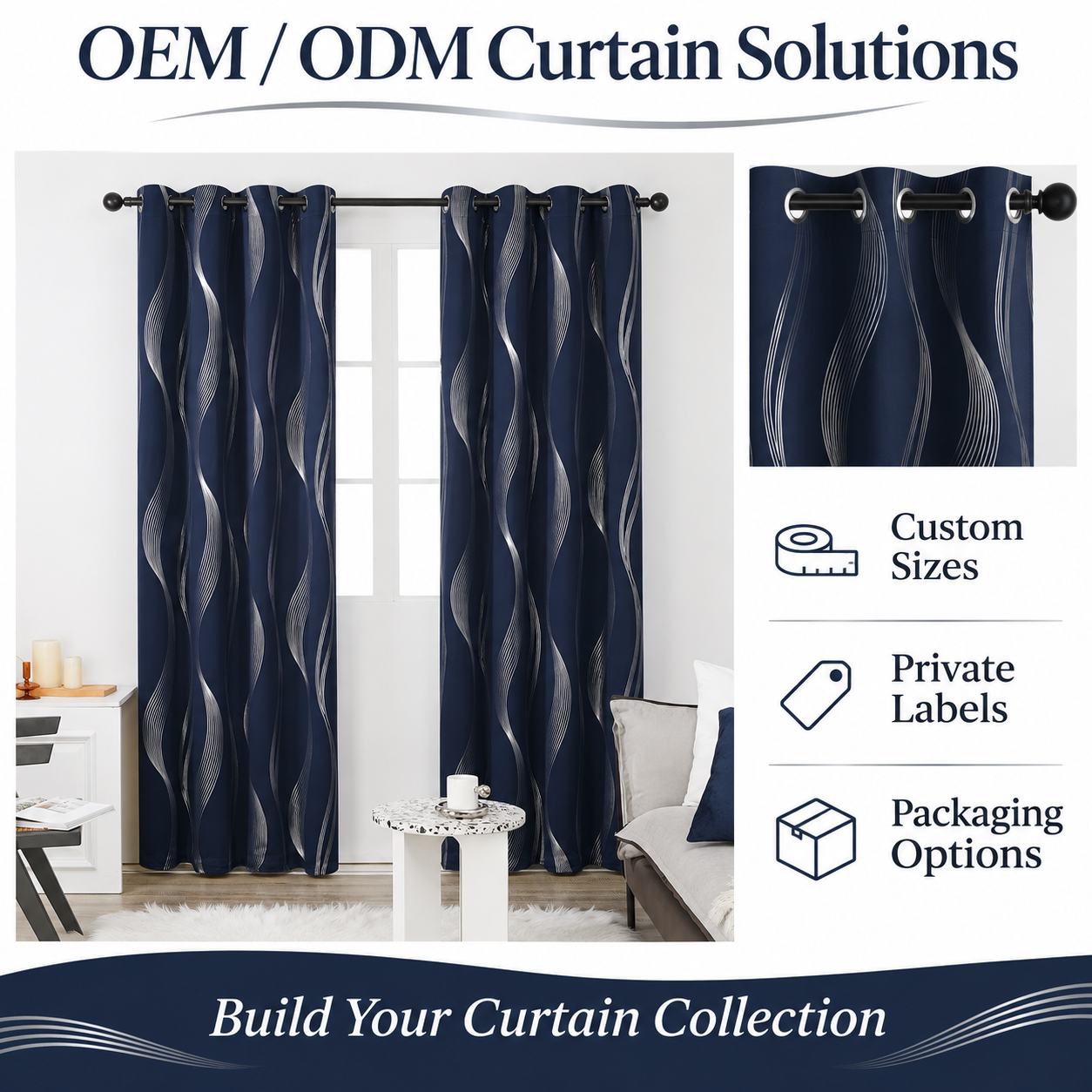
Shaoxing Yingkuo Textile Co., Ltd. (EAGLEKO HOME TEXTILE) can help buyers define a coordinated navy curtain assortment through sample review, print-finish selection and finished-size planning. Our one-stop sourcing approach combines decorative window panels with complementary sheers, cushion covers and other home textiles in one purchasing program. The development brief can cover panel pairing, labels and retail packaging, while technical requirements remain specific to each item. New colorways, artwork changes, minimum order quantities and delivery schedules are confirmed after material and production review.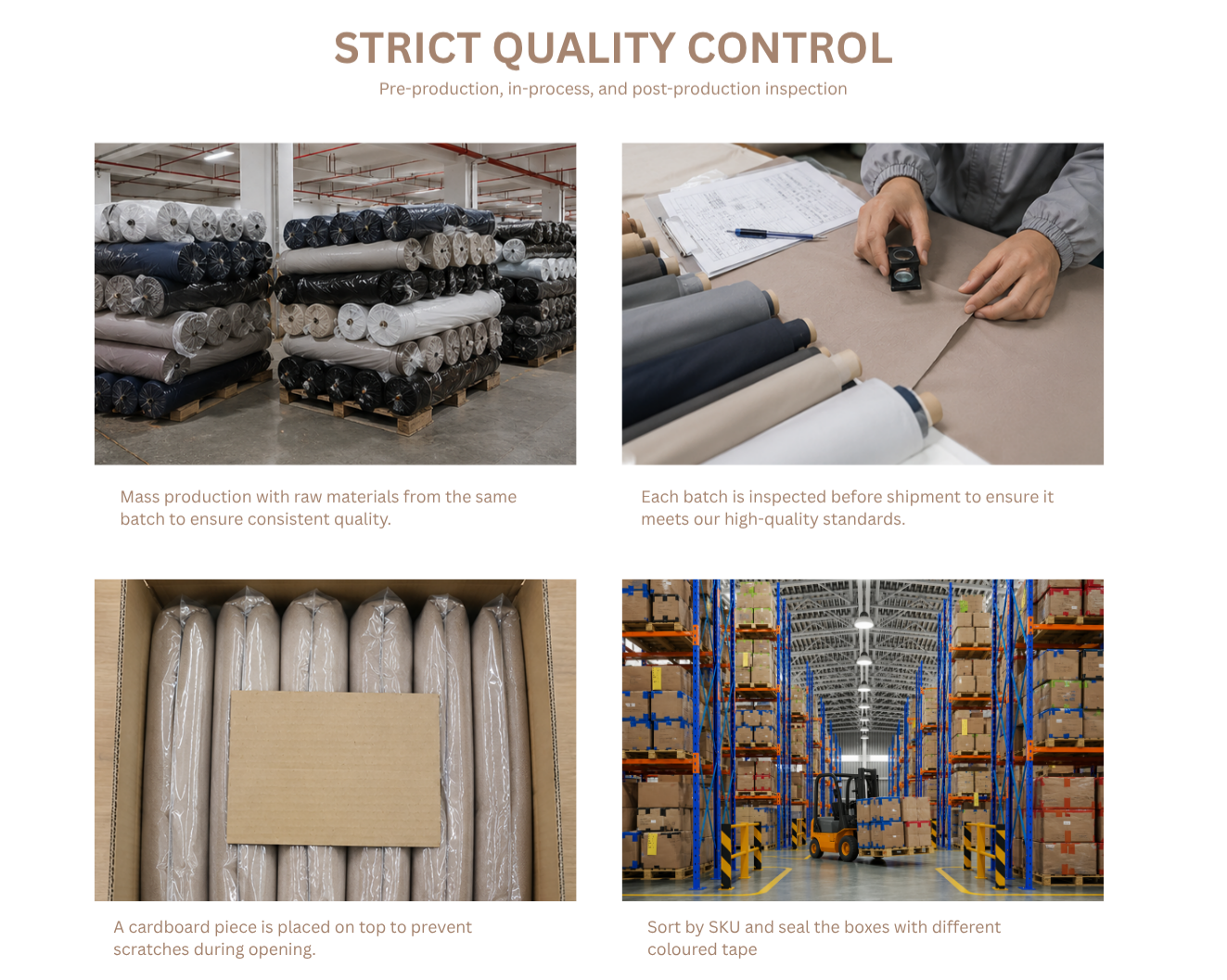
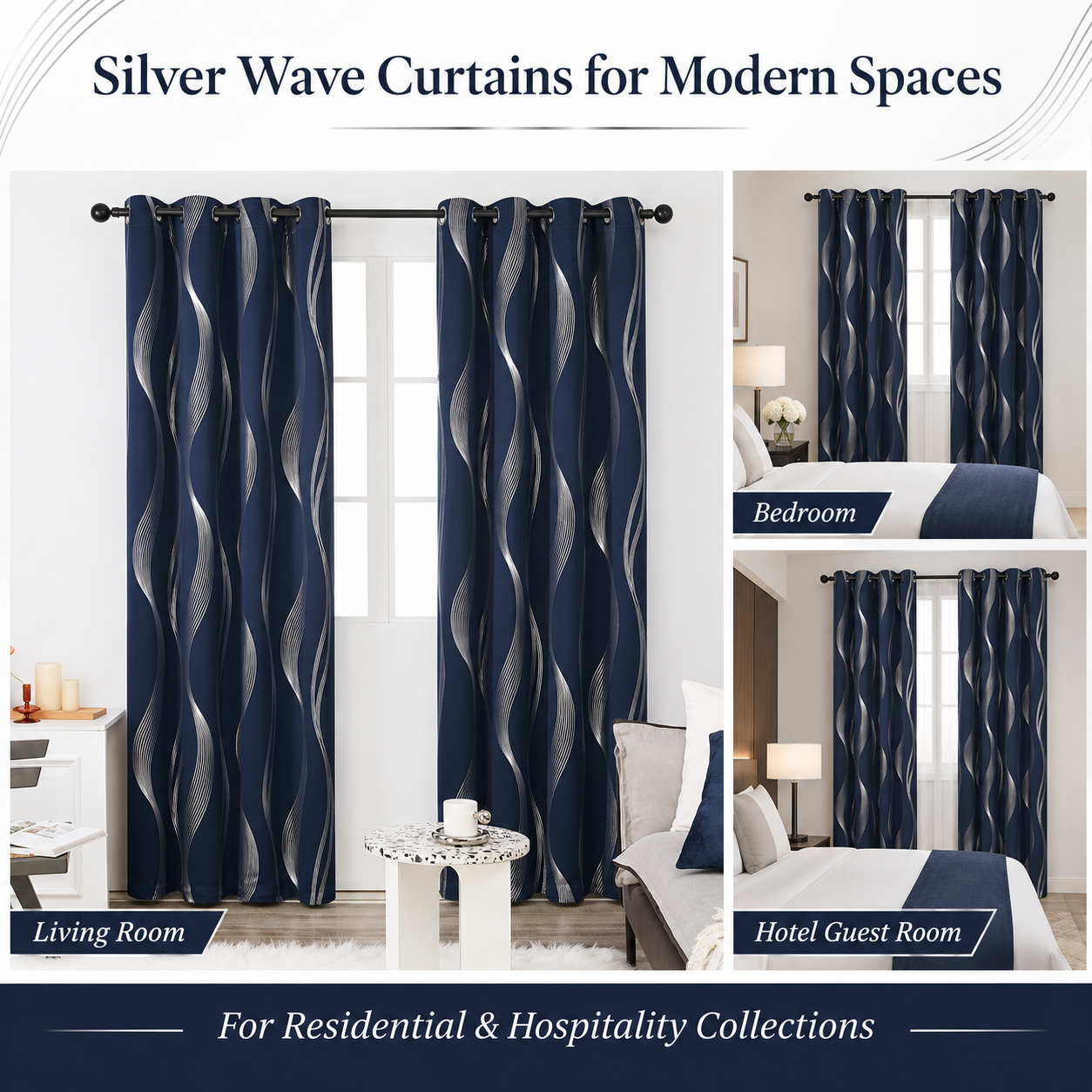
Navy Bedroom Schemes — Coordinate deep blue window panels with pale bedding and simple metallic accents.
Living Room Refreshes — Use reflective waves to introduce detail around a neutral seating area.
Media Room Planning — Assess fabric transmission and window-edge coverage against the buyer’s light-control goal.
Home Office Styling — Review daytime glare and curtain positioning in the intended room.
Retail Color Collections — Build a navy accent range around a physical shade and print reference.
E-commerce Sales — Present each panel’s dimensions, paired appearance and accurate pack contents.
Wholesale Sourcing — Combine the decorative style with complementary plain textiles for range planning.
Deep Blue Color Base — Navy supplies a defined visual frame around the window.
Silver Wave Highlights — Reflective lines add movement across the draped face.
Plain Textile Coordination — The color and metallic detail work with solid bedding and upholstery.
Grommet Fold Profile — The header creates recurring folds that reveal sections of the wave pattern.
Paired Window Styling — A complete set can be approved for print direction and balanced drop.
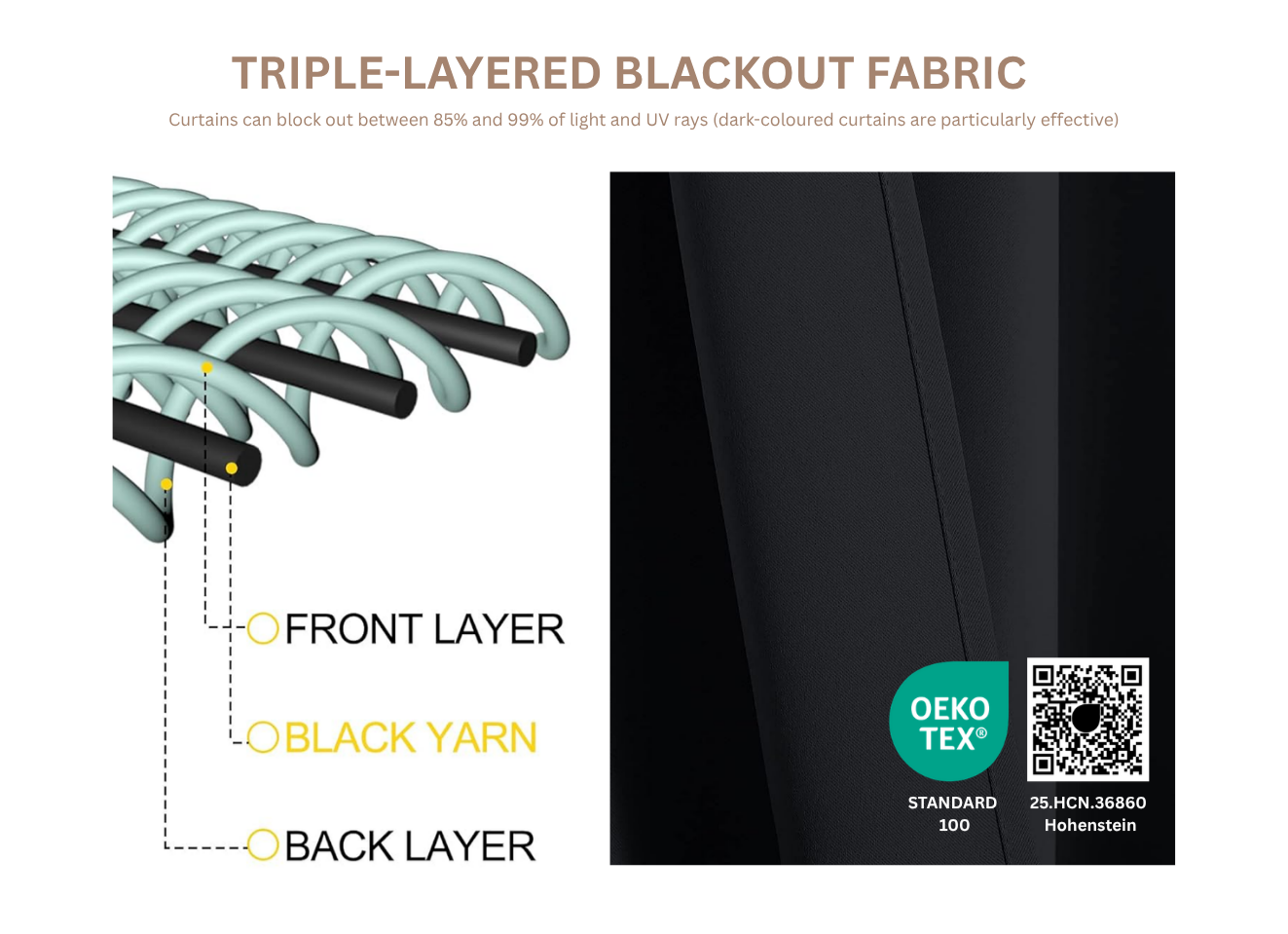
Light Control Specification — The chosen base can be assessed against an agreed darkness requirement.
Assortment Development — Shade extensions, complementary categories and private-label packing can be discussed.
Q1: Can a navy fabric be approved for blackout simply because it looks dark?
A: No. Fabric color alone is insufficient. Establish a light-transmission requirement and evaluate the selected construction under agreed conditions. Check seams and header areas as well as the fabric body, then distinguish fabric performance from light entering around the installed panel.
Q2: What should be compared when selecting a navy shade for bulk supply?
A: Review face and reverse tones, hue under daylight and interior lighting, and the interaction with silver foil. Approve a physical standard before dyeing and define how lot variation will be accepted. Dark blue shades that look similar on a screen can differ noticeably in a coordinated room.
Q3: How can buyers prevent foil quality from drifting during a long production run?
A: Retain a signed print standard and compare samples from the beginning, middle and end of the run. Record line clarity, coverage, unwanted transfer and gloss variation. Agree on checks after the intended care process so approval addresses both initial appearance and finish retention.
Q4: How much flat panel width is needed for a grommet curtain set?
A: Plan from the usable rod span, desired fullness, side returns and center overlap. Flat fabric width is not the same as covered width once folded. Approve a hanging sample where coverage is critical and make clear whether the retail width refers to one panel or the pair.
Q5: Which checks help prevent a mismatched pair even when both panels pass individually?
A: Inspect the two panels together for length, navy shade, foil direction and visual density. Specify whether the waves require exact joining or simply a balanced arrangement. Pair and label the approved units together rather than combining unrelated pieces at the final packing stage.
Q6: How should cleaning claims be set when similar foil fabrics have different care instructions?
A: Use trials on the actual finished fabric and print system. Examine foil loss, transfer, wrinkling and dimensional change after the proposed process. Do not borrow care instructions from a similar listing; validate cleaning and ironing conditions before the label and online description are finalized.
Q7: What evidence is needed before offering this style for a hotel project?
A: Obtain the property’s required fire, care and durability specifications before selecting the fabric. Match any report to the actual construction and intended market. A domestic decorative curtain or an unrelated certification does not establish suitability for a particular commercial project.
Q8: How should repeat orders be managed if the foil or base cloth changes?
A: Treat a material substitution as a new approval point. Compare a finished preproduction pair with the retained standard, checking shade, drape, print and light control. Confirm revised specifications before bulk cutting and update SKU records if the change affects appearance, care or performance.
 EN