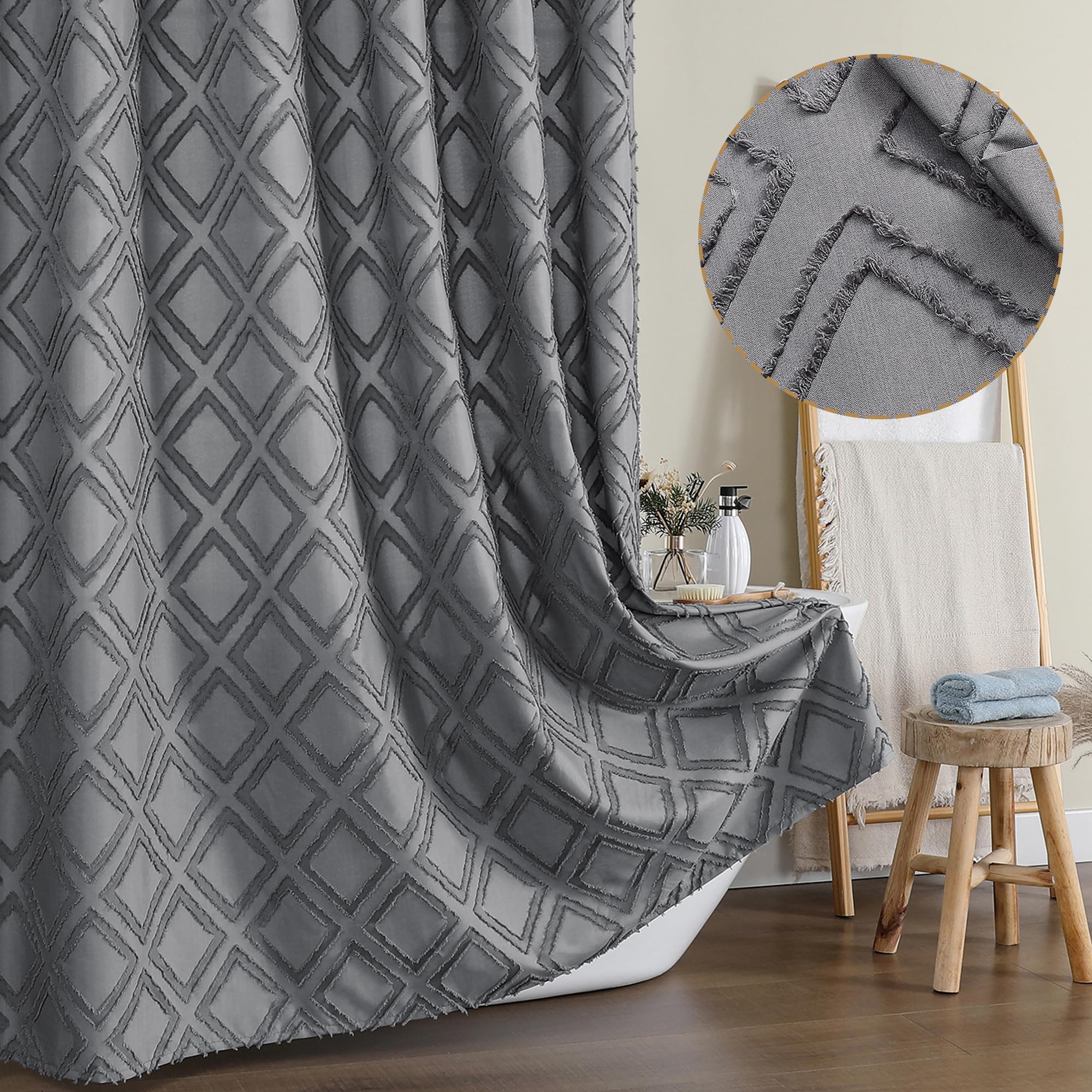
| Product Name |
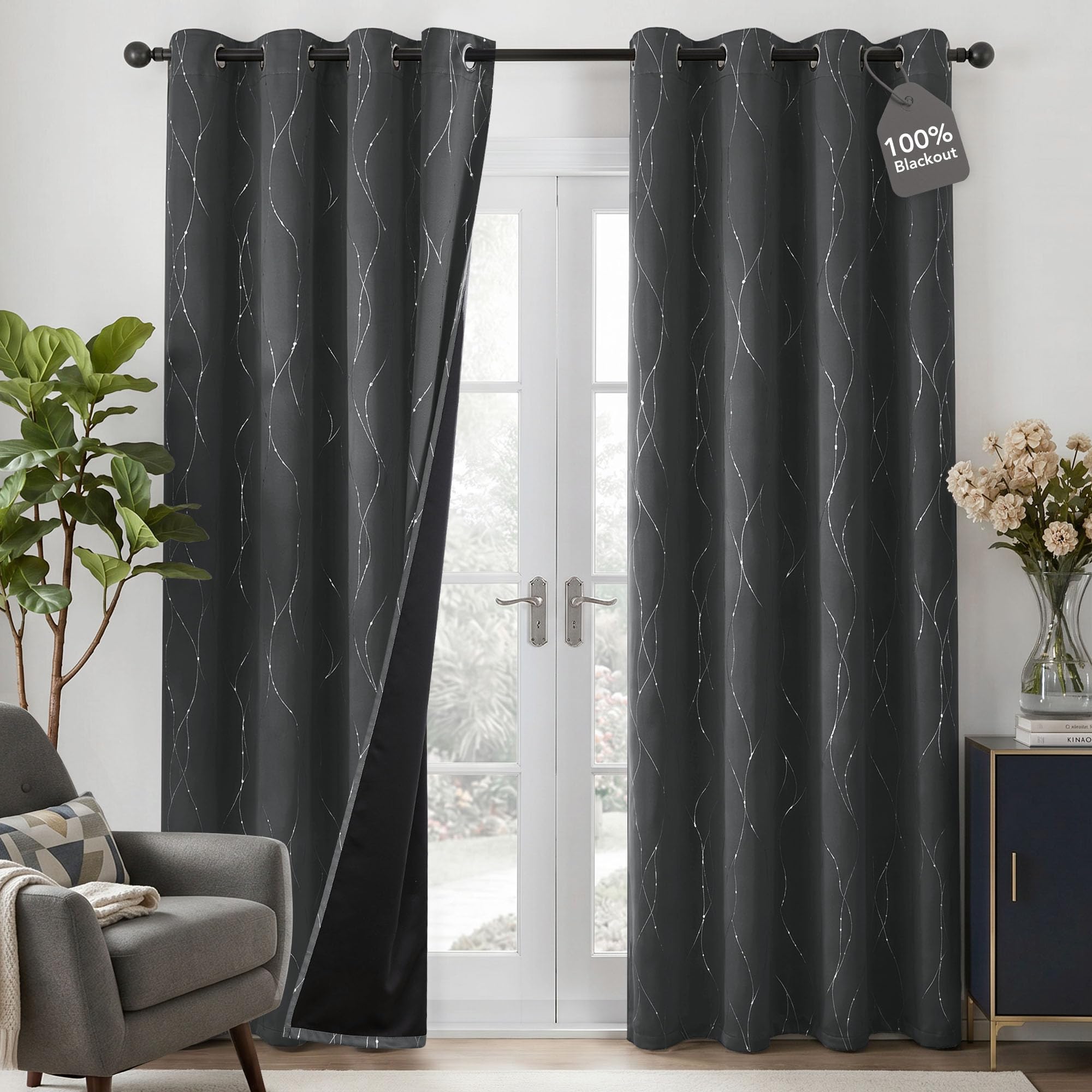
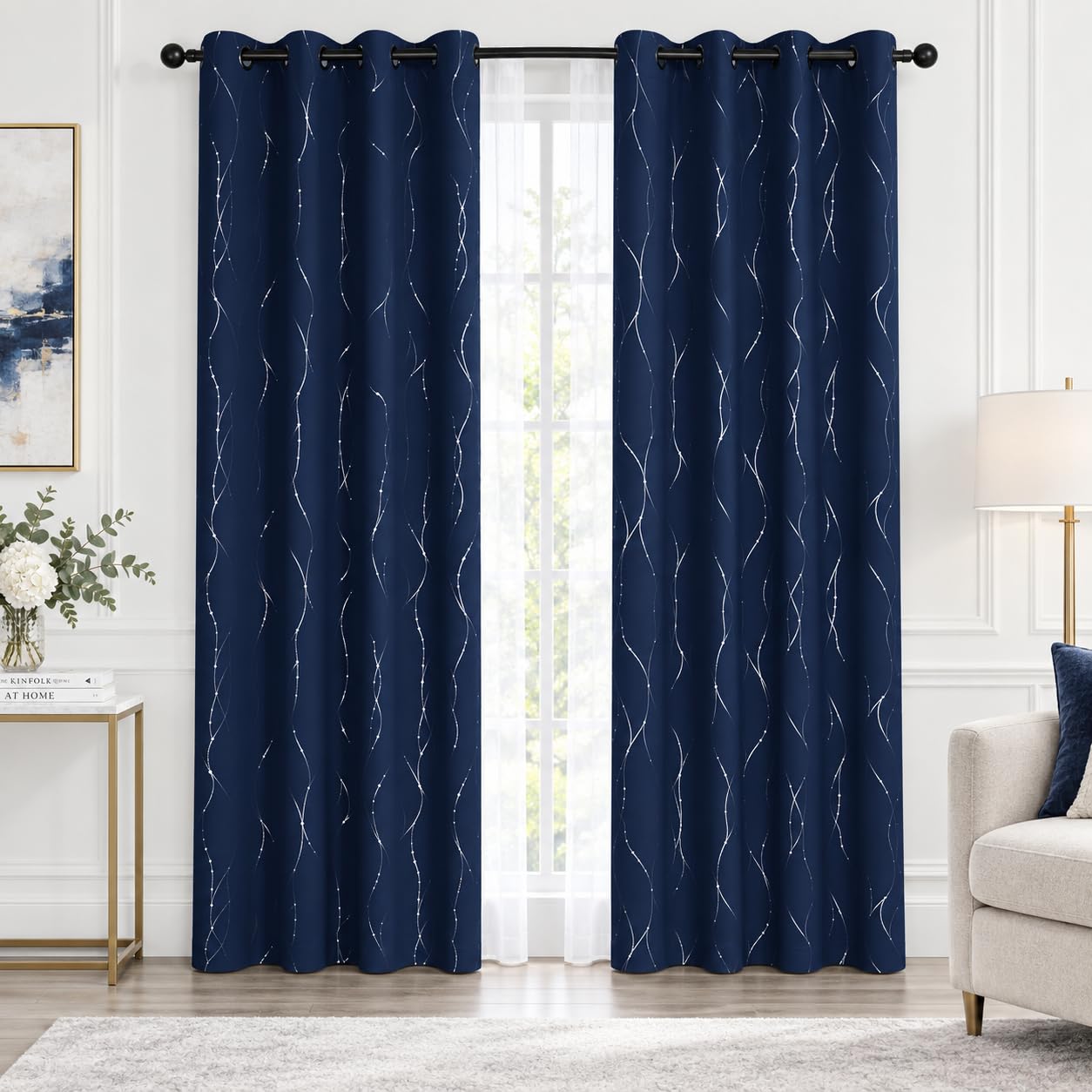
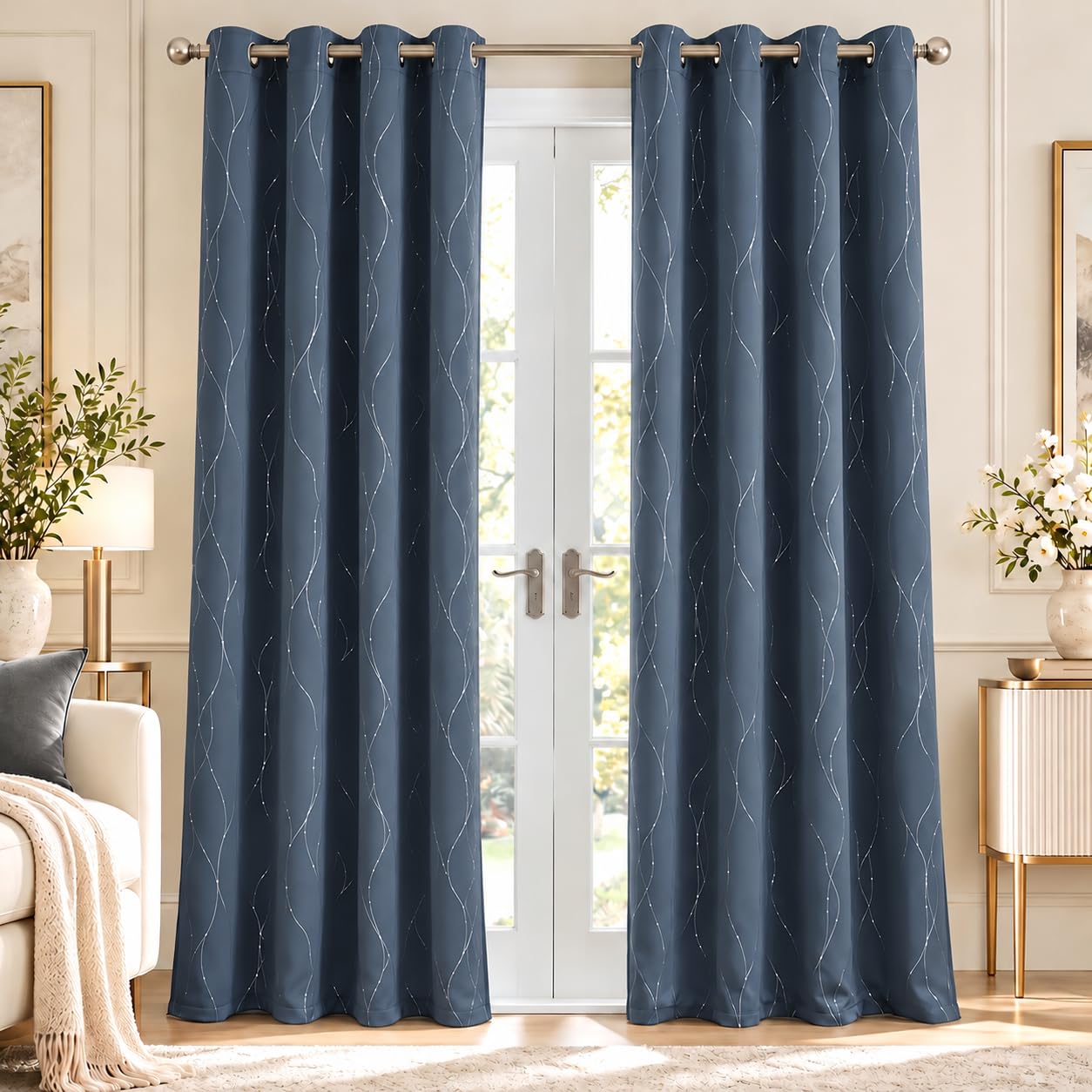
Silver Wave Foil Print Blackout Grommet Curtains |
| Color |
Dark grey ground with silver decorative print; final shade and metallic finish to be approved |
| Material |
Polyester reference fabric; confirm bulk composition and light-blocking construction |
| Style |
Contemporary Decorative / Room Darkening Window Drapes |
| Size |
Reference panel 52 inches wide by 84 inches long; custom sizes subject to quotation |
| Package | 1 Shower Curtain with Snap-in Liner / Custom Packaging Available |
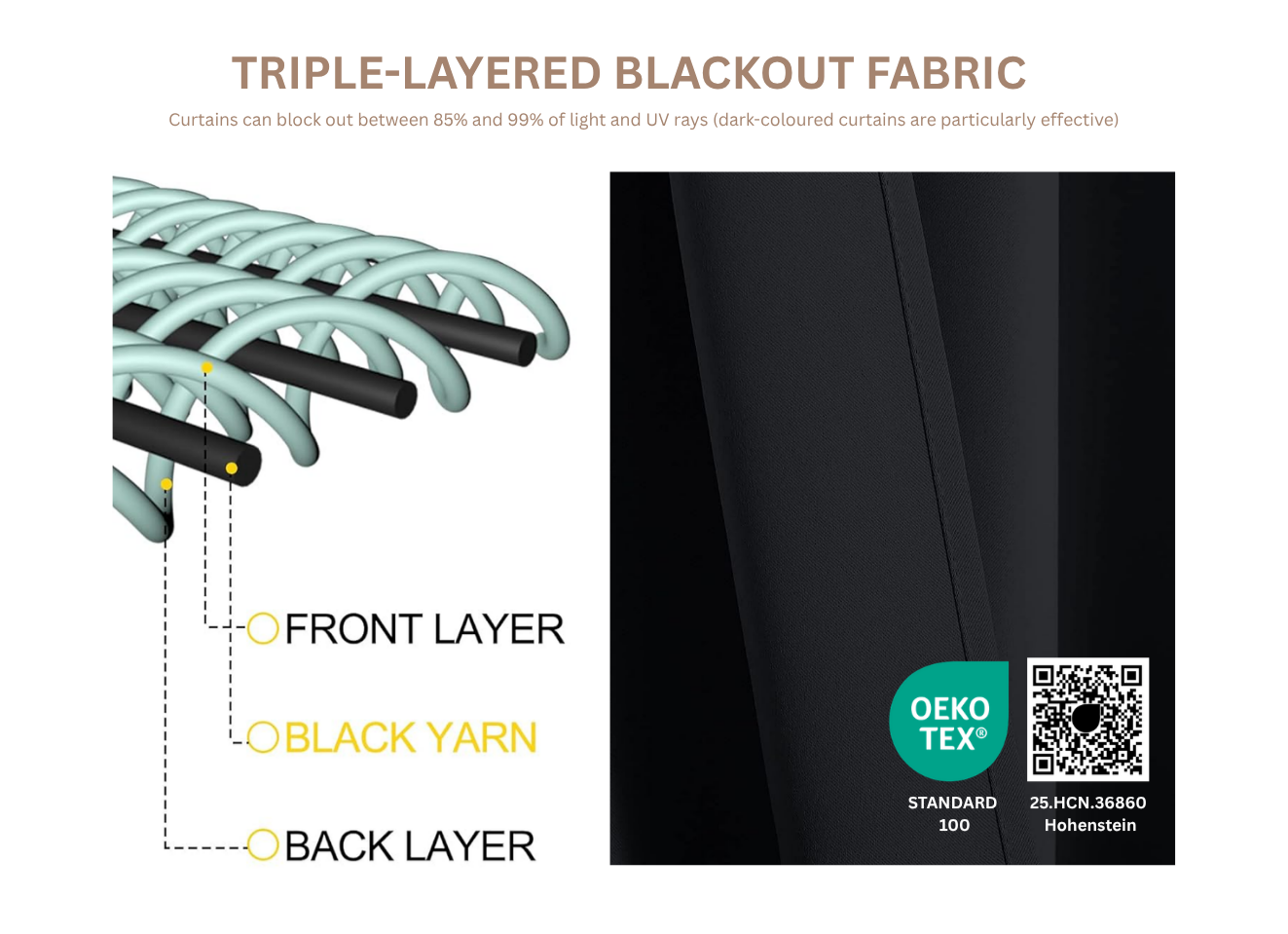
| Certification | OEKO-TEX Standard 100 Available |
| MOQ | 200 |
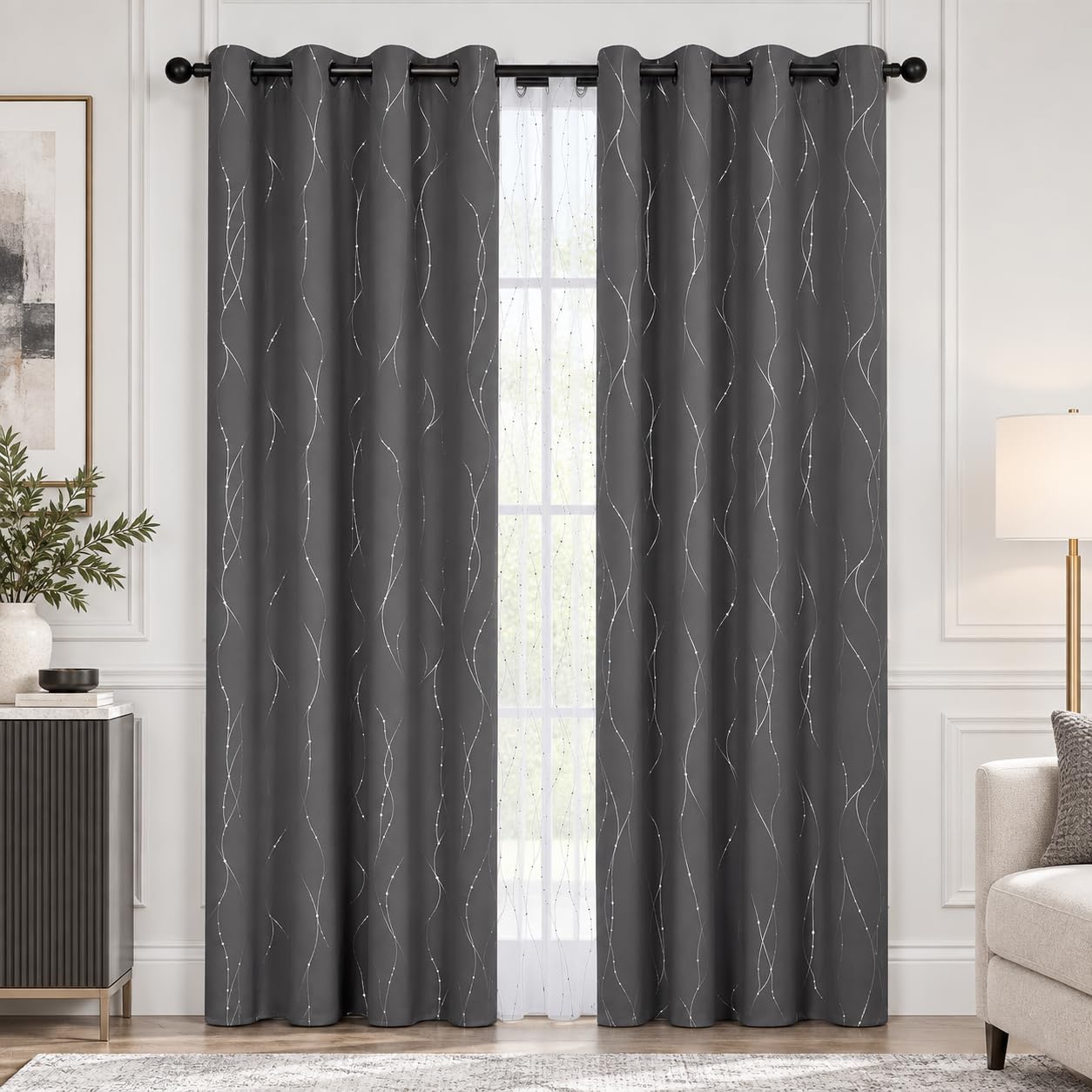
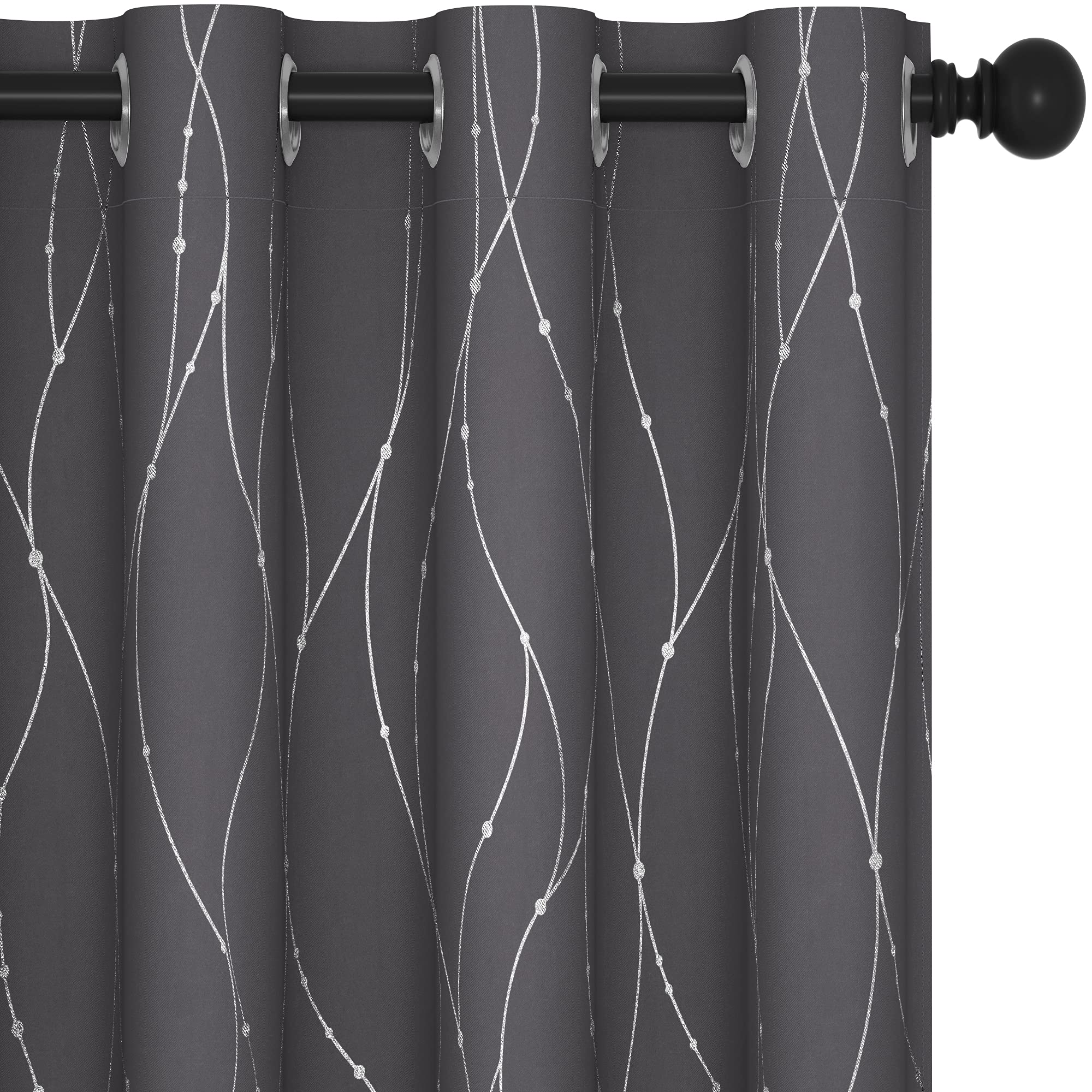
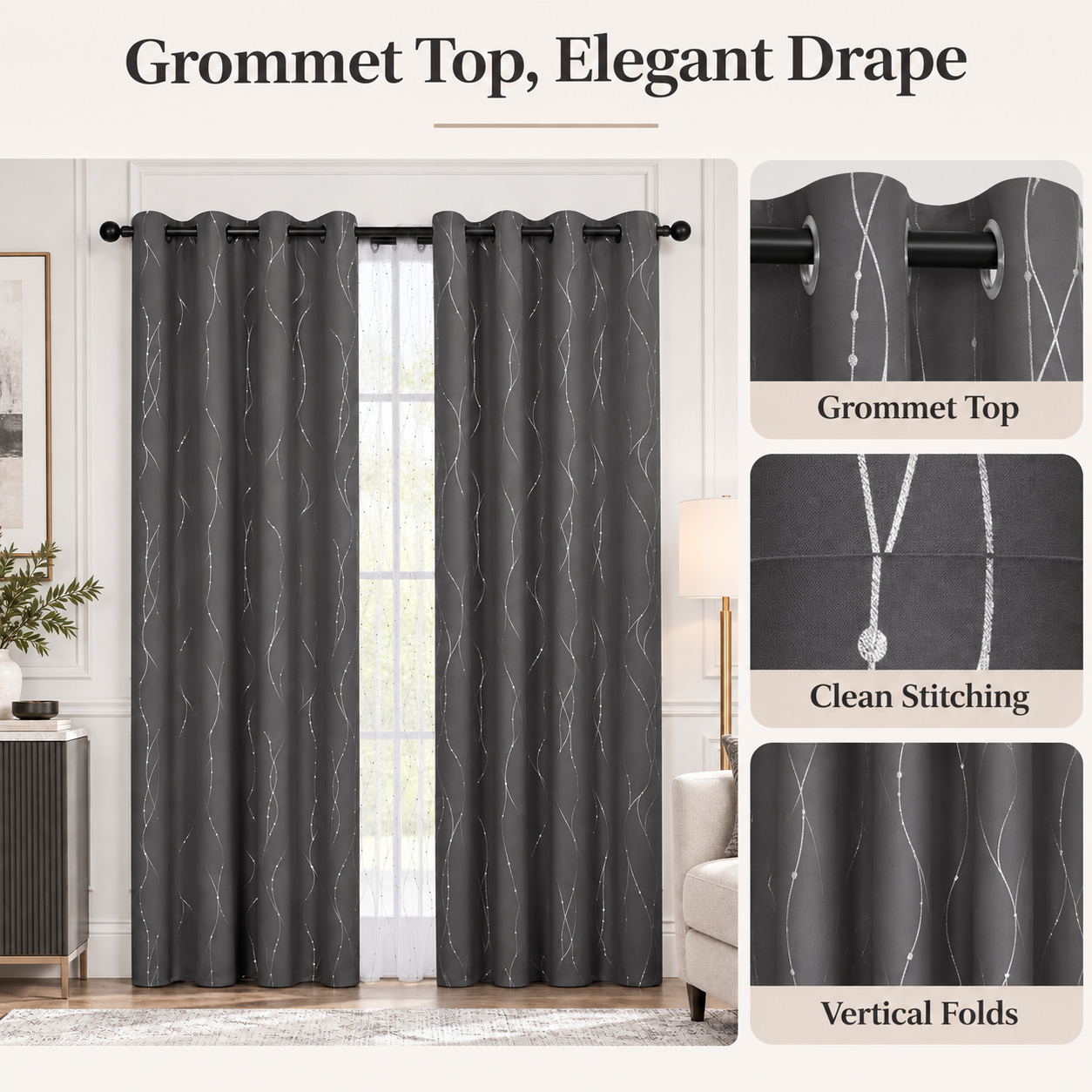
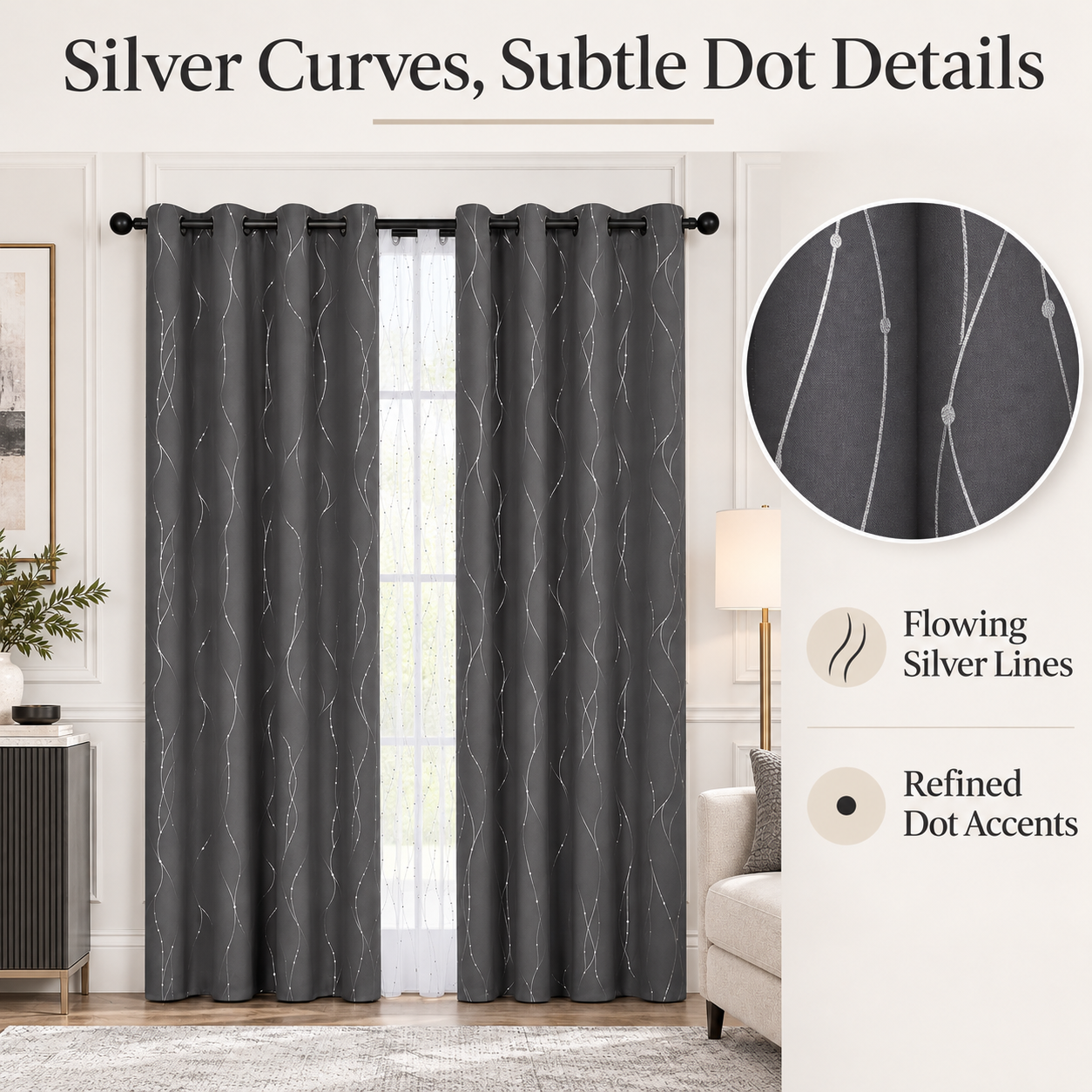
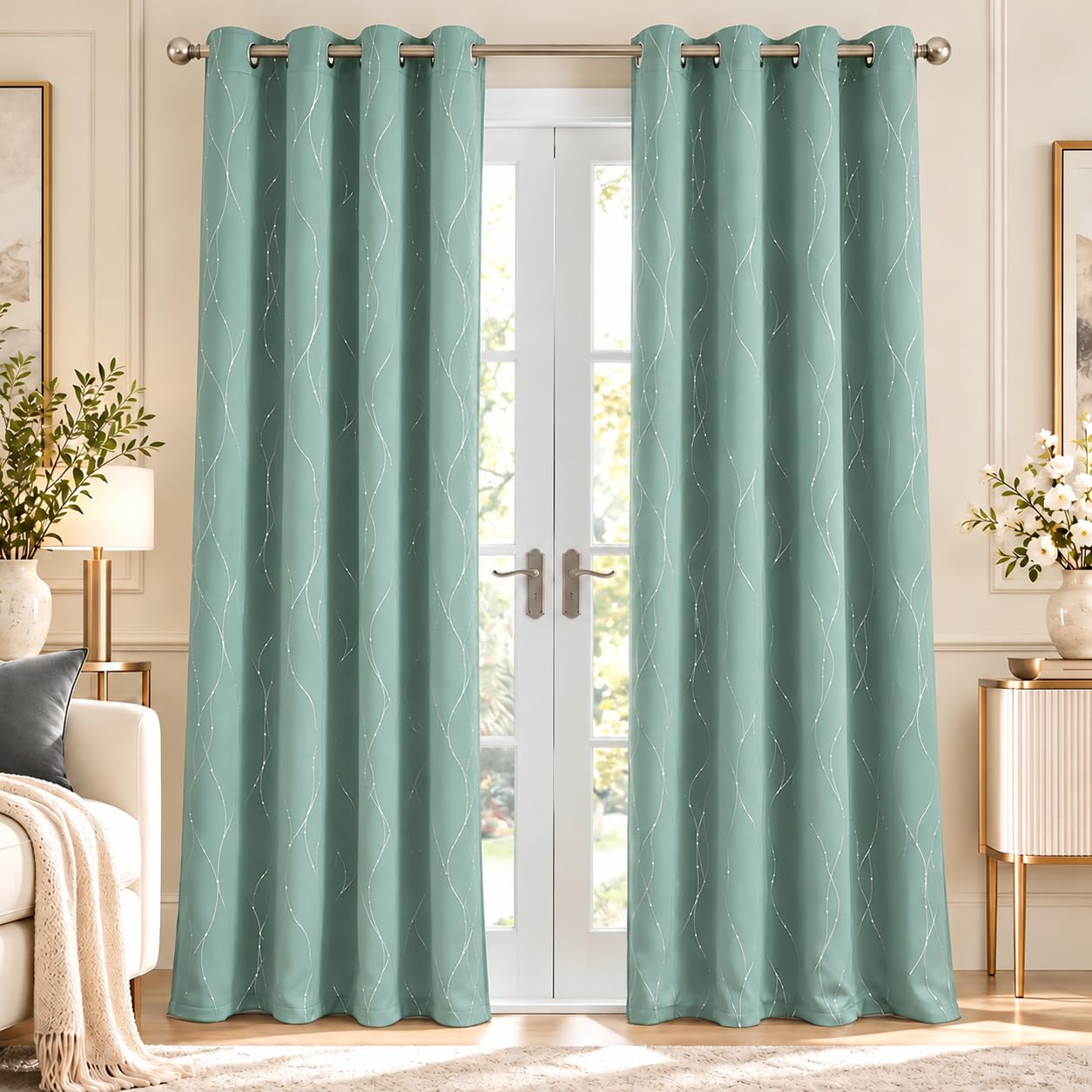
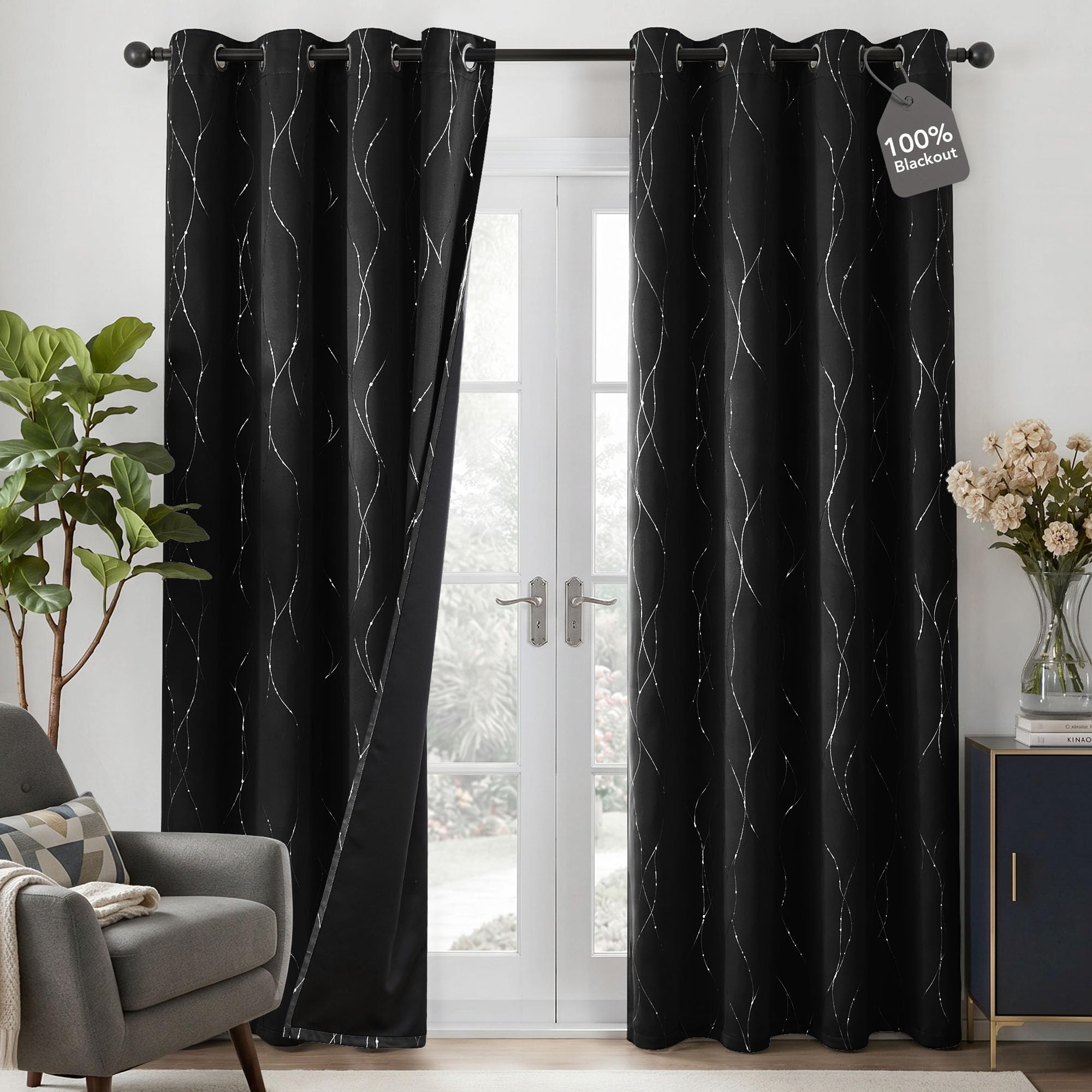
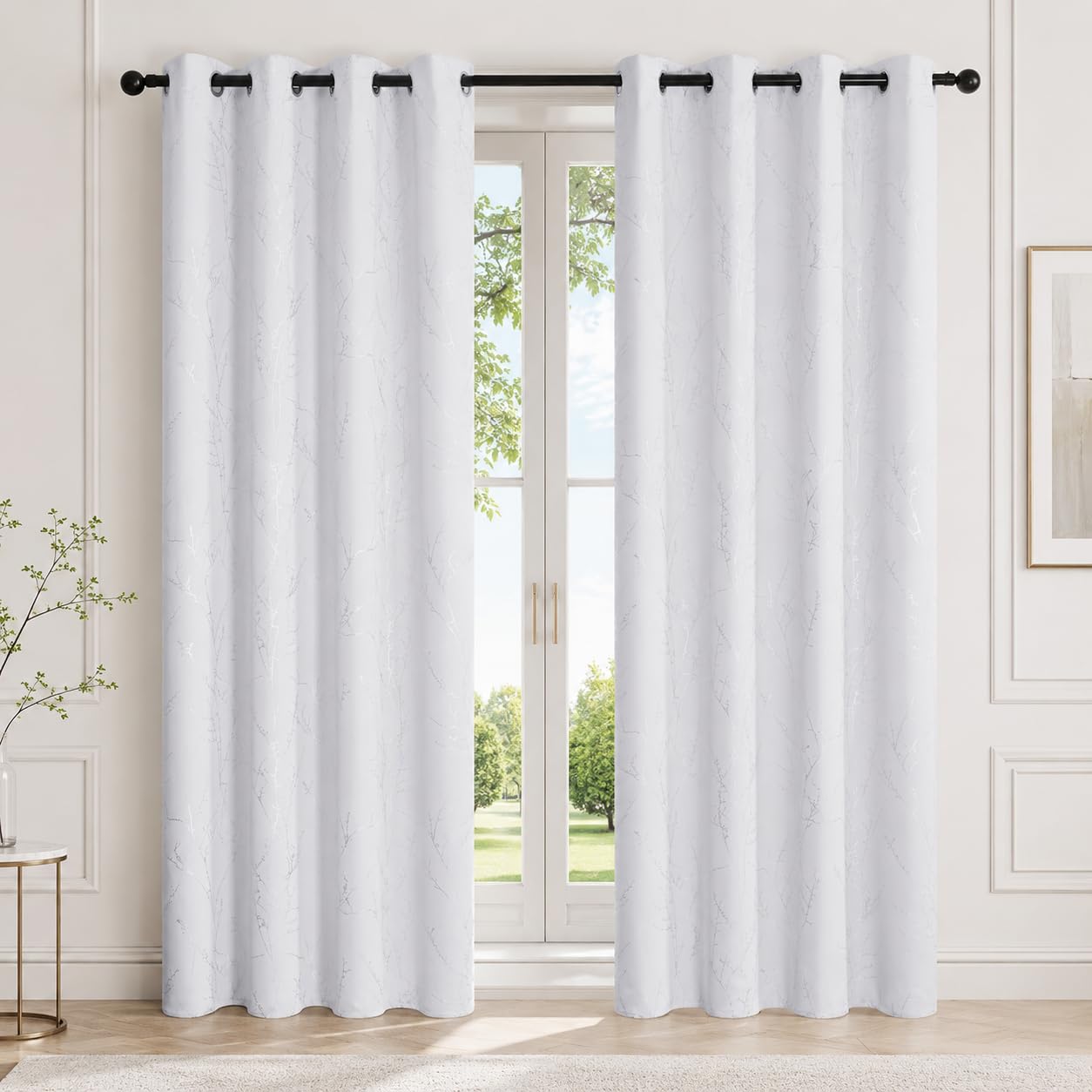
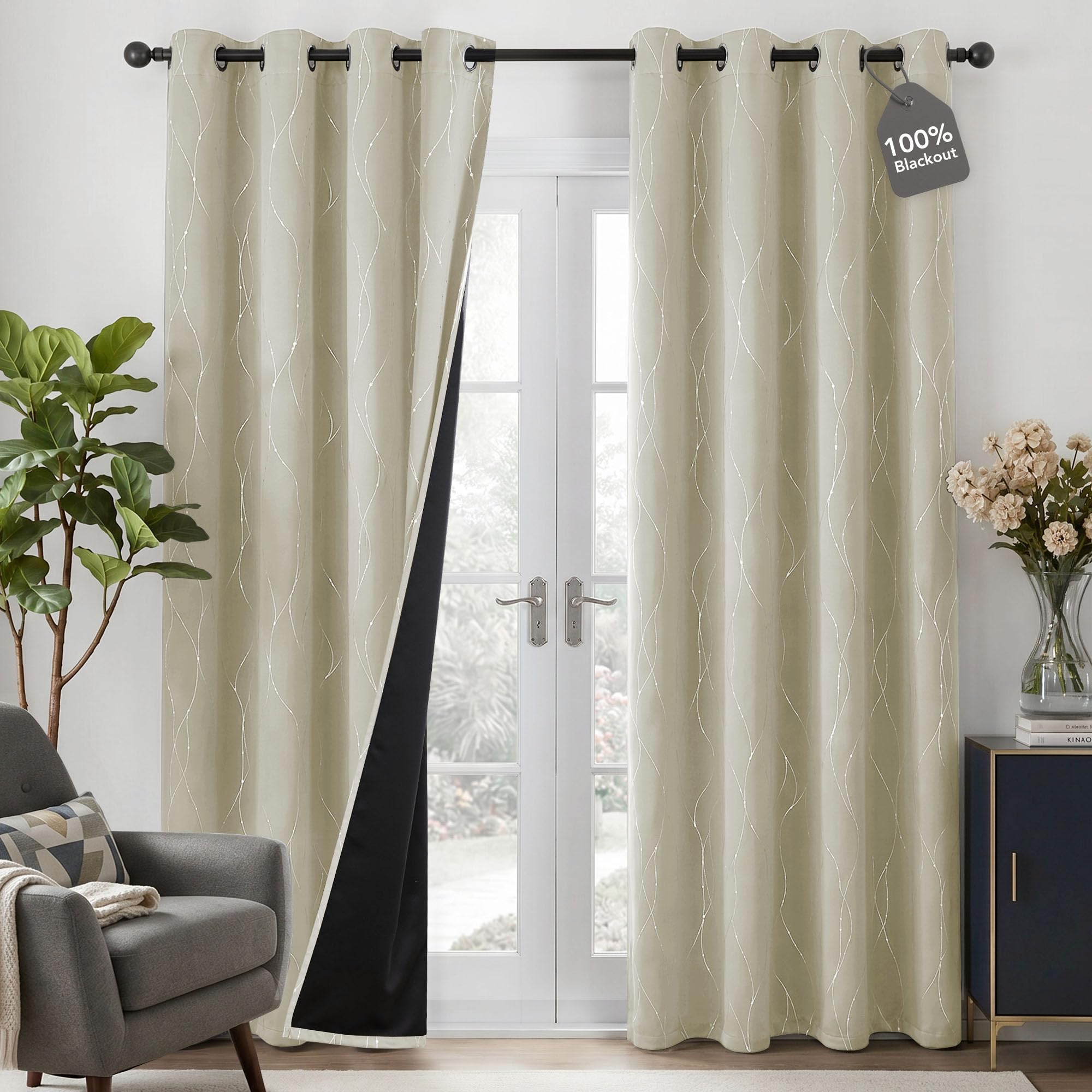
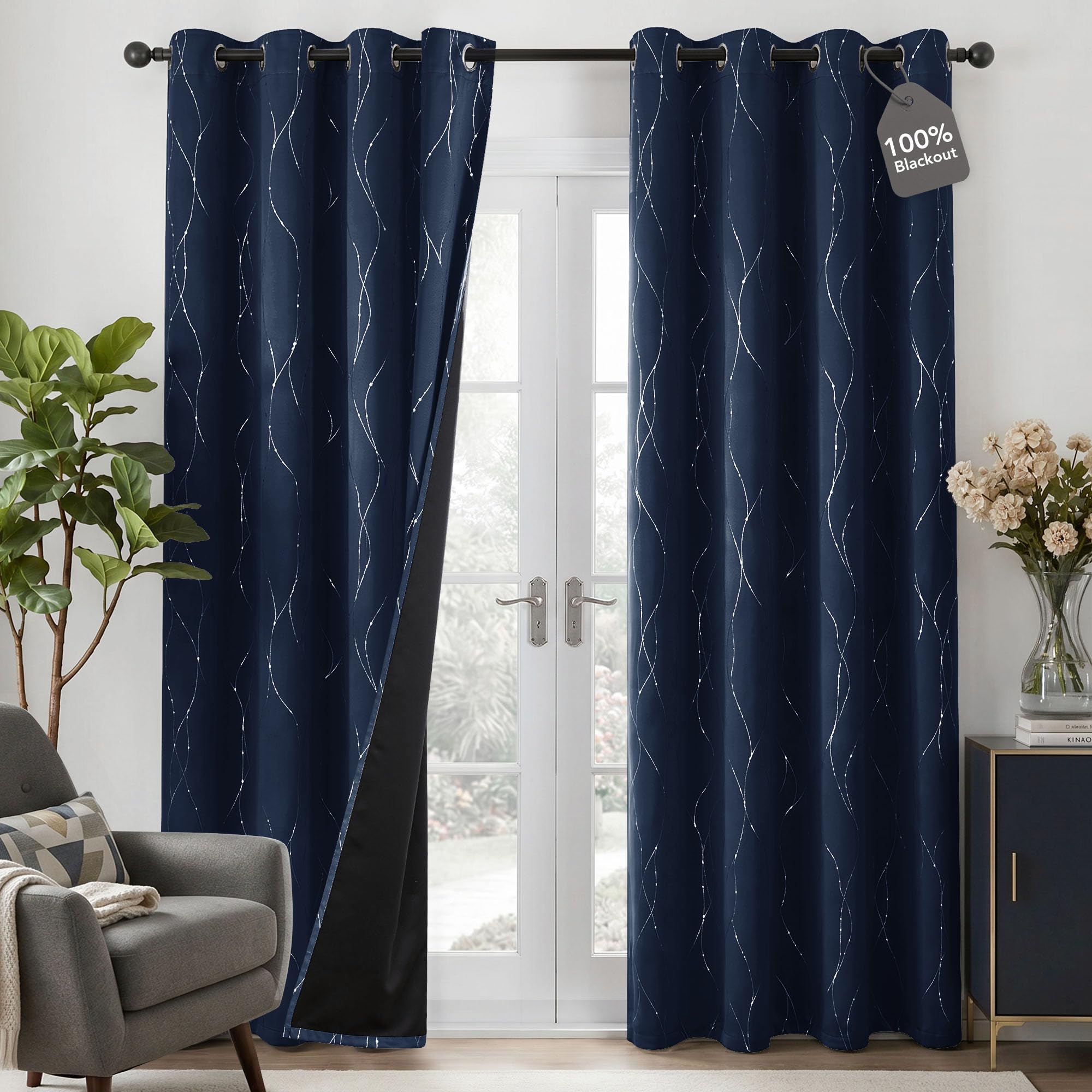
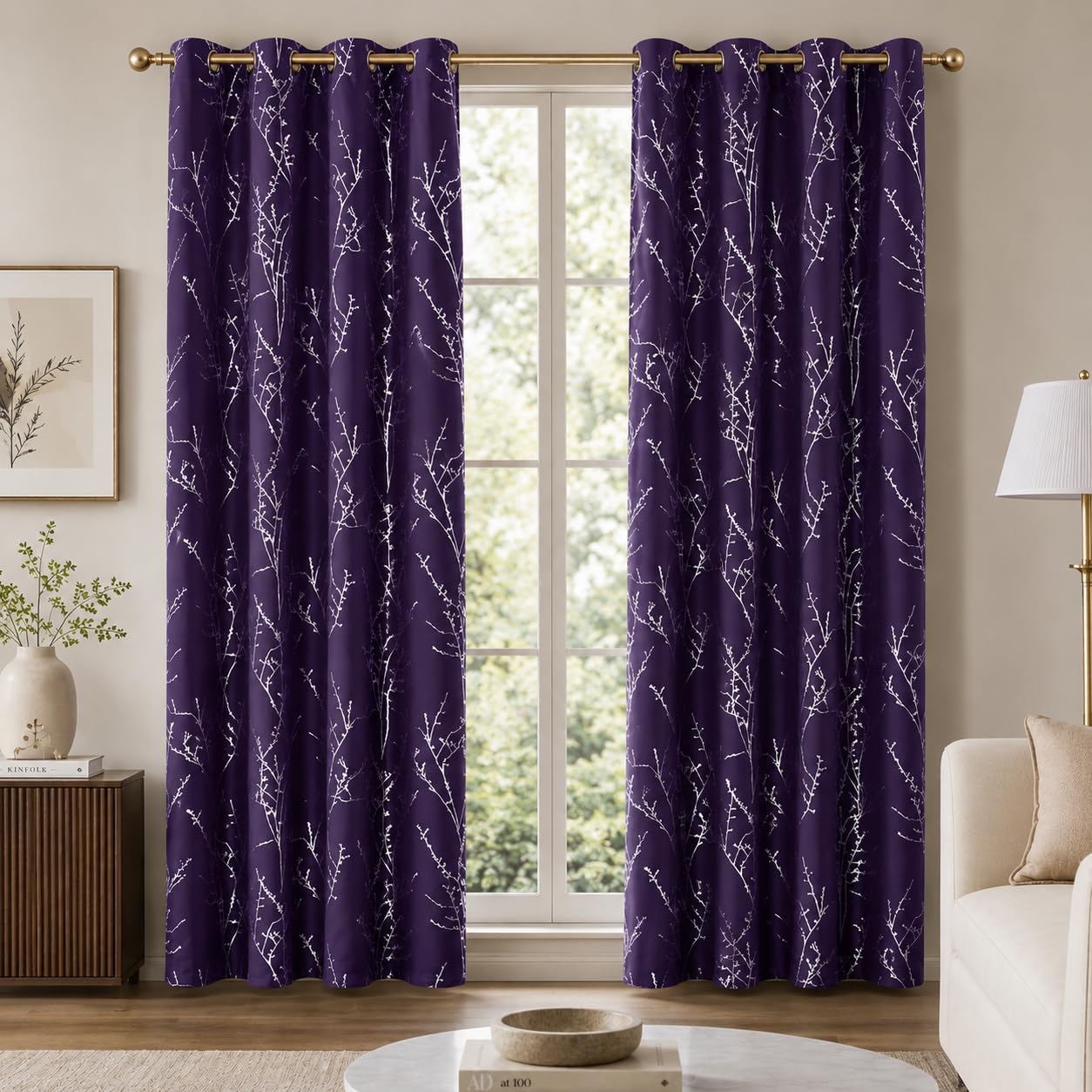
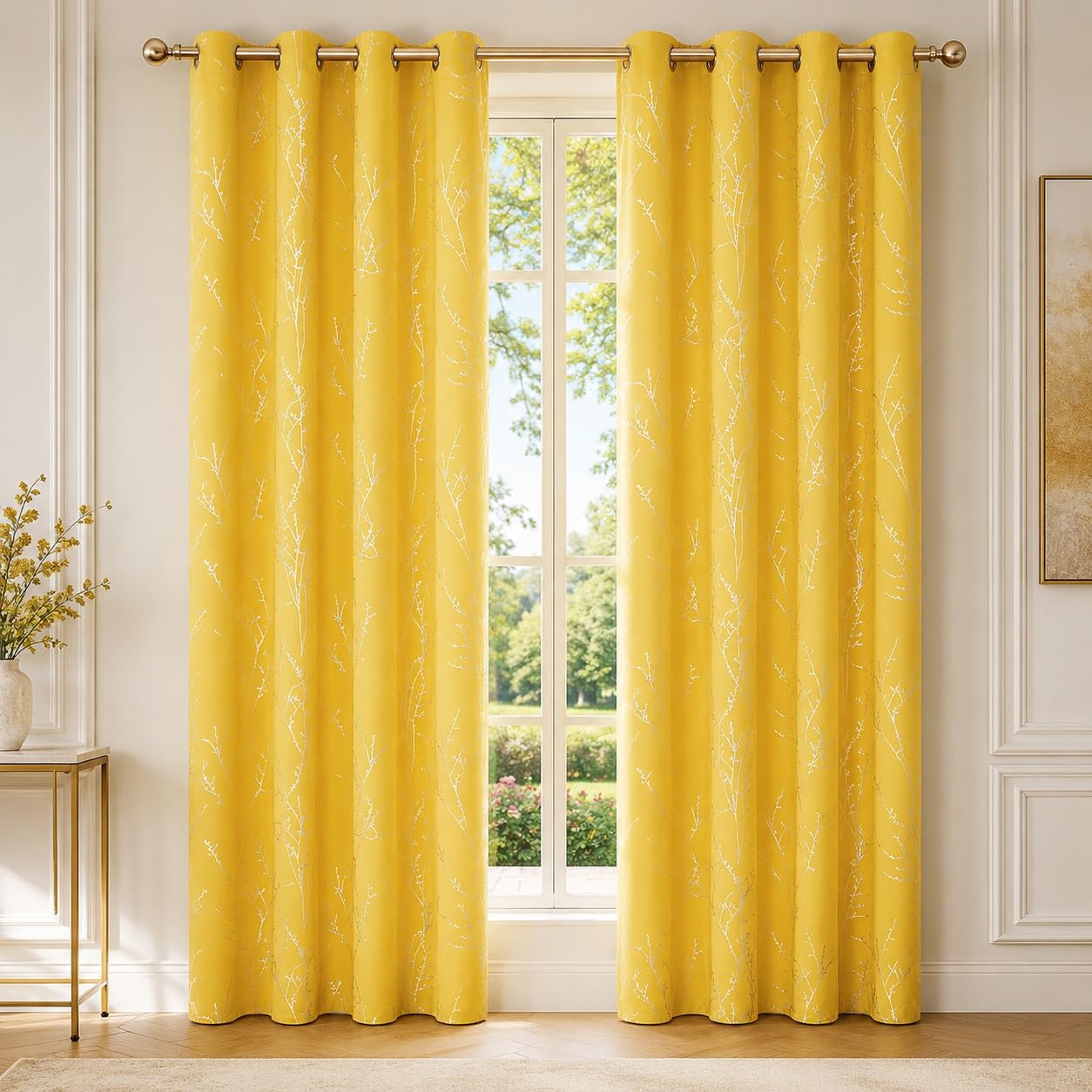
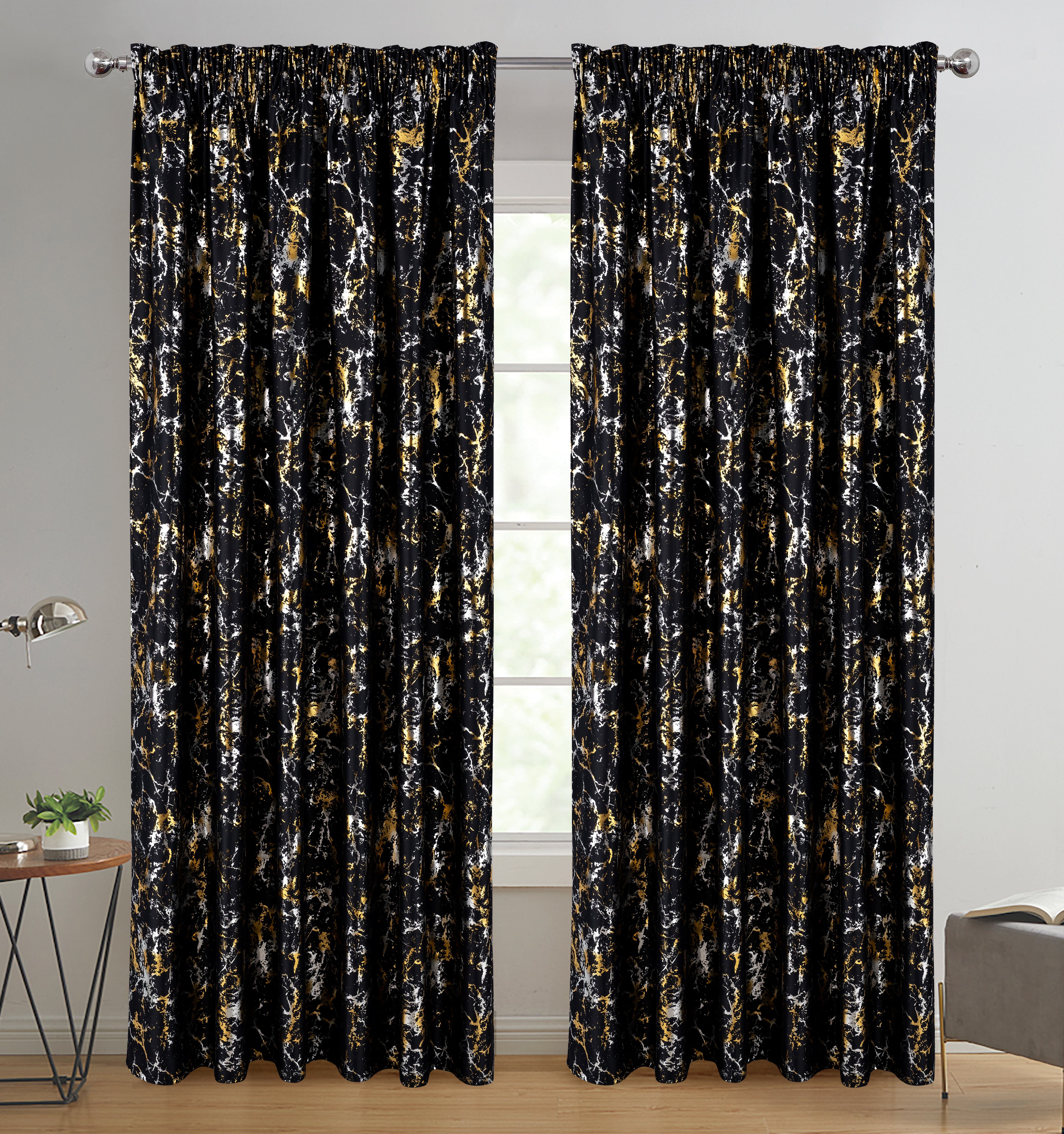
Silver wave lines and scattered dot accents bring a reflective decorative layer to these dark grey window panels. The metallic pattern catches changing room light while the darker ground anchors the design, making the curtains a focal point alongside plain upholstery and restrained wall finishes. The grommet header forms relaxed folds that reveal different sections of the print as the panels open and close. Developed as a blackout curtain style, the final fabric must be assessed for light transmission and finished-window coverage before any specific darkness claim is used.
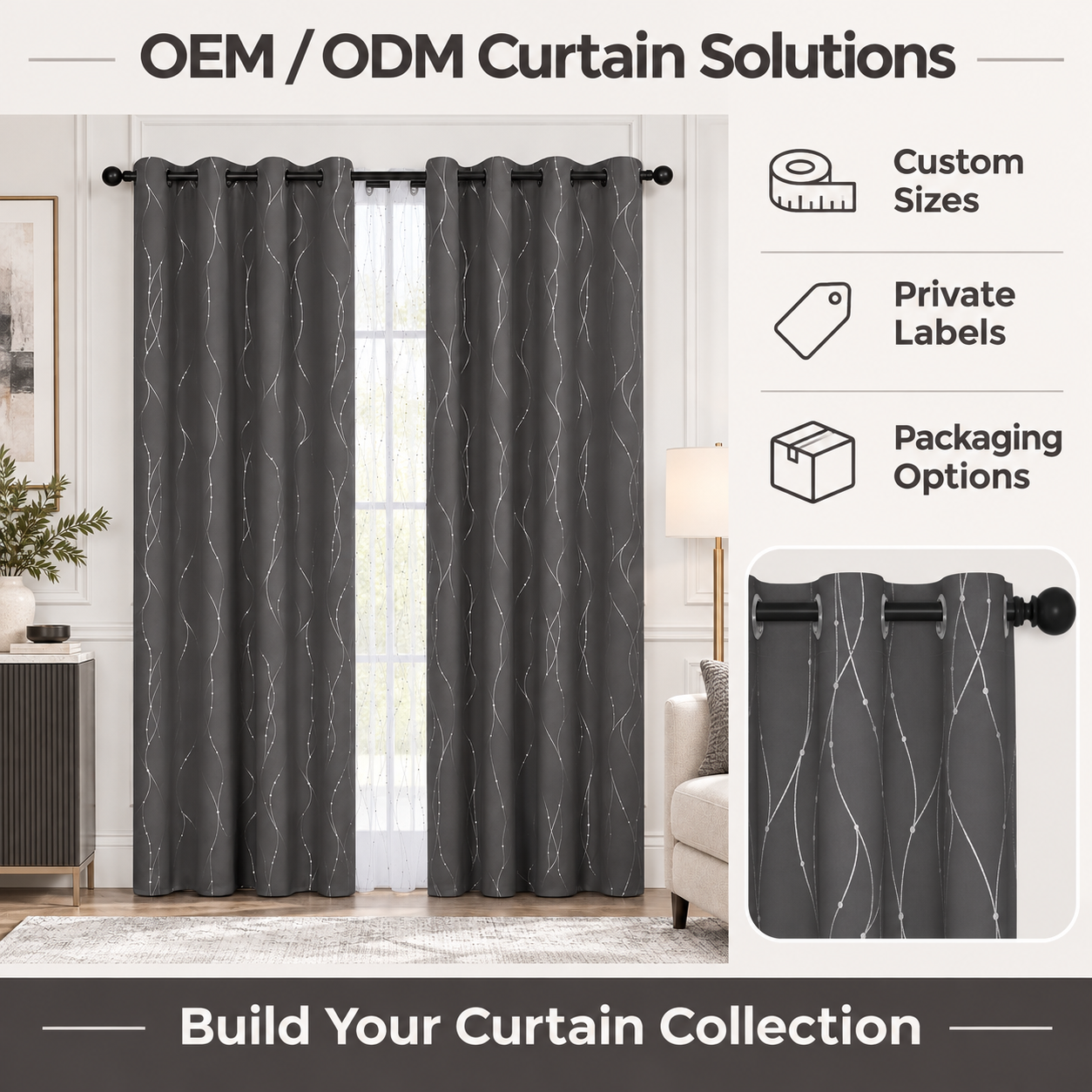
For a metallic-print curtain program, Shaoxing Yingkuo Textile Co., Ltd. (EAGLEKO HOME TEXTILE) can discuss foil finish, base-cloth selection and paired-panel presentation within the same sampling brief. Our one-stop sourcing approach allows decorative curtains to be purchased alongside plain sheers, cushion covers and other complementary home textiles. Buyers can establish an approved print reference, agree on inspection criteria and plan private-label packaging before production. Custom artwork feasibility, accessory inclusions, minimum quantities and delivery timing are confirmed against the actual order specification.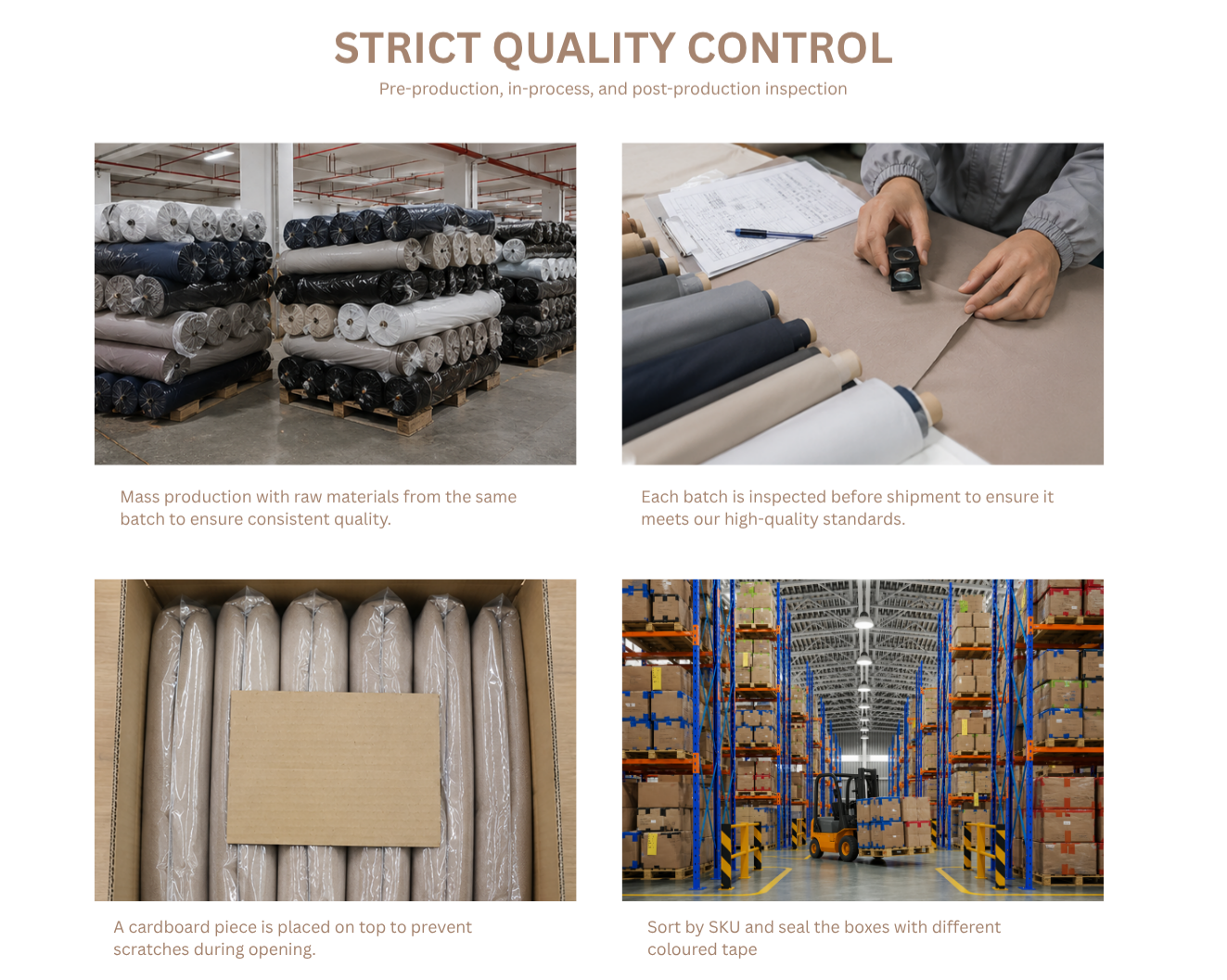
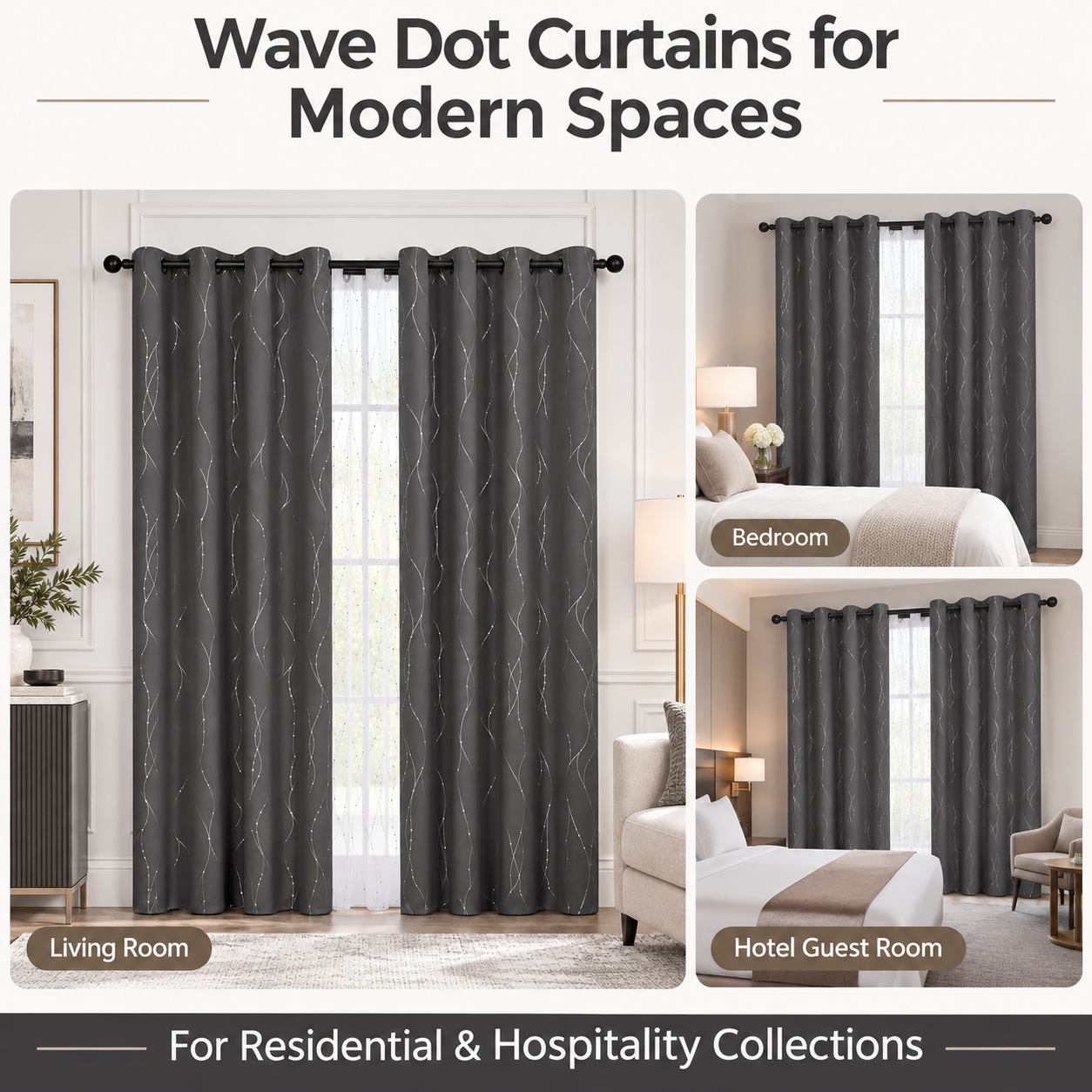
Contemporary Living Rooms — Use the silver pattern as an accent against plain seating and grey or neutral finishes.
Bedroom Window Collections — Review the approved light-blocking fabric and installed coverage for the intended room-darkening effect.
Coordinated Retail Ranges — Pair metallic curtains with plain home textiles to build a balanced assortment.
E-commerce Sales — Show print close-ups, full-panel pattern placement and accurate set contents.
Wholesale Curtain Programs — Develop repeatable color and size SKUs around a retained print standard.
Interior Styling Projects — Evaluate the reflective finish under the project’s actual daylight and artificial lighting.
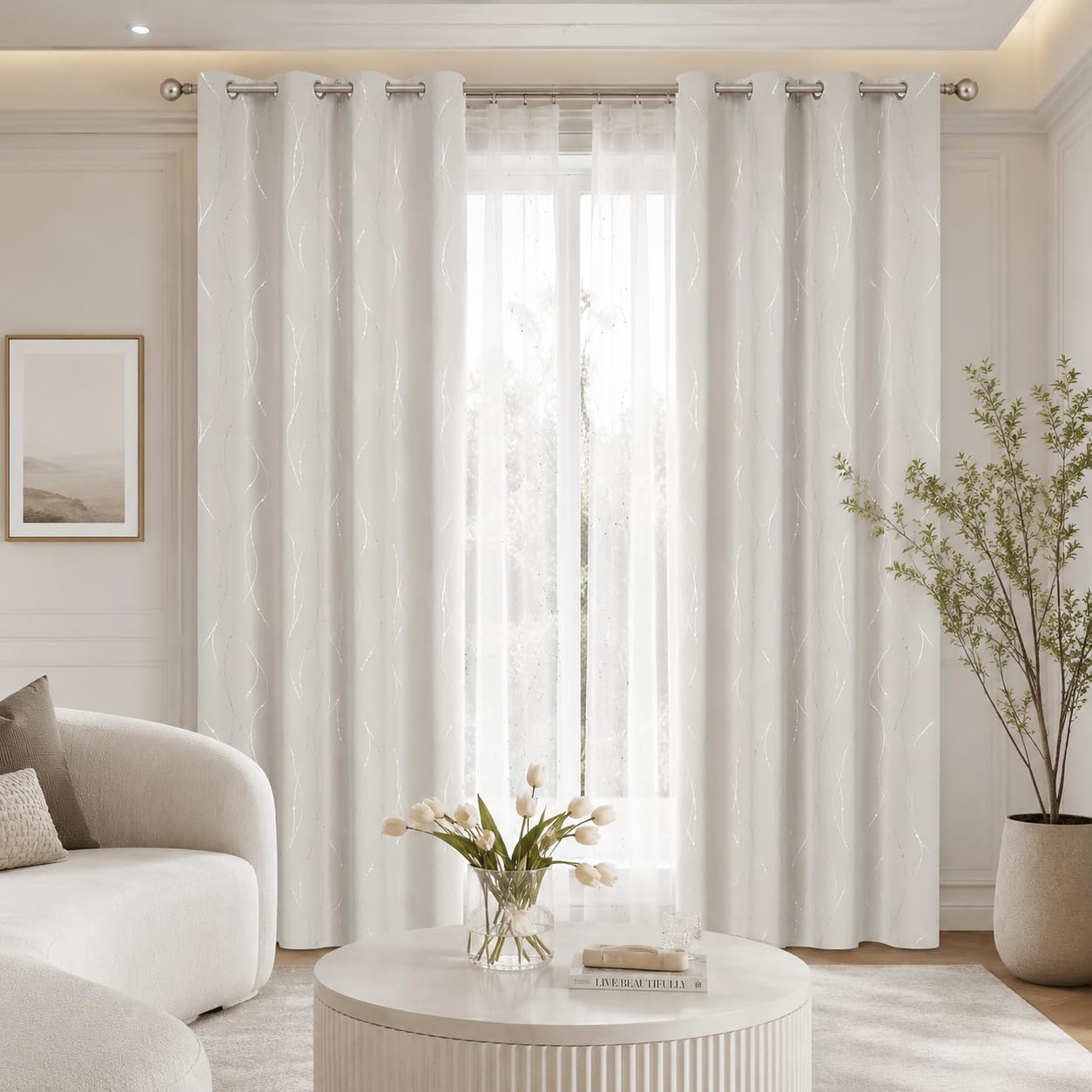
Layered Window Schemes — Combine with a separate sheer layer after checking rod capacity and clearance.
Metallic Wave Detail — Silver lines and dots provide a decorative highlight across the dark fabric.
Dark Ground Contrast — The grey base makes the reflective pattern visually distinct.
Fold Responsive Pattern — Grommet folds create changing highlights as the curtain is positioned.
Light Control Development — Base fabric can be assessed against the buyer’s required transmission criteria.
Paired Panel Presentation — Print direction and visual balance can be reviewed on a complete window set.
Coordinated Tiebacks — Matching solid accessories may be specified as part of the agreed retail package.
Private Label Assortments — Packaging and complementary textile selection can support a coordinated launch.
Q1: How should foil adhesion be evaluated before bulk production?
A: Approve a printed sample after the intended finishing process. Agree on suitable rubbing, flexing and care-cycle checks, then compare loss of metallic coverage, transfer and changes in gloss. Keep the tested reference with the production specification so visual approval is linked to durability requirements.
Q2: Can a silver decorative print be described as a thermal backing?
A: A face-side metallic motif does not establish a continuous reflective backing or verified insulation. Identify the actual layer construction first. Any thermal or energy-saving claim needs evidence appropriate to the finished fabric or window system; do not infer it from the silver color.
Q3: What determines whether the curtains meet a blackout requirement?
A: Specify an agreed light-transmission method, lighting conditions and acceptance threshold for the selected color. Test the base fabric and inspect sewing areas separately. Installed darkness also depends on side returns, overlap and header gaps, so fabric results should not be presented as a guarantee of total room darkness.
Q4: Must the wave pattern join exactly where the two panels meet?
A: Define whether the buyer expects continuous matching or only coordinated direction and repeat scale. Exact joining may require controlled cutting positions, extra fabric and pair-specific packing. Approve a full hanging pair and include the selected matching rule in the quotation and inspection brief.
Q5: How can packaging reduce permanent damage to the metallic lines?
A: Trial fold positions and pack pressure on finished samples, then inspect after a representative storage period. Look for cracking, adhesion between folded faces and loss of gloss. Keep hard accessories away from printed areas and approve recovery instructions without assuming high heat is safe.
Q6: How should care labels be developed for a foil-printed curtain?
A: Validate the proposed cleaning method on the printed finished panel, not just the unprinted fabric. Check the effect of agitation, detergent, drying and ironing on both foil and drape. Set the care label from those results; a washable base cloth does not automatically make the decorative finish machine washable.
Q7: Why can silver prints appear different between sample and bulk?
A: Foil batch, transfer conditions and fabric surface can alter reflectivity even when the nominal color is unchanged. Review samples under consistent diffuse and directional lighting. Use a retained approval panel to define acceptable gloss and coverage, and avoid judging metallic finish from screen images alone.
Q8: Which checks should be performed on a complete retail pair?
A: Check paired lengths, print orientation, ground-shade consistency, grommet alignment and tieback inclusion together. Inspect for needle damage or light points under agreed conditions. Confirm that the size label states dimensions per panel and that the photographed accessories match what the customer receives.
 EN